
Tools
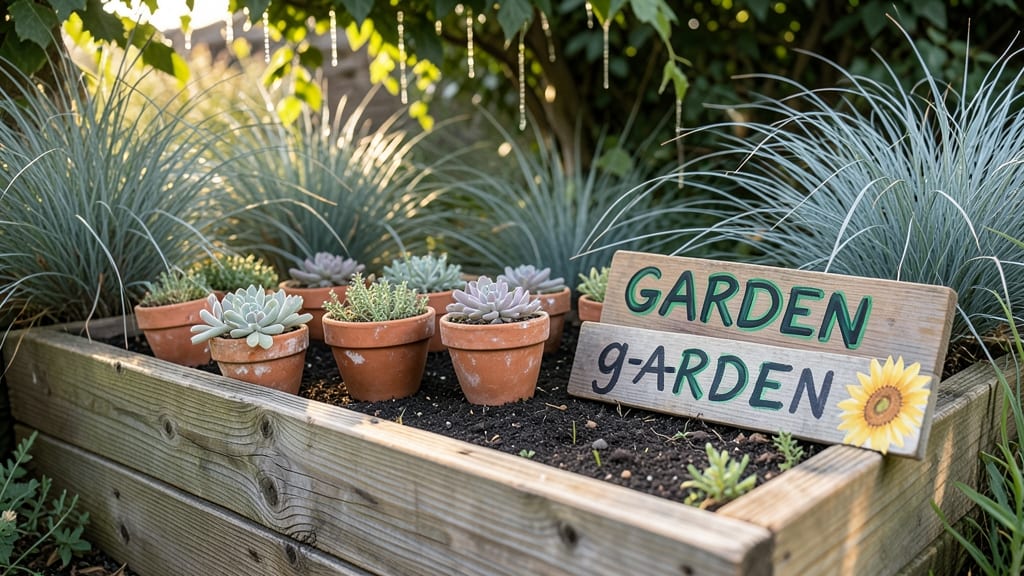
To spell "garden," use a single 'n'—G-A-R-D-E-N—not 'gardenn' or 'gardin.' This spelling reflects its Old English roots (gerden) and remains the standard in modern English for plant cultivation spaces.
This spelling isn't just about letters—it's about history. The word traces back over a thousand years to Old English, where gerden described enclosed green spaces. 🌿 Many people mistakenly add an extra 'n' because they confuse it with similar words like 'gardeners' or 'gardening,' but the core term stays simple.
For writers and gardeners, remembering this distinction helps avoid common typos that could undermine professionalism or clarity.
If you're still unsure, try this trick: think of the word as "a garden of dreams" (not "gardenn"). The double 'n' only appears in related terms like "gardener" or "gardening," where the extra syllable justifies the extra letter.
This linguistic quirk is one of those charming details that make English so fascinating!
💡 In This Article
- The Etymology of 'Garden' and Its Linguistic Roots
- Common Misspellings of 'Garden' and How to Avoid Them
The etymology of 'garden' and its linguistic roots
The word "garden" has deep historical roots that stretch back to the 5th century in Old English, where it was spelled gerden. This term described an enclosed, cultivated space—often surrounded by a fence or wall—to grow plants.
The single 'n' was consistent even as the language evolved. 🌿 By the 11th century, Middle English saw minor spelling variations like gardyn, but the core form remained unchanged.
Linguists trace gerden to Proto-Germanic gardaz, meaning "enclosure," which connects it to related words across languages. In Latin, the equivalent was hortus (source of our word "orchard"), while Old Norse used garðr. These shared roots reveal how gardening practices spread across Europe, with similar concepts emerging independently.
The 'g' sound was always hard (like in "go"), never soft (like in "gem"), which helps explain why some modern speakers mistakenly add an extra 'n'.
English spelling conventions solidified during the 15th-16th centuries, thanks to printers like William Caxton, who standardized forms. The Oxford English Dictionary confirms that "garden" with a single 'n' has been the dominant spelling since 1400.
What's fascinating is how this spelling survived despite phonetic changes—English speakers dropped the 'g' sound in words like "gnat" but kept it in "garden" to preserve the original meaning. 📜
For gardeners, this linguistic history matters because the word's structure reflects its purpose: a contained space. The single 'n' mirrors the simplicity of a well-tended plot—no extra letters needed.
Meanwhile, related terms like "gardener" (with two 'n's) evolved to reflect additional syllables and roles, showing how language adapts while preserving core meanings.
Here's a linguistic comparison to highlight the pattern:
- Old English: gerden (single 'n')
- Middle English: gardyn (brief variation)
- Modern English: garden (standardized single 'n')
- Derivatives: gardener (two 'n's for extra syllable)
Understanding this evolution helps explain why "gardenn" or "gardin" sound off—they break the centuries-old pattern of the word's structure and purpose. The single 'n' isn't arbitrary; it's a linguistic fingerprint of the word's ancient origins. ✨