
Tools
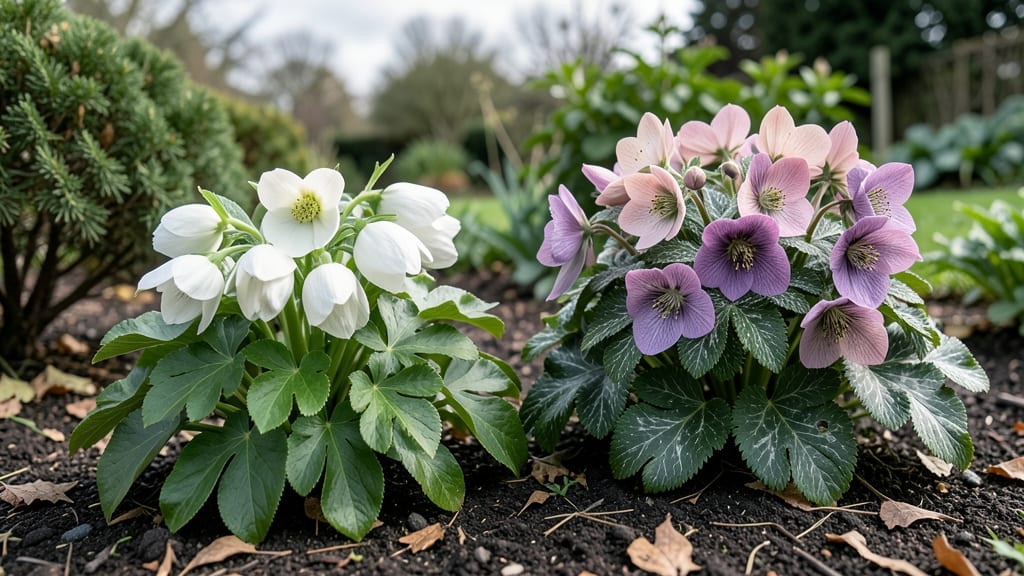
Hellebores in garden deliver stunning winter blooms, thriving as hardy perennials that brighten landscapes from late fall through early spring. These shade-loving plants flourish in moist, well-draining soil and are perfect for woodland gardens or partially shaded beds.
These evergreen plants stand out as winter's unsung heroes, offering delicate blooms when most gardens are dormant. 🌿 Their ability to thrive in cooler temperatures makes them a gardener's secret weapon for early-season color.
I've found that hellebores not only survive winter but often bloom more prolifically after a cold snap, rewarding patient gardeners with months of subtle elegance.
Beyond their aesthetic appeal, hellebores are remarkably low-maintenance once established. Their preference for partial shade means they're ideal for spots where sun-loving plants would struggle, making them perfect for under trees or along north-facing walls.
The key to their success lies in keeping the soil consistently moist without becoming waterlogged—a balance that pays off with vibrant blooms year after year.
💡 In This Article
- Hellebore Bloom Timing and Seasonal Care
- Optimal Hellebore Planting Locations and Soil Requirements
Hellebore bloom timing and seasonal care
Hellebores defy convention by blooming when most gardens are dormant, typically from late fall through early spring—often between November and March depending on your climate zone. This unique timing occurs because their flowering cycle is triggered by cooler temperatures rather than heat.
In my experience, hellebores in USDA Zones 4-9 often produce their first buds in late autumn, with peak bloom occurring in winter when other perennials remain bare.
The secret to their winter resilience lies in their evergreen foliage, which continues photosynthesizing even in cold temperatures. Unlike summer-blooming plants that rely on warm weather, hellebores store energy in their rhizomes during summer months, then convert that stored energy into flower production when days grow shorter.
This process is why they often bloom more prolifically after a frost—cold temperatures actually stimulate flowering in many varieties. 🌟 For optimal results, avoid heavy pruning after blooming, as the foliage remains functional until summer.
Seasonal care focuses on protecting their delicate blooms from harsh winter winds while maintaining consistent moisture. A 2-3 inch layer of organic mulch (like shredded bark or straw) helps regulate soil temperature and retain moisture.
I've noticed that hellebores in containers dry out faster than in-ground plants, so they may need weekly watering during winter if rainfall is scarce. The key is to keep soil evenly moist but never soggy—hellebores hate waterlogged roots, which can lead to rot.
Light exposure plays a crucial role in bloom timing and intensity. While they tolerate partial shade, 4-6 hours of morning sun produces the most vibrant flowers. Too much afternoon sun can scorch their leaves, while too little shade may result in fewer blooms.
In my garden, I've found that planting hellebores near deciduous trees works beautifully—they get winter sun while enjoying summer shade as the canopy fills in.
Pruning should be minimal and strategic. After flowers fade, you can trim spent stems to maintain neatness, but avoid cutting back more than one-third of the foliage. The leaves continue working until summer, when you can remove any yellowed or damaged growth.
This approach ensures next year's blooms have the energy they need. 🌿 What many gardeners don't realize is that hellebores often produce second flushes of blooms in late spring if given proper care—sometimes even on the same stems!
Fertilizing is another often-overlooked aspect. A light application of balanced organic fertilizer (10-10-10) in early spring encourages strong growth without overwhelming the plant. I've experimented with bone meal for phosphorus, which has helped some varieties produce larger flower clusters.
The goal is to support their natural growth cycle without disrupting their winter blooming pattern.
One final pro tip: If you notice your hellebores struggling with powdery mildew (common in humid climates), space plants 12-18 inches apart for better airflow.
I've had great success with preventive sprays of neem oil in early spring, which helps keep fungal issues at bay while being gentle on the plants. 💫