
Aphids
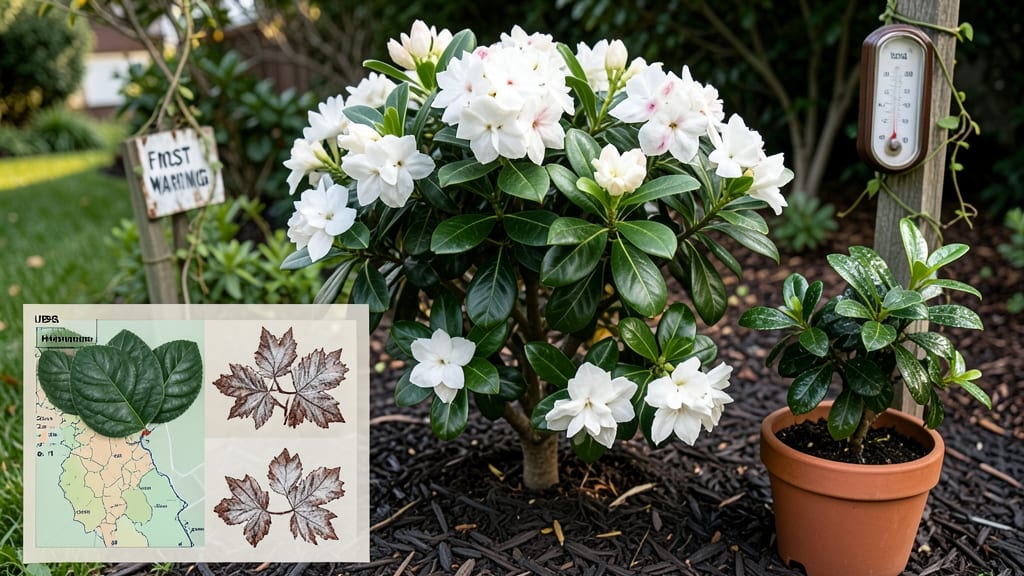
Gardenia cold hardiness is limited to USDA Zones 8-11, meaning these tropical plants can't tolerate frost or temperatures below 30°F without significant damage. Proper winter protection like mulching, container insulation, and indoor overwintering is essential for survival in colder regions.
Gardenia plants struggle with cold because they originate from tropical climates where temperatures rarely dip below 50°F. Even brief exposure to 32°F can cause leaf browning, while roots suffer irreversible damage below 28°F. The good news?
With the right strategies, gardeners in Zones 7 and below can still grow these fragrant beauties. 🌿 For instance, wrapping potted plants in burlap or moving them to a garage during freezes creates a lifesaving buffer.
Even outdoor gardenias benefit from a thick layer of mulch—at least 4-6 inches—to insulate roots from ground-level cold.
What sets gardenias apart is their sensitivity to both cold AND wind. A 30°F night with wind chill can be just as damaging as a frost-free 28°F night. That's why I recommend placing them against south-facing walls or under eaves to create a microclimate that traps warmth.
For extreme winters, bringing potted gardenias indoors near a bright window (but not in direct heat) lets them survive until spring. The key is consistency—these plants can't handle sudden temperature swings, so gradual acclimation in fall and controlled conditions in winter are non-negotiable.
💡 In This Article
- Understanding Gardenia Cold Sensitivity and Temperature Thresholds
- Protecting Gardenias in Cold Climates: Practical Winter Care Strategies
Understanding gardenia cold sensitivity and temperature thresholds
Gardenias evolved in tropical regions where temperatures rarely drop below 50°F, making them highly sensitive to cold. Their leaves begin showing damage at 32°F—the moment ice crystals form in plant cells, rupturing their delicate membranes.
This is called "cold injury," where leaves turn brown and crispy within hours. The roots, even more vulnerable, suffer irreversible damage below 28°F, as their water transport systems freeze and block nutrient flow. 🌡️
The real danger isn't just the temperature itself but how quickly it drops. Gardenias can't trigger protective dormancy like deciduous trees—their tropical biology lacks the biochemical pathways to produce antifreeze proteins. Instead, they rely on consistent warmth.
Humidity plays a critical role too: dry cold (20% humidity) accelerates damage by dehydrating cells faster than moist cold (60% humidity). That's why gardenias in arid climates need extra protection—even if thermometers show 35°F, the wind chill effect can push real damage thresholds lower.
Cold stress manifests in three distinct ways. First, you'll see leaf edges curling and turning black—a sign of cellular dehydration. Next, buds fail to open in spring, as the cold disrupted their flowering hormones. Finally, stems may develop blackened patches where vascular tissue froze.
The most alarming case? Roots that survive the winter but can't absorb water in spring, leading to sudden wilting despite adequate soil moisture. This "false recovery" is why gardeners often think their plants survived only to face fatal spring collapse. 🌱
What most gardeners overlook is how gardenias handle cold differently at various growth stages. Young plants (2 years old) are more vulnerable than mature shrubs because their root systems are shallower.
A 30°F night might only cause leaf browning on a 5-year-old plant but kill a 1-year-old's roots completely. Even established gardenias need protection if they've been recently transplanted—their roots take 6-12 months to fully establish in cold climates.
That's why I recommend waiting until late spring to plant gardenias in Zones 7-8.
Here's the science behind their tropical adaptation: Gardenias lack the suberin layer that protects temperate plants' roots from freezing. Instead, they've evolved thick, waxy leaves to conserve moisture in hot climates—a trait that becomes their Achilles' heel in cold.
When temperatures drop, these leaves become brittle and crack, creating entry points for pathogens. The good news? This biological limitation means we can work with their weaknesses—like using protective covers or creating sheltered microclimates—to give them a fighting chance in colder zones. 🌿
Consider this comparison: While azaleas (another popular shrub) can handle 10°F with proper care, gardenias begin showing stress at 35°F.
Their flowering cycle also makes them more vulnerable—buds form in late summer when nights are still warm, but a single 32°F night in September can kill next year's blooms before they even form. This explains why gardenias in Zone 7 often flower poorly—they're constantly fighting against their biological limitations.
Understanding these thresholds helps gardeners set realistic expectations and implement targeted protection strategies.