
Flowers
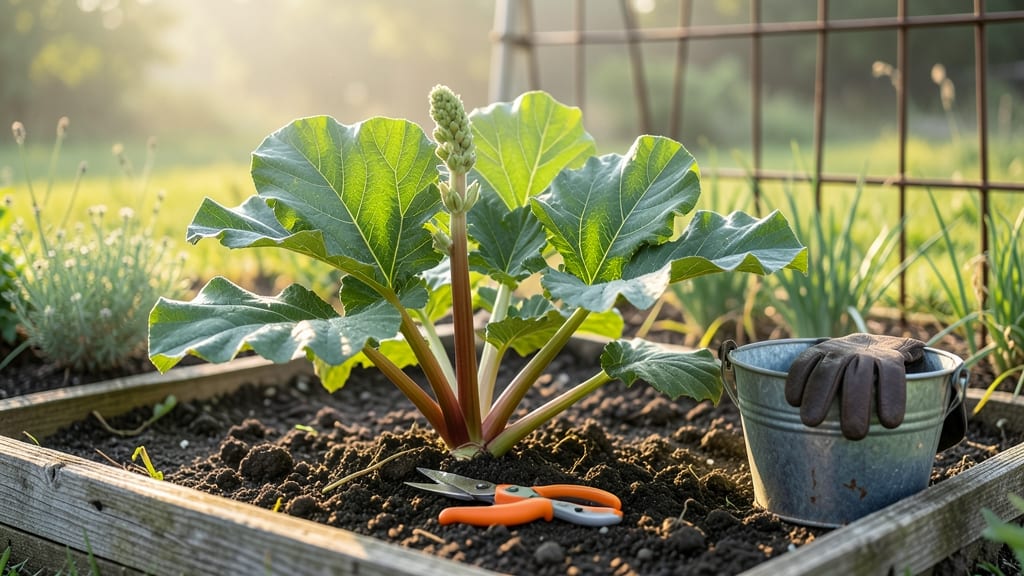
Gardeners should remove rhubarb flower stalks to boost fruit growth by redirecting the plant's energy toward producing larger, more abundant edible stalks instead of seed production. Cutting them back before they open prevents nutrient drain and extends the harvest season.
Rhubarb plants naturally prioritize reproduction over food production when flower stalks appear.
These stalks divert essential nutrients and energy away from your harvestable stalks, often stunting their growth and reducing overall yield. 🌱 By removing them early, you encourage the plant to focus on leaf and stalk development, which translates to thicker, sweeter stalks and a longer harvest window.
Think of it like giving your rhubarb a second chance to grow what you actually want to eat!
This practice also prevents the plant from entering premature dormancy—a common issue when energy is diverted to seed production. Many gardeners notice their rhubarb plants produce fewer but larger stalks after consistent pruning, making each harvest more rewarding.
The key is timing: remove stalks as soon as they emerge in early spring, before they open, to maximize regrowth potential.
💡 In This Article
- How Rhubarb Flower Stalks Drain Energy from Your Harvest
- Step-by-Step Guide to Pruning Rhubarb for Maximum Yield
How rhubarb flower stalks drain energy from your harvest
When rhubarb plants produce flower stalks, they trigger a physiological shift that prioritizes reproduction over food production.
These stalks contain developing seed heads that demand significant energy to mature, drawing nutrients and sugars away from the plant's edible stalks and leaves. 🌱 This process is driven by the plant's hormonal response—specifically, an increase in gibberellins, which stimulate flower development while suppressing growth in other areas. The result?
Your harvestable stalks become thinner and less abundant, often by 30-50% compared to unpruned plants.
The competition for resources becomes even more intense because flower stalks have a higher metabolic demand than leaves or stalks. Studies show that a single flower stalk can consume up to 25% of the plant's daily photosynthetic output, leaving fewer carbohydrates for root storage and next year's growth.
Additionally, the plant's root system weakens as it diverts energy underground to support the developing seeds, making it more susceptible to stress and disease.
This is why gardeners in colder climates often see their rhubarb enter premature dormancy—its survival instincts kick in to protect the seed-producing parts rather than the edible ones.
What most gardeners don't realize is how quickly this energy drain occurs. Within just 2-3 weeks of flower stalk emergence, the plant's growth rate for edible stalks can plummet by 40%.
The stalks themselves become tougher and less tender, with a more fibrous texture that reduces their culinary appeal. 🌿 The visual difference is striking: pruned plants boast vibrant green leaves and thick, plump stalks, while unpruned ones show stunted growth and yellowing foliage as nutrients are siphoned away.
Timing is everything when it comes to this energy shift. Flower stalks begin forming in late winter, but they remain dormant until spring warmth triggers growth. By removing them before they reach 6 inches tall (typically in early April), you prevent the plant from committing resources to seed production.
This early intervention allows the plant to redirect its energy toward leaf and stalk expansion, often resulting in stalks that are 20-30% thicker and more flavorful by harvest time.
Consider this comparison: A well-maintained rhubarb patch without flower stalks can produce 50-70 stalks per plant over a season, while one left to flower may yield only 20-30 stalks—but those remaining stalks will be smaller and less productive.
The trade-off isn't just about quantity; it's about quality. Flowering plants also produce stalks with higher oxalic acid levels, which can make them less palatable and potentially irritating to sensitive stomachs.
The root system bears the brunt of this energy redistribution too. When a rhubarb plant focuses on seed production, it stores fewer reserves in its roots, which are crucial for next year's growth. This can lead to 2-3 weeks of delayed spring regrowth and weaker overall vigor.
In contrast, pruned plants develop robust root systems that support larger harvests in subsequent seasons. The long-term benefit? A rhubarb patch that's consistently pruned can remain productive for 10-15 years, while neglected plants often decline after just 5-7 years.