
Tools
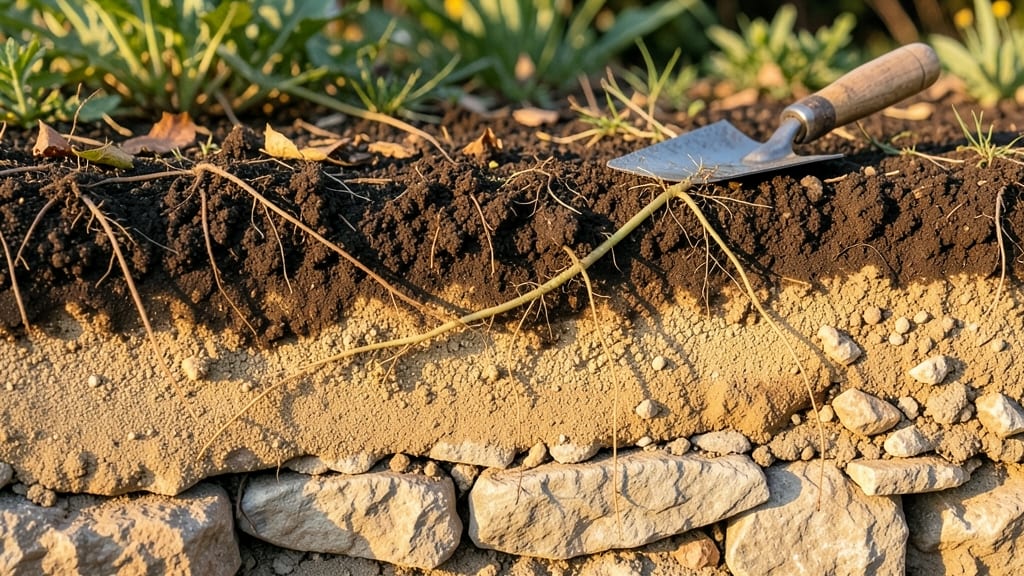
Garden soil layers develop through natural processes like decomposition and weathering, forming distinct layers called horizons that control water drainage, nutrient distribution, and root penetration. The topsoil layer is rich in organic matter for plant growth, while deeper layers anchor roots and store moisture.
These distinct soil layers—often called horizons—develop over decades or centuries as organic material breaks down and minerals shift downward. 🌱 The topmost layer (O and A horizons) is where most plant roots thrive, packed with decomposed leaves and microbes.
Meanwhile, the subsoil (B and C horizons) acts like a sponge, holding water and nutrients for drought-resistant plants. Understanding these layers helps gardeners add compost to enrich topsoil or avoid over-tilling, which can disrupt the natural balance.
For example, clay-heavy subsoils might need gypsum to improve drainage, while sandy topsoils benefit from compost to retain moisture. The key is working with nature's stratification rather than against it—healthy soil layers are the foundation of a thriving garden.
💡 In This Article
- How Soil Horizons Develop Over Time
- Optimizing Soil Layers for Plant Health
How soil horizons develop over time
Soil horizons form through a dynamic interplay of biological, chemical, and physical processes that unfold over decades—or even centuries. At the surface, the O horizon begins as fallen leaves, twigs, and other organic debris accumulate.
Microorganisms like bacteria and fungi break down this material through decomposition, creating humus—a dark, crumbly substance rich in nutrients. This process is most active in temperate climates with moderate rainfall, where decomposition rates balance between too-fast (which loses nutrients) and too-slow (which creates thatch).
Beneath the O horizon, the A horizon develops as decomposed organic matter mixes with mineral particles. This layer typically measures 2-12 inches deep and contains 5-10% organic matter at maturity.
The E horizon, often found in forested areas, forms when minerals like iron and aluminum leach downward, leaving behind a lighter-colored, sandy layer. This leaching is most pronounced in acidic soils with high rainfall, like those found in pine forests.
The B horizon, or subsoil, accumulates minerals and clays washed down from above, creating a denser layer that can hold water and nutrients for deeper-rooted plants.
The C horizon, closest to unweathered parent material (like bedrock or glacial till), consists of partially broken-down minerals with minimal organic content. In some soils, this layer can extend several feet deep and contains fragments of parent rock.
What's fascinating is how climate accelerates or slows these processes: tropical soils develop horizons 10x faster than arctic soils due to higher temperatures and moisture. Meanwhile, desert soils may lack distinct horizons entirely, with organic matter concentrated only at the surface.
Vegetation plays a surprising role too. Deep-rooted plants like oak trees can pull minerals from lower horizons and deposit them in the topsoil through fallen leaves, while shallow-rooted grasses create a thick thatch layer. This explains why forest soils often have deeper A horizons than grassland soils.
The interplay between these factors creates the unique "soil profile" you see when digging a hole—each layer tells a story about the site's history and current ecological conditions.
One often-overlooked mechanism is the role of soil fauna. Earthworms, for instance, can mix up to 20 tons of soil per acre annually, accelerating horizon development. Their burrows create channels that improve drainage while distributing organic matter downward.
Meanwhile, termites in tropical regions can completely alter soil structure by consuming wood and redistributing nutrients. These biological processes are why healthy soils often have more distinct horizons than disturbed or tilled soils.
Understanding these processes helps explain why some soils are naturally fertile while others require amendment. For example, the dark, crumbly A horizon of a prairie soil might contain 5% organic matter, while a sandy coastal soil's A horizon could have as little as 1%.
The difference comes from centuries of organic accumulation versus rapid leaching in sandy conditions. This natural stratification is why gardeners should test soil depth before amending—adding compost to a 6-inch topsoil layer will have different effects than amending a 12-inch profile.