
Tools
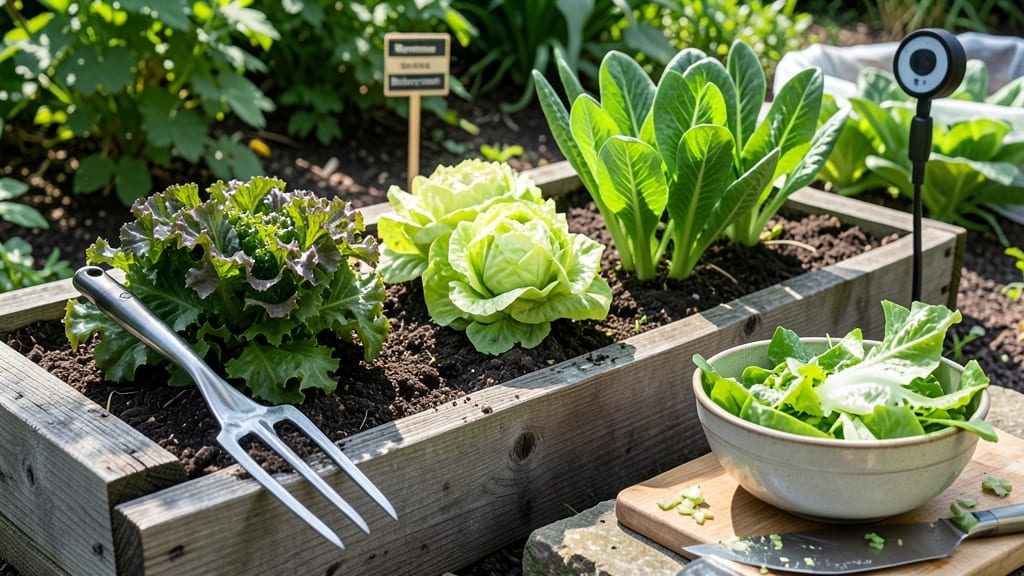
Garden lettuce types include fast-growing varieties like leaf lettuce (e.g., Black Seeded Simpson), romaine (e.g., Parris Island), and butterhead (e.g., Bibb), each planted at different times for optimal harvests—spring, summer, or fall—depending on heat tolerance and growth speed.
The key to growing lettuce quickly lies in choosing the right variety for your climate and season. Leaf lettuce varieties like Black Seeded Simpson mature in just 30-40 days, making them ideal for quick harvests, while romaine and butterhead varieties take slightly longer—50-60 days—but offer heartier textures. 🌱 The secret to their speed is their ability to thrive in cooler temperatures, which slows down bolting (the process where lettuce flowers prematurely).
For example, leaf lettuce handles light frosts better than butterhead, so it's perfect for early spring or late fall plantings.
Timing your plantings right is just as important as choosing the variety.
In most regions, you can start leaf lettuce in early spring and again in late summer for a fall harvest, while romaine and butterhead do best in cooler months. Soil temperature plays a huge role—lettuce grows best when soil stays between 45°F and 75°F.
If temperatures climb above 80°F, even fast-growing varieties will bolt quickly, so shade cloth can be a game-changer during heatwaves.
💡 In This Article
- Fastest-Growing Lettuce Varieties for Home Gardens
- Best Planting Schedule for Lettuce by Type and Climate
Fastest-growing lettuce varieties for home gardens
Leaf lettuce varieties like Black Seeded Simpson lead the pack with maturity in just 30-40 days, thanks to their rapid cell division rates under cool conditions.
This speed comes from their loose-leaf structure, which allows them to focus energy on leaf production rather than developing a dense head. 🌱 The secret lies in their rosette growth habit—a compact circular pattern that maximizes sunlight exposure per leaf, accelerating photosynthesis.
In comparison, butterhead varieties like Bibb take 50-60 days because they allocate resources to forming tender, overlapping leaves rather than rapid expansion.
Romaine types such as Parris Island strike a balance with 45-55 days to maturity, combining the speed of leaf lettuce with the structural integrity of head varieties. Their elongated leaves grow vertically, creating a self-shading effect that protects inner leaves from bolting triggers like excessive sunlight.
What's fascinating is how their vascular bundle arrangement allows efficient nutrient transport, supporting faster growth than denser varieties. For example, a single Black Seeded Simpson plant can produce 10-15 harvestable leaves in its first month, while romaine yields about 6-8 full-length stalks in the same timeframe.
The real advantage of these fast varieties is their heat tolerance window—leaf lettuce can handle brief periods up to 75°F without bolting, while romaine and butterhead begin stressing at 70°F. This difference explains why leaf lettuce dominates summer succession plantings.
The science behind this involves ethylene production—a plant hormone that triggers bolting when temperatures rise. Leaf lettuce varieties have been selectively bred to delay ethylene sensitivity, allowing them to keep growing when other types would flower prematurely.
For home gardeners, this means you can harvest leaf lettuce every 2-3 weeks by cutting outer leaves, extending the growing season by 30-40%. The trade-off? Leaf lettuce has a shorter shelf life (about 5-7 days post-harvest) compared to romaine's 10-14 days when stored properly.
This makes leaf varieties ideal for cut-and-come-again harvests, while romaine and butterhead excel for longer-term storage or salads requiring intact leaves.
What most gardeners overlook is how day length affects growth speed. Short-day varieties (like many leaf lettuces) grow faster in 12-14 hour daylight conditions, which explains their spring/fall dominance.
Long-day varieties (common in butterhead) actually slow growth when days exceed 14 hours, which is why they perform better in northern climates. Understanding this helps explain why Black Seeded Simpson thrives in USDA Zones 3-10 while Bibb butterhead struggles in Zone 10's long summer days.
Practical tip: To maximize speed, plant leaf lettuce in partial shade during summer months—this reduces soil temperature by 5-10°F compared to full sun, delaying bolting. For romaine, use drip irrigation to maintain consistent moisture; uneven watering can cause bitterness and slow growth by 20-30%.
The fastest results come from combining these varieties in succession plantings—sow leaf lettuce every 2 weeks in spring/fall, and romaine every 3 weeks for continuous harvests.