
Picking
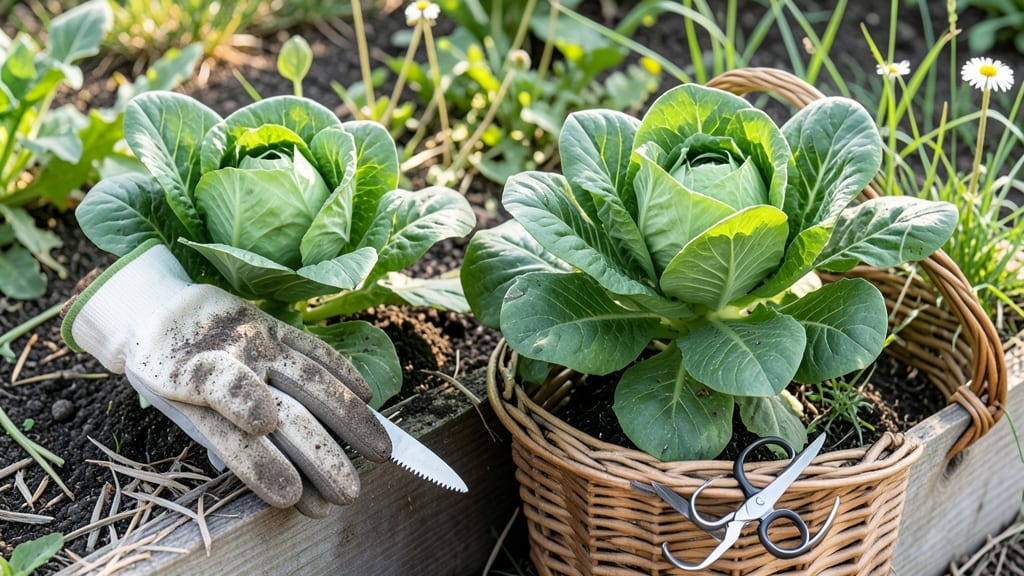
Garden lettuce 🥬 is ready to pick when leaves reach 4–6 inches, stay crisp but tender, and taste sweet—not bitter.
Picking too early means floppy, underdeveloped leaves, while waiting too long turns them tough and bitter. I’ve learned the hard way that timing is everything—especially when you’ve spent weeks nurturing your crop.
You’ll know it’s perfect when the outer leaves are fully formed, the color is deep and vibrant, and the stems snap cleanly when gently pulled. These are the three key tests that guarantee your harvest is at its peak.
Below, I’ll walk you through how to check your lettuce, the best way to harvest it (leaf-by-leaf or whole head), and how often to pick for a continuous supply—without sacrificing flavor or yield.

3 Leaf tests to determine when garden lettuce is ready to pick
There's nothing worse than biting into a lettuce leaf only to find it bitter or tough—especially when you could have harvested it at peak freshness. The key to crisp, sweet lettuce lies in knowing exactly when those leaves are ready for picking.
Unlike many vegetables, lettuce doesn't give off obvious external signals like fruit ripening, so you need to rely on three simple but critical leaf tests. These tests focus on size, texture, and color, all of which work together to tell you when your lettuce is finally ready to harvest.
I've learned through years of gardening that skipping these tests often leads to disappointment. Overripe lettuce can develop a bitter taste due to bolting, while underripe leaves lack the satisfying crunch we all love.
By mastering these three tests, you'll ensure your lettuce stays tender, flavorful, and ready to enjoy in salads or sandwiches. Let's dive into the visual and tactile cues that will transform your lettuce harvest from guesswork to precision.
- 1 Leaf Size Test: Measure outer leaves at 4-6 inches. For loose-leaf varieties, harvest when leaves reach this size. For head lettuce, wait until the entire head is firm and compact.
- 2 Texture Test: Gently squeeze a leaf—it should feel crisp but tender, not mushy or rubbery. Tough leaves mean it's overripe; overly soft leaves need more time.
- 3 Color Test: Look for vibrant, consistent color without yellowing or browning. Dark green or red hues (depending on variety) indicate maturity, while pale leaves are underripe.
The leaf size test is the first checkpoint because it's the easiest to measure. I always use a ruler or my hand as a reference—most mature lettuce leaves span about the width of my palm.
For varieties like romaine or iceberg, wait until the entire head reaches a compact, rounded shape. This ensures the inner leaves are also ready, not just the outer ones. Skipping this step often leads to uneven maturity, where some leaves are perfect while others are still tough or bitter.
Next, the texture test is where many gardeners go wrong. A lettuce leaf that's too firm might still be young, while one that's too soft could be rotting. The ideal texture should be firm enough to hold its shape when washed but tender enough to tear easily with your fingers.
I like to test this by gently pinching the leaf between my thumb and forefinger—if it gives slightly but doesn't collapse, it's ready. This tactile check is especially important for butterhead varieties, which can become mushy if left too long in the ground.
Don't overlook the color test, as it's a dead giveaway for maturity. Healthy lettuce leaves should be a deep, uniform green (or the specific color of your variety, like red for oakleaf).
Any yellowing or browning means the leaf is stressed, either from overmaturity or environmental factors like heat or drought. I always check the undersides of leaves too—if they're turning brown, it's a sign the lettuce is past its prime.
For loose-leaf varieties, you can harvest leaves as soon as they reach the right color, even if they're not fully sized.
One common mistake I see is relying on just one test. For example, you might think a lettuce is ready because the leaves are big, but if they're still pale or mushy, they're not. That's why I always perform all three tests in sequence.
Start with size, then check texture, and finally confirm with color. This three-step process ensures you're harvesting at the perfect moment for the best flavor and texture. If you're unsure, taste a small piece—bitter lettuce is a clear sign it's time to pick, even if the leaves look fine.
Timing your harvest also depends on the variety of lettuce you're growing. Loose-leaf types like green leaf or red leaf can be harvested repeatedly as leaves mature, while head lettuce like romaine should be picked all at once when the head is fully formed.
For continuous harvests, I recommend picking outer leaves first, leaving the inner ones to keep growing. This method extends your harvest season by weeks, giving you fresh lettuce long after the initial planting.
Seasonal factors play a role too. In hot weather, lettuce can bolt quickly, turning bitter before it reaches full size. To combat this, I always harvest in the morning when temperatures are cooler and leaves are crispest.
In cooler seasons, you have more flexibility, but don't wait too long—even mature lettuce can develop a slightly bitter taste if left in the ground for too long.
By paying attention to these seasonal cues and sticking to the three leaf tests, you'll always know exactly when your lettuce is ready to pick.
Pro tip: Keep a small notebook by your garden to track when you plant and harvest your lettuce. Over time, you'll notice patterns in how quickly your specific varieties mature, especially in your local climate.
This personal record becomes invaluable for planning future plantings and ensuring you always have fresh lettuce on hand. With these tests and a little practice, you'll go from guessing to confidently harvesting crisp, sweet lettuce every time.
How to harvest lettuce for continuous yield: cut-and-come-again vs. full head methods
Once your garden lettuce passes the 3 leaf tests for readiness, the next decision is how to harvest it. Your choice between cut-and-come-again and full head harvesting determines whether you get one big harvest or weeks of fresh leaves.
I’ve tested both methods in my garden, and the right approach depends on your lettuce variety and goals.
The cut-and-come-again method works best for loose-leaf varieties like Buttercrunch or Oakleaf. Instead of pulling the whole plant, you snip the outer leaves when they reach 4–6 inches.
This leaves the inner leaves to grow, giving you 2–3 harvests per plant over 4–6 weeks. It’s perfect for salads and continuous supply.
For head lettuce varieties like Iceberg or Romaine, the full head method is ideal. You harvest the entire plant when the head is firm and compact. This gives you one big harvest but no regrowth.
If you want multiple harvests from head lettuce, you’ll need to plant new seeds every 3–4 weeks for a staggered crop.
To use the cut-and-come-again method, start harvesting when the outer leaves reach 4–6 inches. Use clean scissors or pruners to cut just above a leaf node (the point where leaves attach).
This encourages new growth from the center. Avoid removing more than 1/3 of the plant at once to prevent stress.
For full head harvesting, wait until the entire head feels firm when gently squeezed. Use a sharp knife to cut the head 1 inch above the soil.
This prevents the stem from rotting. If you’re growing head lettuce in containers, be gentle to avoid disturbing the roots of nearby plants.
After harvesting, whether you’re using the cut-and-come-again or full head method, keep the soil consistently moist and apply a light nitrogen fertilizer to encourage regrowth. In my experience, loose-leaf varieties can give you up to 3 harvests if cared for properly, while head lettuce requires replanting for continuous yield.
Pro tip: Harvest in the morning when temperatures are cooler. This keeps the leaves crisp and sweet, and you’ll avoid the bitterness that comes from heat stress. Store harvested lettuce in the fridge for up to 5–7 days in a paper towel-lined container to maintain freshness.