
Landscaping
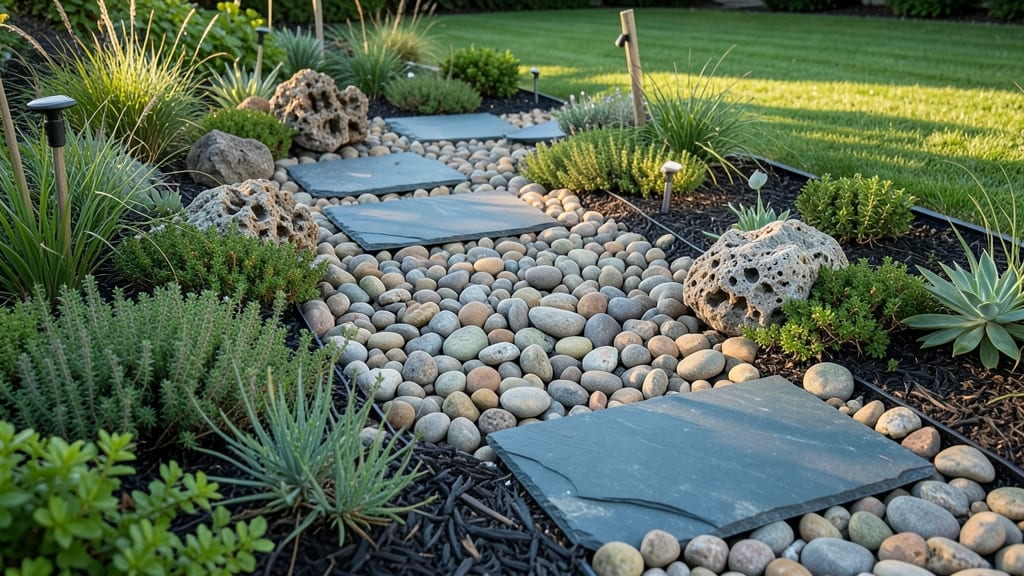
Garden ideas using stones transform outdoor spaces into serene, durable landscapes by creating natural pathways, framing plant beds, or adding organic focal points with virtually no maintenance. Flat flagstones work best for borders, while smooth river rocks excel in water features or drainage areas.
Stone gardens thrive because they eliminate the need for mowing or replanting while adding texture and structure to any outdoor space. Flat stones like slate or granite create clean, modern borders that guide the eye through your yard, while rounded river rocks soften edges and prevent erosion in slopes or around water features. 💫 The key is balancing stone shapes—stepping stones for pathways, irregular slabs for rustic charm, and pebbles for Zen-like tranquility.
I always start with a sketch to visualize how different textures will interact with plants and existing hardscapes.
For a truly low-maintenance design, consider permeable stones like decomposed granite, which allow water drainage while suppressing weeds. These materials also pair beautifully with drought-tolerant ground covers like creeping thyme or sedum, creating a self-sustaining ecosystem.
The best part? Once installed, stone gardens require only occasional sweeping and the occasional replacement of displaced stones after heavy rain.
💡 In This Article
- How to Design Stone Garden Layouts for Visual Impact
- Best Stone Types and Placement Tips for Low-Maintenance Gardens
How to design stone garden layouts for visual impact
Stone garden layouts rely on three core design principles: scale, texture contrast, and visual flow. The human eye naturally follows the largest elements first, so placing 12-18-inch flagstones along main pathways creates a bold structural guide.
Smaller 6-8-inch stepping stones then invite exploration, while 1-2-inch pebbles soften transitions between hard and soft landscapes. This layered approach mimics natural terrain, where boulders frame valleys and riverbeds.
Texture plays an equally critical role—rough granite slabs (with their 0.5-1.5mm deep natural clefts) provide grip for pathways, while smooth river rocks (2-4mm polished surface) reflect light beautifully in water features.
The secret lies in mixing these materials: pair angular slate edges with rounded cobblestones to create visual tension that draws the eye through your garden. For example, a 12-inch-wide slate border around a rose bed adds definition, while 3-inch river rocks scattered at the base suppress weeds and enhance drainage.
Visual flow depends on repetition and rhythm—place stones at 2-3 foot intervals along pathways to create a natural cadence, or arrange them in diagonal lines to guide movement through space.
In Zen gardens, I've seen raked sand patterns between 1-2 inch pebbles create meditative pathways, while cottage gardens often use irregularly shaped field stones for organic charm. The key measurement? Maintain 6-12 inch spacing between stones to allow for plant growth while keeping the design cohesive.
Color coordination matters too—cool gray slate contrasts beautifully with warm golden sandstone, while black basalt creates dramatic focal points. For a cohesive look, stick to a 3-color palette (e.g., gray, tan, and white) that complements your home's exterior.
Pro tip: Place larger stones near seating areas to create natural conversation points, while smaller stones work well for accentuating individual plants or shrubs.
Lighting transforms stone gardens at night—LED path lights embedded in 6-inch flagstones create a magical glow, while solar-powered uplights behind 12-inch boulders highlight architectural features. For water features, submersible LED candles in 3-4 inch river rocks add ambiance without maintenance.
The best part? Stone layouts remain visually striking year-round, unlike seasonal plants that require constant attention. 💫
When planning, start by mapping your garden's "bones"—existing trees, structures, and slopes. Use spray paint to mark stone placement before digging, and always leave 1-2 inch gaps for gravel or sand (which helps with drainage and stability).
For slopes, terracing with 18-inch-high stone walls prevents erosion while creating planting levels. The result? A timeless landscape that requires only occasional sweeping and the occasional replacement of displaced stones after heavy storms.