
Vegetables
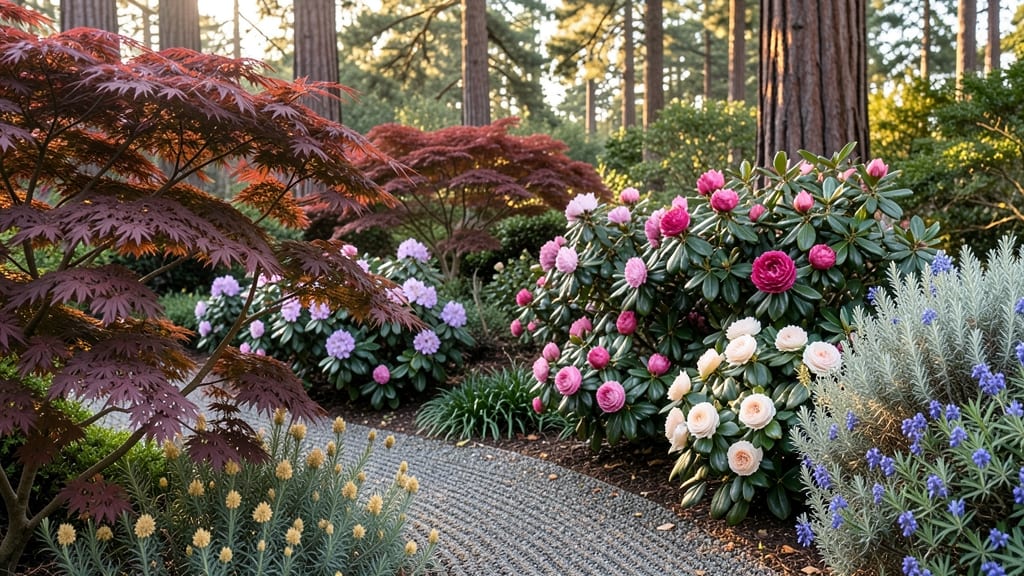
Filoli Gardens in Redwood City, CA, blends historic architecture with vibrant seasonal displays, from its iconic rose garden to breathtaking autumn foliage. Beyond the main attractions, visitors discover lesser-known gems like the serene Japanese Tea Garden and the charming historic dairy barn, plus winter's magical Christmas Tea Garden.
This stunning estate isn't just about its famous gardens—it's a living museum of 1915-era design, where every path tells a story. 🌿 The rhododendron collection alone spans 100+ varieties, while the Italian Water Garden offers a peaceful escape.
Pro tip: Weekday mornings are your best bet for quiet exploration, and don't miss the seasonal festivals that transform the grounds into ever-changing canvases.
The property's history adds depth too. Originally built as a dairy farm, it later became a Gilded Age mansion before being transformed into the public garden we know today. This dual heritage creates unique experiences—like sipping tea in the Japanese garden while overlooking the restored dairy barn's rustic charm.
For foodies, nearby Redwood City offers excellent dining options that pair perfectly with a garden visit.
💡 In This Article
- Exploring Filoli’s Historic Gardens and Landscapes
- Seasonal Highlights and Visitor Tips for Filoli Gardens
Exploring Filoli’s historic gardens and landscapes
Filoli’s garden design is a masterful blend of early 20th-century aesthetics and natural beauty, reflecting the vision of its original owners, Dr. Freeark and Mary F. Lathrop.
The estate’s layout follows a formal-to-informal progression: the meticulously manicured Italian Water Garden leads to more wild, naturalistic spaces like the 10-acre woodlands. This intentional flow mirrors the era’s design philosophy, where structured gardens met untamed nature seamlessly.
The 100+ rhododendron varieties alone showcase the estate’s botanical significance, with some dating back to the 1920s—many still thriving due to Filoli’s rigorous conservation protocols.
The Italian Water Garden, a centerpiece, features a 15-foot-tall fountain and cascading terraces designed to mimic Italian Renaissance gardens.
What’s fascinating is how the water’s movement—engineered with 19th-century hydraulic systems—creates a soothing auditory experience, masking urban noise from nearby Redwood City. 🌿 Meanwhile, the Japanese Tea Garden, added in 1937, uses native California plants like toyon and manzanita to evoke a serene, self-sustaining ecosystem.
These gardens aren’t just decorative; they’re living examples of historical horticulture, where plant selection and placement serve both beauty and ecological balance.
Restoration efforts at Filoli are equally impressive. The estate’s original 1915 dairy barn, now a visitor center, underwent a $2.5 million renovation in 2018 to preserve its tin roof and wooden beams while modernizing accessibility. This duality—honoring history while adapting to today’s needs—extends to the gardens.
For instance, the rose garden’s 500 bushes are pruned using period-appropriate techniques, but with contemporary pest management to ensure longevity. Visitors often overlook how these details preserve the estate’s authentic atmosphere, making it feel like stepping into the 1920s.
One standout feature is the hidden "Secret Garden", a 1-acre woodland planted in the 1930s as a private retreat. Unlike the formal gardens, it’s left to evolve naturally, with native ferns, dogwoods, and wildflowers creating a lush, untamed vibe.
This contrast highlights Filoli’s layered design: every path offers a new perspective, whether you’re admiring the geometric precision of the Italian garden or the organic chaos of the woodlands. 🌿 The estate’s 16-acre lake further enhances this duality, serving as both a reflective pool in the formal gardens and a habitat for over 100 bird species in its natural state.
For plant enthusiasts, the conservatory is a must-visit. This 1930s greenhouse maintains a 70°F year-round climate, housing rare specimens like orchids and bromeliads that thrive in controlled humidity.
The conservatory’s glass walls create a greenhouse effect, but the estate uses passive solar design to minimize energy use—a nod to sustainable practices that align with its historic roots. This blend of old-world elegance and modern stewardship is what makes Filoli’s gardens uniquely immersive.
What most visitors don’t realize is how the estate’s topography shapes the experience. The 30-foot elevation change across the property creates microclimates, allowing for diverse plant zones.
For example, the lower gardens near the lake stay cooler and damper, ideal for azaleas and camellias, while the upper terraces bask in full sun, perfect for roses and lavender. This natural gradient ensures year-round interest, with each season revealing new highlights. 🌸