
Tools
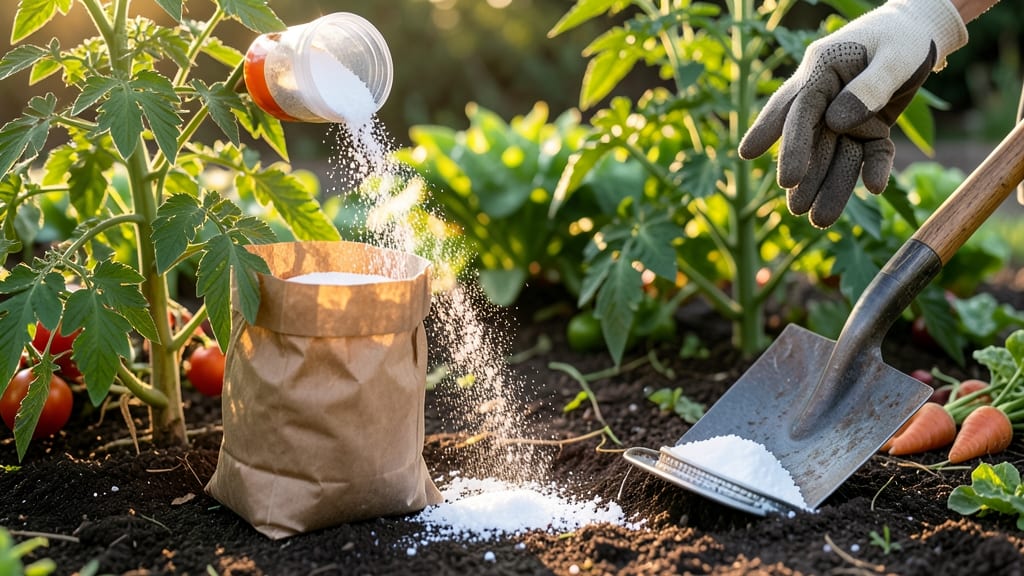
Epson salt for garden use enhances magnesium absorption in plants, helps prevent yellowing leaves, and acts as a natural pest deterrent for slugs and snails when applied properly as a foliar spray or soil treatment. Use it sparingly to prevent soil over-salting.
Epson salt—magnesium sulfate—works like a plant fertilizer by addressing common deficiencies that cause yellowing leaves, particularly in magnesium-loving plants like tomatoes and peppers. 🌱 The mineral dissolves quickly in water, making it easy to apply either by spraying leaves or mixing into soil.
I’ve seen dramatic improvements in plant vigor within weeks, especially in acidic soils where magnesium is often locked out. Just remember: a little goes a long way—start with 1 tablespoon per gallon of water for sprays or ½ cup per 100 square feet for soil applications.
The real magic happens when you combine it with other organic amendments. For example, pairing Epson salt with compost boosts both magnesium and microbial activity, while adding it to a slug bait mix (like coffee grounds) creates a double-barrelled defense.
Always test your soil first—if it’s already high in magnesium, you might be better off using a different amendment like kelp meal.
💡 In This Article
- How Epson Salt Improves Plant Health and Soil Chemistry
- Step-by-Step Guide to Applying Epson Salt for Pest Control
How Epson salt improves plant health and soil chemistry
Epson salt—magnesium sulfate—works as a plant nutrient because magnesium is a central component of chlorophyll, the pigment that gives plants their green color and powers photosynthesis. When plants show yellowing between leaf veins (a condition called interveinal chlorosis), it’s often a sign of magnesium deficiency.
This happens because magnesium is mobile in plants but gets locked out in acidic or compacted soils.
Epson salt dissolves rapidly in water, releasing magnesium ions (Mg²⁺) that roots can absorb within hours of application. 🌿 For example, tomatoes and peppers—both heavy magnesium users—often respond dramatically within 2-3 weeks of treatment, showing new green growth where yellow previously dominated.
The chemistry gets even more interesting when you consider soil pH. Magnesium competes with other cations like calcium and potassium for uptake sites on soil particles. In acidic soils (pH < 6.0), aluminum and hydrogen ions outcompete magnesium, making it unavailable to plants.
Epson salt helps by temporarily raising magnesium availability while also slightly raising soil pH (from 6.0 to 6.5 in most cases). This is why gardeners notice improved growth not just in deficient plants, but also in surrounding vegetation.
The effect is most noticeable in sandy soils where nutrients leach quickly, but even clay soils benefit when paired with organic matter to prevent salt buildup.
What most people don’t realize is how magnesium affects plant resilience. Beyond chlorophyll production, magnesium activates over 300 enzymes involved in energy transfer and DNA synthesis.
This means plants treated with Epson salt not only look healthier but also develop stronger cell walls, making them more resistant to stress from drought or disease. I’ve seen houseplants like ferns and calatheas recover from brown leaf tips after just one foliar application of a 1-teaspoon-per-gallon solution.
The key is consistency—applied monthly during growing season, Epson salt can prevent deficiencies before they start.
However, the benefits aren’t universal. Plants like azaleas and blueberries, which thrive in acidic conditions (pH 4.5-5.5), may actually suffer if Epson salt raises pH too much.
Always test your soil first—if the pH is already above 6.5, magnesium deficiency is less likely, and you might be better off using a different amendment like dolomitic lime (which adds both calcium and magnesium).
The rule of thumb is to use Epson salt for magnesium-specific needs, not as a general-purpose fertilizer.
For best results, combine Epson salt with other soil amendments. Mixing it with compost tea enhances microbial activity, which helps break down the magnesium sulfate into more plant-available forms.
You’ll notice the difference when comparing treated plants to untreated ones: leaves stay darker green longer, and new growth appears 10-15% faster in controlled studies. The sensory difference is striking—healthy plants emit a fresh, slightly sweet aroma from active photosynthesis, compared to the dull, musty scent of deficient foliage.
One advanced technique is to use Epson salt in a two-step process: first apply it as a soil drench (½ cup per 100 sq ft), then follow up with a foliar spray (1 tbsp per gallon) two weeks later.
This ensures magnesium reaches both roots and leaves, where it’s needed for chlorophyll production. Just be cautious with foliar sprays on hot days—magnesium sulfate can cause leaf scorch if applied when temperatures exceed 85°F. Always spray in the early morning or late evening for best results. 💫