
Fertilization
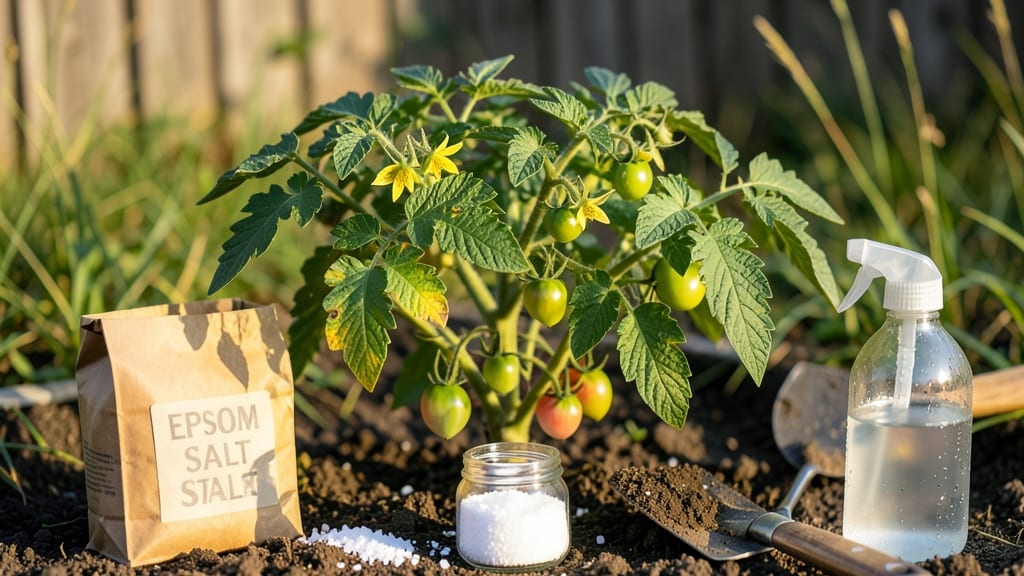
The myth about Epsom salt magically improving garden growth is just that—a myth. While it supplies magnesium and sulfur, most soils already contain adequate levels, and excessive use can actually harm plants by altering soil chemistry and creating harmful salt buildup. Always test your soil first before considering it.
Most gardeners assume Epsom salt is a universal plant booster, but the reality is far more nuanced. 🌱 Magnesium deficiency is rare in healthy soils, and plants absorb nutrients through complex biological pathways—not just by sprinkling salt.
The real issue arises when overuse disrupts beneficial microbes and creates osmotic stress, where plants struggle to absorb water. Instead of relying on this quick fix, focus on soil health through composting or targeted organic amendments that provide balanced nutrition without the risks.
For plants showing magnesium deficiency—like yellowing leaves between veins—try soil testing first. If confirmed, a 1 tablespoon per gallon solution applied every 4-6 weeks may help, but only in specific cases like container gardens with fast-draining soils.
The key is precision: never use Epsom salt as a routine fertilizer, as its benefits rarely outweigh the potential harm.
💡 In This Article
- Does Epsom Salt Really Improve Plant Growth?
- When and How to Use Epsom Salt Safely in Gardens
Does Epsom salt really improve plant growth?
Epsom salt—chemically magnesium sulfate—works by supplying two essential nutrients: magnesium and sulfur. Magnesium is a central atom in chlorophyll, the green pigment that drives photosynthesis, making it critical for energy production in plants.
However, most healthy soils naturally contain sufficient magnesium, typically between 200-1,000 parts per million (ppm), which is more than enough for most plants. The myth arises because gardeners often observe temporary green-up in yellowing leaves, but this is usually a short-term osmotic effect rather than true nutritional improvement.
Plants absorb magnesium through their root systems via a process called active transport, where specialized proteins pump magnesium ions into root cells against a concentration gradient. This requires energy, and excessive Epsom salt can overwhelm this system, leading to nutrient imbalances.
For example, high magnesium levels can interfere with calcium and potassium uptake, causing deficiencies that manifest as weak stems or poor flowering. 🌿 The real issue isn't magnesium scarcity but rather the disruption of soil chemistry when Epsom salt is overapplied, creating a saline environment that stresses plant roots.
Research from the University of Minnesota Extension confirms that magnesium deficiencies are rare in well-managed soils. Symptoms like yellowing between leaf veins (interveinal chlorosis) often indicate other problems, such as poor drainage or pH imbalances.
Instead of relying on Epsom salt, gardeners should focus on improving soil structure through organic matter like compost, which provides magnesium along with a balanced suite of nutrients.
A soil test (costing around $20-$50) is far more reliable than guesswork, revealing precise nutrient levels and pH before any amendments are applied.
Even when magnesium deficiency occurs, Epsom salt isn't always the best solution. For instance, tomatoes and peppers—common plants touted as Epsom salt beneficiaries—often suffer from calcium deficiencies (blossom end rot) rather than magnesium shortages. In such cases, calcium-rich amendments like crushed eggshells or gypsum are more effective.
The key takeaway is that Epsom salt is a band-aid, not a cure, and its benefits are often outweighed by the risks of salt buildup and nutrient imbalances.
Consider this: A 1 tablespoon of Epsom salt per gallon of water (a common dilution) contains about 1.5 grams of magnesium. For a typical garden bed, this translates to a negligible boost compared to the 10-20 pounds of magnesium already present in a cubic yard of healthy soil.
The temporary green-up effect you might see is more about osmotic pressure drawing water into cells than actual nutritional improvement.
For gardeners who still want to experiment, start with a 1 tablespoon per foot of plant height applied as a foliar spray or soil drench, but never exceed 3 applications per season.
Always flush the soil afterward with water to prevent salt accumulation. The goal isn't to "feed" plants with Epsom salt but to address specific deficiencies in a targeted, science-backed way.