
Tools
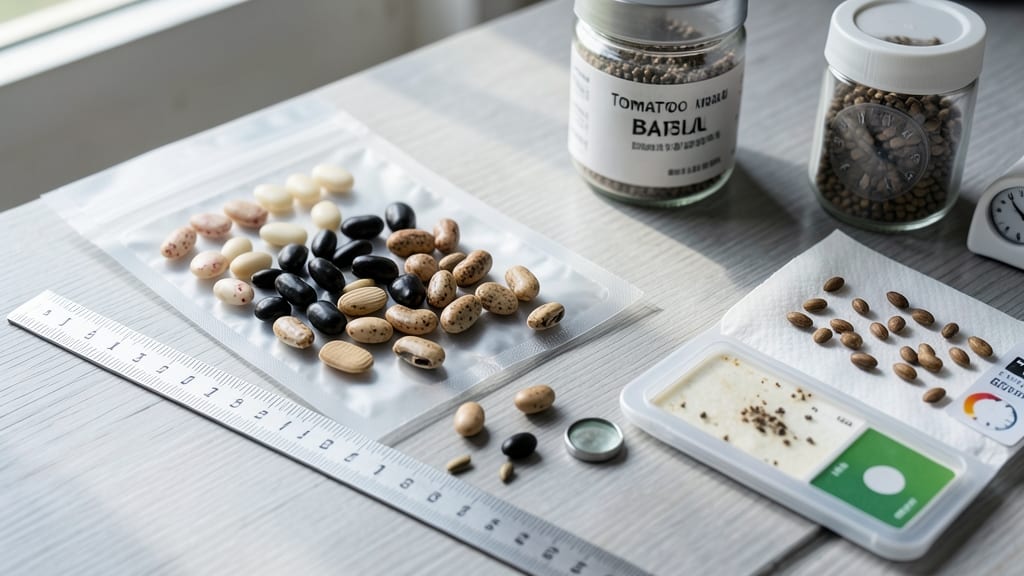
Garden seeds do go bad over time, with most losing viability within 1–5 years, depending on storage conditions. Test germination rates by planting a few seeds in damp paper towels to confirm freshness before sowing entire batches.
Seeds degrade because their natural oils and enzymes break down over time—especially when exposed to heat, moisture, or oxygen. 🌱 A cool, dry environment (like a sealed container in the fridge) can extend shelf life, while humidity or temperature swings accelerate spoilage.
Even "old" seeds might still sprout, but their germination rates drop dramatically, meaning fewer plants per packet.
For example, tomato seeds often stay viable for 4–5 years, while lettuce seeds may only last 1–2 years. The paper towel test is the fastest way to check: fold a damp paper towel, place seeds between layers, and wait 5–7 days.
If most seeds sprout, they're still good to plant. This simple test saves you from wasting entire seed packets on weak or non-viable seeds.
💡 In This Article
- Seed Viability Factors: Moisture, Temperature, and Storage Conditions
- Germination Testing Methods for Old Seed Packets
Seed viability factors: moisture, temperature, and storage conditions
Seeds degrade primarily due to enzymatic activity and cellular breakdown triggered by exposure to oxygen, moisture, and warmth. Inside a seed, enzymes begin breaking down stored nutrients (like starches and proteins) the moment it's harvested, even if it's still dormant.
This process accelerates when seeds encounter humidity over 40% or temperatures above 70°F, which is why pantry storage often shortens shelf life compared to refrigeration.
The science behind seed dormancy involves a delicate balance of moisture and temperature. Seeds enter a state of metabolic dormancy when dried to 5-10% moisture content, slowing down enzymatic activity. However, even in ideal conditions, seeds lose viability over time because their cell membranes gradually lose integrity.
For example, tomato seeds can remain viable for 4-5 years in optimal conditions, while carrot seeds typically last only 1-2 years due to their higher oil content, which attracts oxygen and speeds up oxidation.
Storage environment makes all the difference. A cool (35-40°F) and dry (30-40% humidity) space, like a sealed container in the fridge or freezer, can extend seed life significantly.
The International Seed Testing Association recommends storing seeds in airtight, moisture-proof containers with desiccant packets to maintain these conditions. Even a small increase to 80°F can halve a seed's shelf life, while exposure to 90% humidity can cause mold growth within weeks.
Light exposure also plays a role, though it's less critical than moisture and temperature. Seeds stored in opaque containers remain viable longer than those in clear packaging, which allows UV light to degrade cellular structures.
The combination of these factors explains why seeds purchased years ago might still sprout—if stored properly—but with dramatically reduced germination rates, often below 50% after their prime.
For gardeners, this means checking seed packets for expiration dates (if provided) and conducting germination tests before planting. The paper towel method is particularly effective for quick assessments, revealing whether seeds have lost viability due to improper storage conditions over time. 🌱
Consider this: A packet of marigold seeds stored at 75°F with 60% humidity may lose 20% viability per year, while the same seeds kept at 40°F with 35% humidity could retain 80% viability after 5 years.
These differences highlight why professional seed banks use climate-controlled vaults to preserve genetic material for decades.