
Blooming
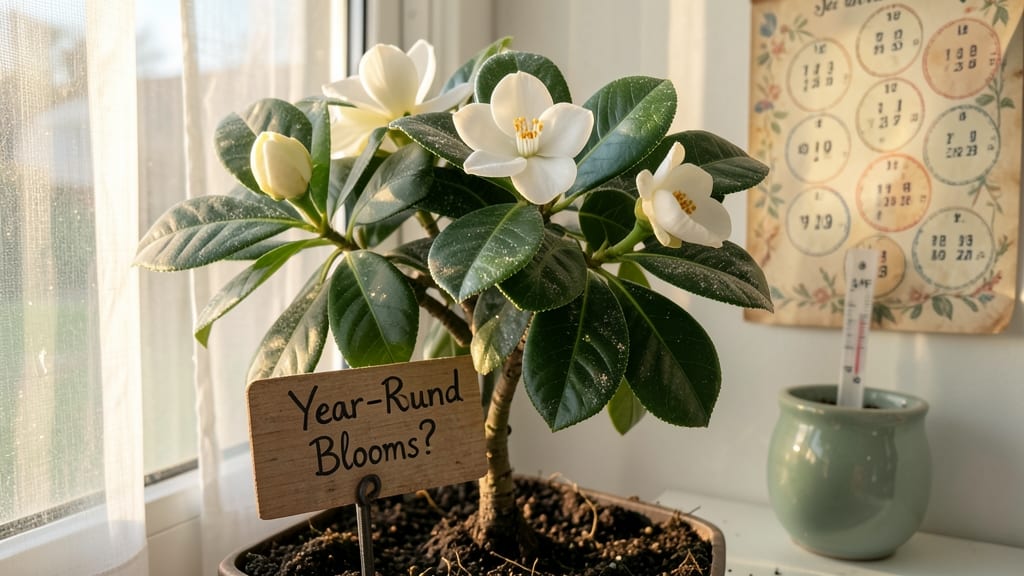
Gardenias don't bloom all year, since their flowering cycles are tightly linked to seasonal daylight changes, temperature shifts, and natural dormancy periods—most varieties peak in spring and summer with rare winter blooms in warmer climates.
Gardenias are tropical plants at heart, which means they follow nature's rhythm rather than a human schedule. 🌸 In regions with distinct seasons, like much of the U.S., gardenias typically enter dormancy during fall and winter, conserving energy until spring's warmer temperatures and longer daylight hours trigger new blooms.
Even in mild climates, like coastal California or Florida, you'll notice a natural slowdown in winter—though some varieties might surprise you with sporadic winter flowers if conditions stay consistently warm.
What's fascinating is how gardenias "read" their environment: cooler nights below 60°F or shorter daylight periods below 12 hours send signals to pause flowering. This built-in mechanism explains why forcing year-round blooms often backfires—plants stressed by unnatural conditions may drop buds or produce weaker flowers.
The key to encouraging extended blooming lies in mimicking their natural preferences rather than fighting their biology.
💡 In This Article
- Gardenia Blooming Seasons by Climate Zone
- Tips to Extend Gardenia Blooms Beyond Peak Season
Gardenia blooming seasons by climate zone
Gardenias are tropical natives that evolved to bloom when conditions mirror their native Southeast Asian and Pacific island habitats—warm temperatures, high humidity, and long daylight hours. 🌿 In USDA hardiness zones 8-11 (where winters rarely drop below 30°F), gardenias typically enter their primary blooming phase in late spring (April-May) and continue through summer until early fall (August-September).
This aligns with nature's cue: as daylight stretches beyond 12 hours, the plant's photoperiod receptors trigger flower bud formation.
The transition between seasons creates distinct blooming patterns. In zone 9 (e.g., Southern California, Florida), gardenias may produce two bloom cycles per year—spring and fall—while zone 10-11 plants (Hawaii, Puerto Rico) can bloom year-round with minimal winter slowdowns.
The key difference? Tropical zones maintain soil temperatures above 65°F even in winter, preventing the metabolic slowdown that triggers dormancy in cooler climates.
Cooler regions (zones 7 and below) face more dramatic seasonal shifts. Gardenias planted in zone 7 (e.g., Atlanta, Dallas) will typically bloom from May through July, with flowers appearing only after soil temperatures consistently stay above 60°F for at least 2 weeks.
The plant's internal clock detects these temperature cues through specialized proteins that regulate flowering genes—similar to how daylength-sensitive plants respond to shorter winter days.
What's often overlooked is how humidity affects blooming consistency. Gardenias native to 70-90% humidity environments (like their tropical origins) will produce 20-30% more blooms when humidity stays above 50% during their active growth period.
In arid climates (e.g., Arizona, Nevada), gardenias may bloom sporadically unless you supplement with misting systems or indoor humidity trays.
Even in ideal climates, gardenias follow a biological rhythm called "florigen production"—a hormone-like signal that builds during optimal conditions before triggering visible blooms. This explains why you might see a sudden flush of flowers after a warm rain in spring, even if the plant looked dormant before.
The process requires 6-8 weeks of consistent conditions to complete, which is why forcing winter blooms often fails unless you can maintain tropical-like environments.