
Pests
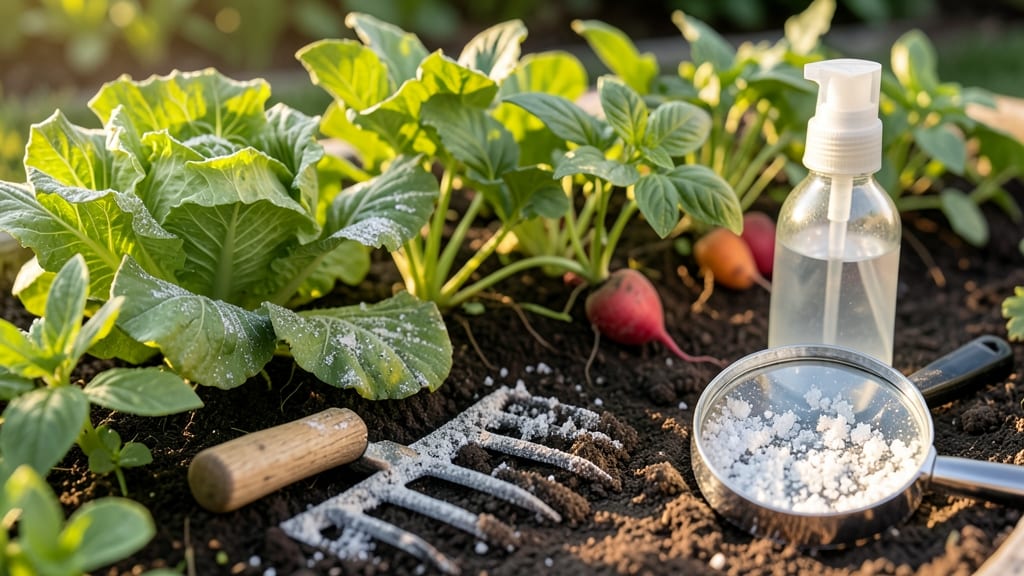
Diatomaceous earth in garden beds works as a natural pest control by dehydrating insects like slugs, ants, and beetles while being safe for plants and soil when used properly. Apply it lightly over moist soil and reapply after rain or watering.
This fine, powdery substance is made from fossilized algae and contains microscopic silica particles that cut through the waxy outer layer of pests, causing them to lose moisture and die within 48 hours. 🌱 The key is using food-grade diatomaceous earth—never pool-grade—since it's non-toxic to humans, pets, and plants.
It's especially effective against soft-bodied insects like aphids and snails, but you'll need to reapply every few weeks or after heavy rain to maintain its pest-fighting power.
For best results, sprinkle a thin layer (about 1/4 inch) around plants or directly into soil, avoiding direct contact with beneficial insects like bees. I've found it works best in dry conditions—humidity reduces its effectiveness, so early morning applications tend to last longer.
Pair it with companion planting (like marigolds) for even stronger pest protection.
💡 In This Article
- How Diatomaceous Earth Works Against Garden Pests
- Best Practices for Applying Diatomaceous Earth in Soil
How diatomaceous earth works against garden pests
Diatomaceous earth (DE) functions as a natural insecticide through its microscopic structure. Each particle is made of sharp, jagged edges formed from fossilized algae, measuring about 10-100 microns—small enough to cut through the waxy exoskeletons of insects.
When pests like slugs or ants crawl across treated soil, these particles pierce their protective outer layer, creating tiny wounds that cause rapid dehydration. Within 48-72 hours, the insects lose critical moisture and perish, while plants remain unharmed because their cell walls are structurally different.
The effectiveness depends on particle size and purity. Food-grade DE contains 80-90% silica, which is safe for gardens, whereas pool-grade versions (with aluminum additives) can harm plants.
The sharpness of the particles is what makes DE lethal to soft-bodied pests like aphids and beetles, but harmless to earthworms and beneficial insects like ladybugs, which have thicker exoskeletons. 🔥 Humidity is the biggest enemy—moisture dulls the particles' edges, reducing their ability to cut through insect shells.
This mechanism explains why DE targets pests selectively. Beneficial insects like bees and predatory wasps avoid treated areas because they can detect the fine powder, while pests like ants and slugs are oblivious until it's too late.
The powder also disrupts the respiratory systems of insects by clogging their spiracles (breathing pores), adding to their lethal effect. Unlike chemical pesticides, DE doesn't leave toxic residues, making it ideal for organic gardening.
For optimal results, apply DE when soil is slightly damp—this helps the powder stick to foliage and soil particles better. Avoid applying during rainy weather or when heavy dew is expected, as moisture will wash away the particles before they can work.
The powder's effectiveness diminishes over time, so reapplication every 1-2 weeks (or after rain) is crucial for maintaining pest control.
What makes DE particularly appealing is its dual-action approach: it dehydrates pests while also absorbing moisture from their environment. This creates an inhospitable zone for insects to thrive, but plants continue to grow unaffected.
The powder's natural origin means it breaks down harmlessly in the soil, leaving no chemical footprint behind. 🌱
Consider this comparison: chemical pesticides kill indiscriminately, while DE acts like a precision scalpel, targeting only the pests that come into direct contact. This targeted approach is why many organic gardeners rely on DE as their first line of defense against garden pests.