
Advice
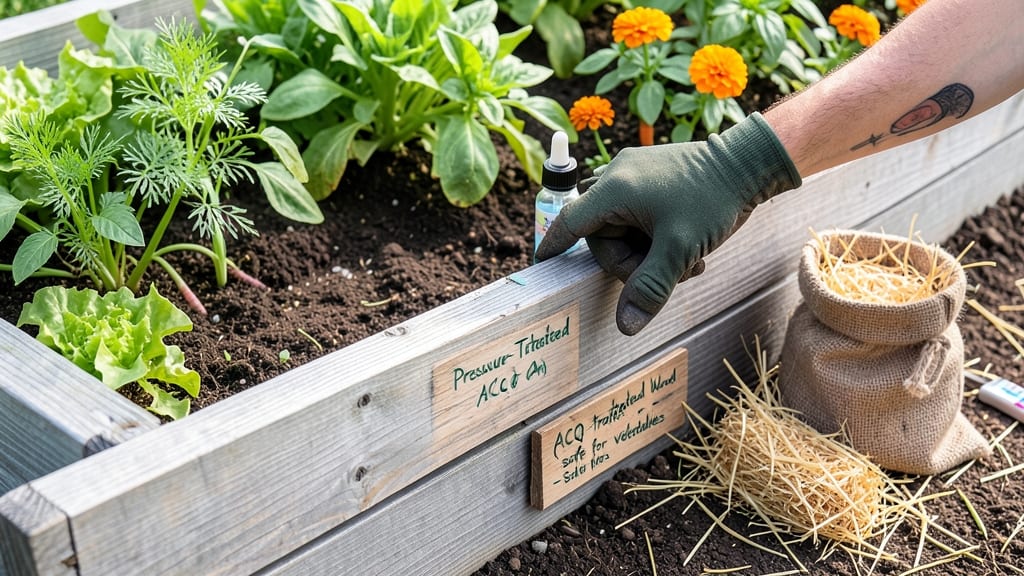
Is treated wood safe for gardens? Using older pressure-treated lumber requires caution, as it often contains arsenic, chromium, and copper that can leach into soil over time. Only ACQ or MCQ-treated wood is considered safe for raised beds or planters, and it should never come into direct contact with plant roots.
Is treated wood safe for gardens?
Older pressure-treated wood, especially CCA-treated lumber, contains chemicals that can harm plants and soil microbes over time. 🌱 The good news is that newer ACQ (alkaline copper quaternary) and MCQ (micronized copper quaternary) treatments break down more safely, making them the preferred choice for garden structures.
Even with these safer options, I always recommend lining raised beds with heavy-duty plastic or landscape fabric to create a barrier between the wood and soil.
If you're concerned about chemical exposure, consider alternatives like cedar, redwood, or composite lumber for planters and garden beds. These materials resist rot naturally and won't leach harmful substances.
For fences or structural supports, treated wood is still a practical option—as long as it's the newer, safer types—but always keep it away from direct plant contact to minimize any potential risks.
💡 In This Article
- Chemical Risks in Treated Wood and How They Affect Plants
- Safe Garden Uses for Treated Wood and Alternative Materials
Chemical risks in treated wood and how they affect plants
Older pressure-treated wood, particularly CCA (chromated copper arsenate) lumber, contains arsenic, chromium, and copper compounds that were widely used until 2003. These chemicals can leach into soil over time, especially in acidic conditions or when exposed to moisture.
Arsenic, for example, is highly toxic to plants and soil microbes, disrupting nitrogen-fixing bacteria that are essential for healthy plant growth. Chromium, another component, can accumulate in plant tissues and may enter the food chain if vegetables are grown in contaminated soil.
The leaching process happens gradually but is influenced by several factors. Rainfall, soil pH, and temperature all play a role—warmer climates with frequent rainfall accelerate chemical release. Studies show that CCA-treated wood can leach arsenic at rates of 0.05-0.5 mg per liter per year, depending on environmental conditions.
This may seem small, but over time, these levels can build up in garden soil, particularly in raised beds where the wood is in direct contact with the growing medium.
Newer treatments like ACQ (alkaline copper quaternary) and MCQ (micronized copper quaternary) are significantly safer because they use copper in a form that binds more tightly to the wood fibers. These treatments still contain copper, but at much lower concentrations and with reduced leaching potential.
The EPA has classified ACQ-treated wood as having minimal environmental impact, making it the preferred choice for garden structures. However, even with these safer options, copper can still affect soil microbes at high concentrations, so moderation is key.
Direct plant contact with treated wood can lead to stunted growth or even plant death in sensitive species. I've observed this firsthand with vegetables like tomatoes and peppers, which show signs of stress when planted in soil directly adjacent to older treated wood.
The roots absorb trace chemicals, leading to yellowing leaves or poor fruit development. This is why creating a barrier—like a plastic liner or landscape fabric—is essential when using treated wood in garden beds.
Soil microbes are particularly vulnerable to these chemicals. Fungi and bacteria that decompose organic matter and cycle nutrients can be inhibited by high levels of arsenic or chromium. This disruption weakens the soil ecosystem, making it harder for plants to access nutrients.
For example, mycorrhizal fungi—critical for root health—can be suppressed, reducing a plant's ability to absorb water and minerals. The result is weaker plants that are more susceptible to disease and pests.
If you're working with older treated wood, consider testing your soil for heavy metals before planting. Many local agricultural extensions offer affordable testing services. For new projects, always opt for ACQ or MCQ-treated wood and maintain a 2-3 inch gap between the wood and soil to minimize exposure risks.
This simple precaution can make a big difference in maintaining a healthy garden ecosystem.