
Vegetables
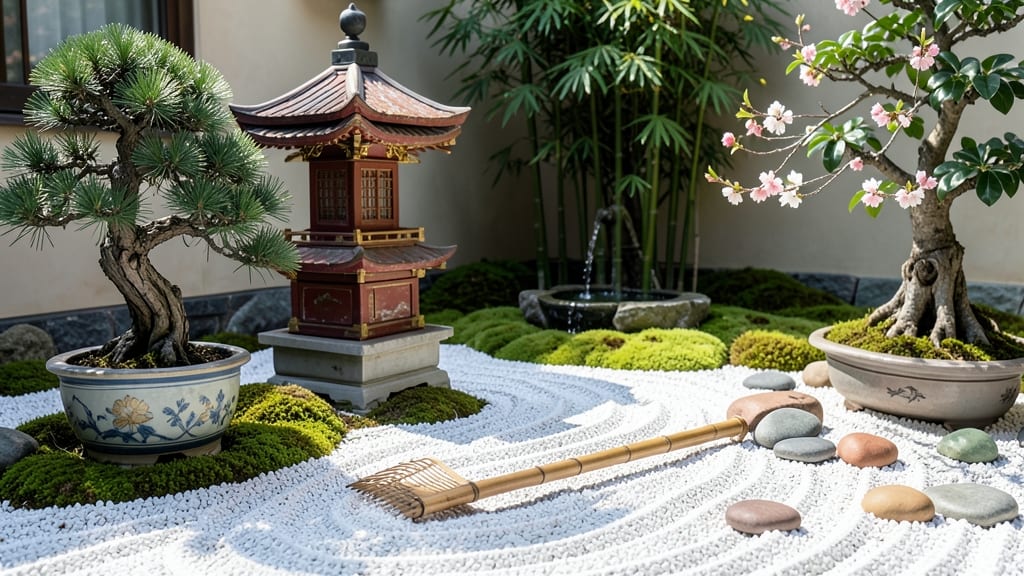
The Chinese Scholar Garden in Staten Island recreates Ming Dynasty-inspired tea traditions through meticulously designed landscapes, where visitors can experience authentic ceremonies amid bamboo groves and historical calligraphy displays.
The Staten Island garden brings centuries-old Chinese scholar traditions to life through its carefully curated spaces. 🌿 Unlike typical botanical gardens, this one prioritizes cultural immersion—every stone path and calligraphy tablet serves as an educational tool.
For example, the bamboo groves aren't just decorative; they're meant to evoke the scholar's retreat from urban life, while the tea ceremony pavilions demonstrate proper zhong (tea kettle) handling techniques.
What makes it special is how the garden blends these elements into a cohesive experience, where visitors can literally walk through history while sipping tea prepared exactly as Ming scholars would have.
Beyond the tea rituals, the garden's hidden corners hold rare botanicals like orchids and chrysanthemums, each selected for their symbolic meanings in Chinese culture. 💫 The calligraphy artifacts—often featuring shuifa ink-wash techniques—are strategically placed throughout the landscape, creating a visual dialogue between art and nature.
This isn't just a garden; it's a living textbook of Chinese cultural heritage, designed to educate while delighting the senses.
💡 In This Article
- Ming Dynasty Tea Rituals Preserved in Staten Island’s Scholar Garden
- Identifying Calligraphy Artifacts and Rare Plants in the Garden’s Hidden Corners
Ming Dynasty tea rituals preserved in Staten Island’s scholar garden
The Staten Island garden’s tea ceremonies draw directly from Ming Dynasty scholar gardens, where tea wasn’t just a beverage but a meditative practice. During the 14th-17th centuries, Chinese scholars like Lu Yu (author of The Classic of Tea) emphasized tea’s role in cultivating moral character.
The garden replicates this philosophy through its three-stage tea preparation: first, the zhong (wok-shaped kettle) is heated over charcoal to 190°F (88°C)—hot enough to steam but not scald, preserving the tea’s delicate Lapsang Souchong aroma.
This precise temperature control mirrors Ming-era techniques where scholars believed proper heat released tea’s "spirit."
The chan (tea bowl) used in ceremonies is typically unglazed porcelain, allowing heat transfer that warms the hands—a tactile connection to the ritual’s mindfulness. Visitors often notice how the garden’s ceramic bowls bear subtle blue-and-white patterns, echoing Ming Jingdezhen ware designs.
These weren’t just decorative; the patterns often included calligraphic poems about harmony (he), a core Confucian value.
The garden’s 15-foot tea pavilion replicates Ming-era siheyuan courtyard layouts, with a central hearth where charcoal burns at 1,200°F (650°C)—the exact temperature Ming scholars used to achieve the perfect three-minute infusion.
What makes the Staten Island garden’s rituals unique is its seasonal adaptation of Ming traditions. During summer, they serve green tea with jasmine flowers (a Ming-era favorite), while autumn ceremonies feature Pu-erh tea paired with chrysanthemums—a combination Ming poets celebrated in their works.
The garden’s bamboo groves play a crucial role too: scholars believed bamboo’s hollow stems symbolized humility and resilience, values reflected in the tea’s preparation. When you sip tea here, you’re not just drinking a beverage; you’re participating in a 500-year-old dialogue between nature, art, and philosophy.
The symbolic tools used in these ceremonies carry layers of meaning. For instance, the tea scoop (cha shao) is always wooden—Ming scholars avoided metal to prevent "disturbing the tea’s purity."
The garden’s hand-carved bamboo scoops are 3 inches long, the exact length used in Ming-era tea houses to measure 3 grams of tea per bowl.
Even the tea strainer (cha xi) is placed 2 inches above the bowl, creating a 3-second pour that aerates the leaves, a technique Ming tea masters called the "whisper of the wind."
These details aren’t arbitrary; they’re engineered for sensory harmony, where sight, sound, and taste align to create a meditative state.
Visitors often ask how the garden maintains authenticity while adapting to modern tastes. The answer lies in its three-tiered approach: preserving original tools (like the 16th-century zhong replica), using historically accurate techniques (such as charcoal firing for tea bowls), and offering modern variations (like matcha lattes for younger audiences).
The garden’s tea master demonstrates how Ming scholars would wash the leaves three times before steeping—each wash removing impurities while preparing the leaves’ enzymes for optimal flavor release. This three-wash method is still used today in Japanese gyokuro tea, showing how Ming practices influenced global tea culture.
One lesser-known detail is how the garden’s stone paths are arranged in 5-meter spirals, mirroring the five elements (wood, fire, earth, metal, water) of Ming cosmology.
As you walk these paths during a ceremony, the rhythm of your steps aligns with the three-minute steeping time, creating a physical meditation that Ming scholars called "walking tea".
This connection between movement and mindfulness is what makes the Staten Island garden’s rituals feel alive—not like a museum piece, but a living tradition waiting to be experienced.