
Tools
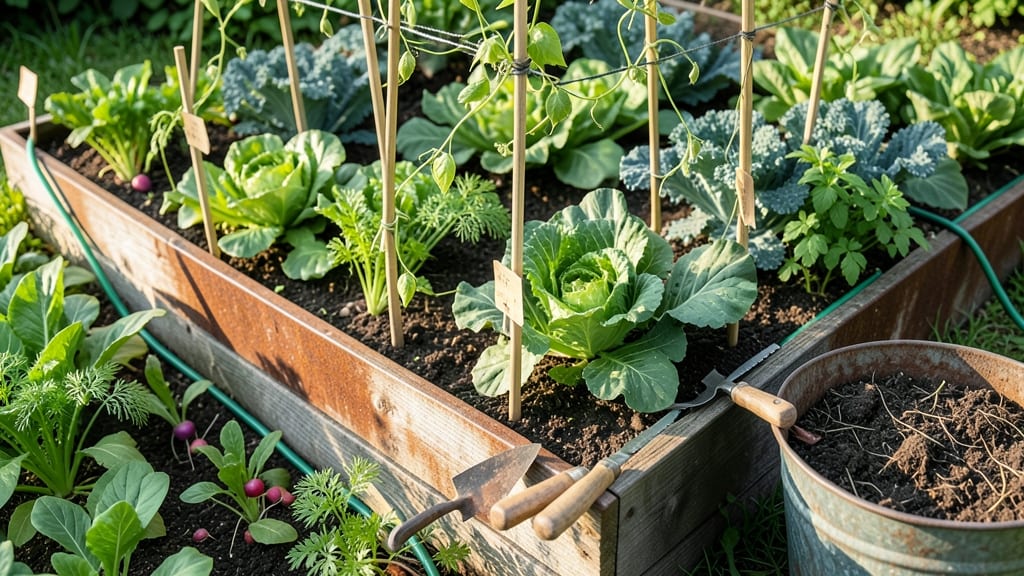
A market garden is a small-scale farming operation that grows high-value, fresh produce for direct sale to local customers, typically using intensive methods on limited land. These farms focus on quick-harvest crops like leafy greens, herbs, and berries instead of large-scale commodity production.
A market garden thrives on proximity and speed—think farmers' markets, CSA boxes, and restaurant deliveries rather than grocery store shelves. 🌱 The real magic happens in the diverse crop rotation and succession planting that keep harvests coming every few weeks.
Unlike traditional farms that prioritize volume, market gardens maximize profit per square foot by growing what sells fastest, like microgreens or specialty herbs, often using organic or regenerative practices to meet consumer demand for transparency.
What sets these operations apart is their labor-intensive approach: hand-weeding, daily harvests, and direct customer relationships replace machinery and bulk storage. Many market gardeners double as educators, teaching workshops on soil health or pest control because their success depends on building loyal local communities.
The payoff? Freshness that beats store-bought produce by days—or even hours.
💡 In This Article
- How Market Gardens Differ From Traditional Farms
- Essential Crops and Techniques for Successful Market Gardening
How market gardens differ from traditional farms
Market gardens operate on a fundamentally different scale than traditional commercial farms.
While large-scale farms often manage hundreds or thousands of acres growing single crops like corn or soybeans, market gardens typically work with less than 5 acres—sometimes just ¼ acre—and focus on 20-50 different crop varieties at once.
This diversity allows them to supply farmers' markets with fresh, seasonal produce every week, whereas commodity farms ship bulk products to distant warehouses. 🌱 The key difference lies in their production goals: market gardens prioritize perishable, high-value crops that sell quickly, while traditional farms optimize for volume and storage efficiency.
The labor intensity is another critical distinction. Market gardens require 20-50 hours of labor per acre per week during peak season, compared to 5-10 hours per acre on conventional farms.
This hands-on approach enables techniques like succession planting—where crops are sown every 2-3 weeks to maintain continuous harvests—rather than relying on seasonal planting blocks.
For example, a market garden might plant lettuce every 10 days to ensure fresh heads for customers, while a traditional farm might plant a single large lettuce field once per season.
Sales channels make the biggest practical difference. Market gardens sell 80-90% of their produce directly to consumers through farmers' markets, CSAs (Community Supported Agriculture), and restaurant partnerships, commanding premium prices for their freshness. Traditional farms, however, typically sell 70-80% to wholesale buyers who negotiate lower prices.
This direct relationship means market gardeners must master marketing as much as farming—often spending 15-20% of their time at markets or managing online sales, compared to 2-5% for large-scale farmers who rely on brokers.
Crop selection reveals the philosophical divide. Market gardens focus on fast-maturing, high-value crops like arugula (30-40 days to harvest), radishes (25 days), and strawberries (60 days), which can be harvested multiple times per season.
Traditional farms grow longer-season crops like wheat (120+ days) or almonds (5+ years to maturity) that require less frequent labor but higher upfront investment.
The sensory difference is striking: a market garden's produce tastes 2-5 days fresher than store-bought, with vibrant colors and textures that disappear within days of harvest.
Technology plays a different role too. While large farms use GPS-guided tractors and automated irrigation systems, market gardens rely on hand tools, drip tape, and shade cloths> to manage microclimates in small spaces.
The soil itself becomes a key differentiator—market gardens often use biointensive methods> like raised beds and compost teas to maintain fertility, while conventional farms may use synthetic fertilizers applied via airplane.
This hands-on soil management creates 30-50% higher organic matter content> in just 2-3 years, leading to sweeter-tasting produce.
Consider this comparison: A traditional corn farm might yield 200 bushels per acre with minimal labor, while a market garden growing the same space with microgreens, herbs, and salad mixes> could generate $50,000-$100,000 per acre annually>—about 10-20 times more revenue per square foot>.
The tradeoff? Market gardens require 5-10x more labor hours> but offer immediate cash flow> and community engagement> that traditional farms rarely experience. 💡