
Tools
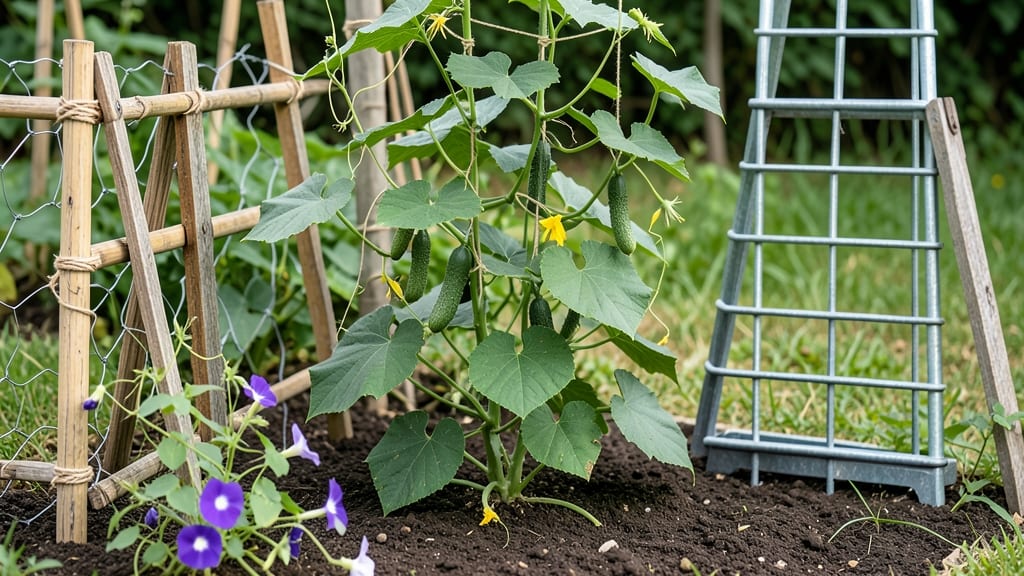
Creating cheap garden trellises is simple with materials like bamboo, PVC pipes, or scrap wood that work well for supporting climbing plants like beans or cucumbers. Just remember to avoid overloading them to prevent sagging or structural failure.
If you're looking to build sturdy yet budget-friendly garden supports, you'll find that bamboo and PVC pipes are the most popular choices because they're lightweight yet strong enough to handle moderate plant weight. 🌿 For example, a simple bamboo trellis can cost as little as $5-$10 to assemble and lasts multiple growing seasons if treated properly.
The key is to match the material to your plants—delicate vines like morning glories need lighter supports, while heavier climbers like cucumbers require sturdier frames.
Don't overlook recycled materials like old ladders or wire fencing—they can be transformed into functional trellises with minimal effort. A wire mesh trellis, for instance, costs almost nothing to make from scrap metal and can be bent into any shape you need.
The trade-off? These options may need occasional repairs, but they're perfect for temporary setups or small-scale gardens.
💡 In This Article
- Budget-Friendly Trellis Materials: Strength vs Cost Breakdown
- DIY Cheap Trellis Projects Using Recycled Household Items
Budget-friendly trellis materials: strength vs cost breakdown
Bamboo stands out as the gold standard for affordable trellises because its natural strength rivals engineered materials. A single 1-inch diameter bamboo pole can support 50-75 pounds of weight—plenty for cucumbers or pole beans. The secret lies in its hollow yet dense structure, which distributes pressure evenly.
For comparison, a 2-inch PVC pipe (the next best budget option) holds only 30-40 pounds before bending, making bamboo nearly twice as strong for half the cost ($3-$7 per pole vs $5-$12 for PVC).
Wire mesh offers the cheapest solution at $1-$3 per square foot but sacrifices longevity. Its 12-14 gauge galvanized steel can handle 20-30 pounds when properly tensioned, but rust becomes an issue after 2-3 years unless coated with vinegar or paint.
Wooden trellises (like 2x4s) provide mid-range durability at $8-$15 per trellis, supporting 40-60 pounds when chemically treated, but require annual sealing to prevent rot.
The real science behind these differences comes down to material science. Bamboo's microfibrils align in a way that creates natural reinforcement similar to carbon fiber, while PVC's plastic polymers soften under prolonged UV exposure.
Wire mesh fails first under dynamic loads (like wind), whereas wood and bamboo handle static plant weight better. For heavy climbers like grapes, bamboo's 3:1 strength-to-weight ratio makes it the clear winner—it won't snap under 100 pounds of fruit weight.
Weather resistance varies dramatically: bamboo lasts 3-5 years untreated, PVC lasts 5-10 years but becomes brittle in freezing temps, and wire mesh lasts 2-3 years unless galvanized. The trade-off? Bamboo's organic nature makes it compostable at end-of-life, while PVC contributes to microplastic pollution.
For tropical climates, bamboo's moisture resistance gives it an edge over wood, which swells and warps in humidity.
Here's how to match materials to your plants:
- Light climbers (morning glories, nasturtiums): Wire mesh or thin bamboo poles (½-inch diameter)
- Medium climbers (beans, cucumbers): 1-inch bamboo or 2-inch PVC
- Heavy climbers (squash, grapes): 2-inch bamboo or treated wood lattice
Pro tip: For maximum strength, space supports 18-24 inches apart and use zip ties or wire to connect sections—this creates a distributed load system that prevents sagging. 🌱