
Plants
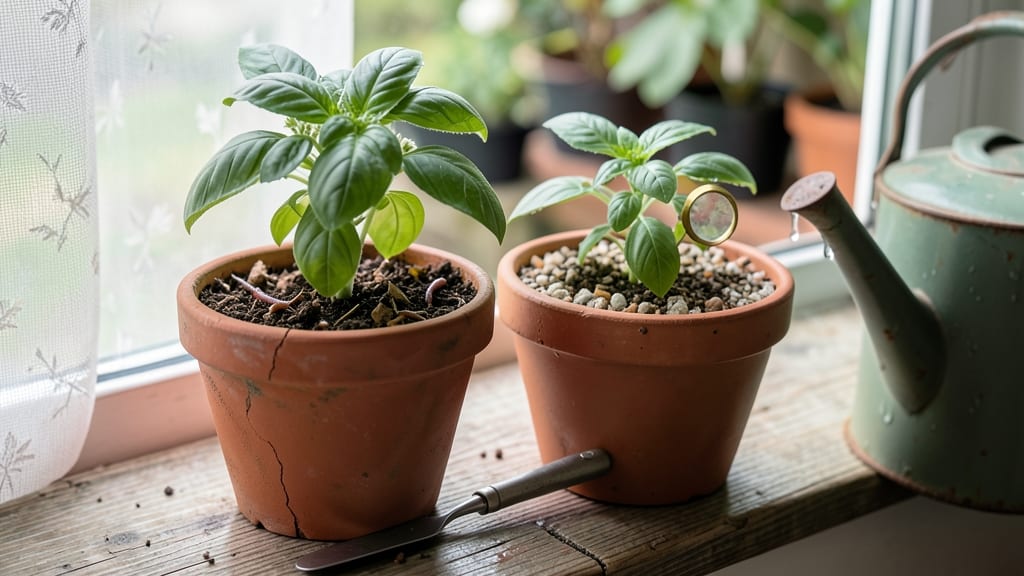
You shouldn't use garden soil for potting plants because it compacts easily, drains poorly, and may contain weeds, pests, or diseases. Instead, mix it with perlite or compost for better aeration and drainage, or use lightweight potting mix designed for containers.
Garden soil's heavy clay or silt content makes it ideal for in-ground planting but disastrous for containers. 🌱 Without proper amendments, roots suffocate from poor airflow, and excess moisture leads to rot.
I've seen even drought-resistant plants struggle when planted in unmodified garden soil—it's like trying to breathe through a wet towel. For best results, blend garden soil with 30-50% perlite or vermiculite to create air pockets, or use a pre-mixed potting soil that's formulated to prevent compaction.
Another critical factor is nutrient balance. Garden soil often lacks the organic matter potted plants need for steady growth, forcing you to fertilize more frequently. Compost or coconut coir can help restore organic material, but they won't fix the structural issues.
The key is creating a mix that mimics the loose, well-draining conditions plants prefer in containers—think of it as giving your plants a lightweight, breathable home rather than a dense, suffocating space.
💡 In This Article
- Why Garden Soil Fails as Potting Mix
- Safe Ways to Modify Garden Soil for Potting
Why garden soil fails as potting mix
Garden soil's structure is fundamentally different from what container plants need. In-ground soil develops a dense, layered composition over years—clay particles tightly pack together, while organic matter decomposes into fine particles that fill the gaps.
This creates a 5-10% air space in natural soil, but when you squeeze it into pots, that air space collapses to just 1-3%, suffocating roots. The result? Roots struggle to absorb oxygen, leading to stunted growth or even root rot when combined with poor drainage.
Drainage is where garden soil truly betrays potted plants. Clay-heavy soils can hold water like a sponge, staying saturated for days. In containers, this means roots sit in waterlogged conditions, cutting off oxygen and inviting fungal diseases.
I've seen snapdragons and petunias in garden soil pots develop black, mushy roots within weeks—yet the same plants thrive in potting mix where water drains freely within 10-15 minutes after watering.
The ideal potting mix should drain completely in under 30 minutes, while garden soil often takes hours or doesn't drain at all.
Nutrient availability becomes another critical issue. Garden soil's nutrients are bound to clay particles, releasing slowly over months. But potted plants need immediate access to nutrients since their root systems are confined.
Without proper amendments, you'll see yellowing leaves (a classic nitrogen deficiency) or stunted growth as plants exhaust available nutrients in just 4-6 weeks. The organic matter in garden soil also breaks down faster in containers due to higher temperatures, leaving plants malnourished.
Weed seeds and pathogens present another hidden danger. A single shovelful of garden soil can contain thousands of weed seeds that will germinate in your pots, competing with your plants for water and nutrients.
Even "clean" looking soil may harbor fungal spores like Phytophthora or bacterial infections that thrive in the moist, warm conditions of containers. These problems are nearly impossible to eliminate once established in your potting mix.
Consider this comparison: Garden soil is like wearing a thick wool sweater in summer—it traps heat and moisture against your skin (roots), while potting mix acts like breathable cotton, allowing air and water to move freely.
The ideal potting mix contains 40-60% organic matter (like peat or coconut coir), 20-30% perlite/vermiculite for aeration, and 10-20% sand or compost for structure. This ratio creates the perfect balance of moisture retention, drainage, and oxygen flow that container plants crave.
The science behind this is all about porosity and capillary action. Potting mixes create larger air pockets (macropores) that allow oxygen to reach roots, while still maintaining smaller pores (micropores) that hold moisture.
Garden soil's tiny particles create a uniform, dense matrix that blocks both air and water movement. It's why even drought-tolerant plants like succulents struggle in garden soil—they can't regulate their moisture intake properly.