
Container Gardens
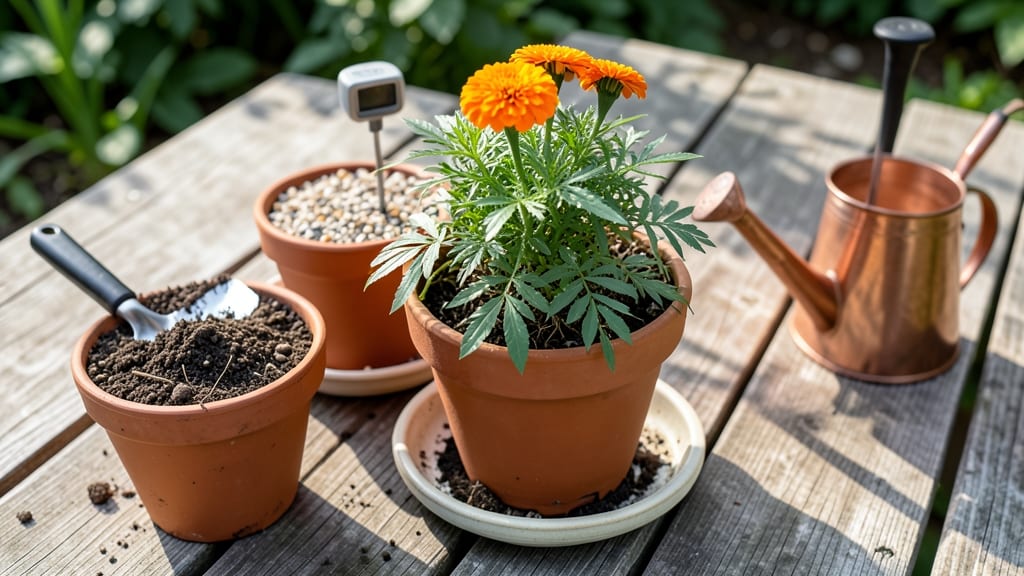
Yes, garden soil can be used in pots—but only when properly amended. On its own, it compacts easily, drains poorly, and lacks the air pockets roots need. To fix this, blend it with perlite, coarse sand, or compost in equal parts, and always use containers with drainage holes to prevent waterlogging and root suffocation.
Garden soil works in pots only if you break up its dense structure—think of it like trying to breathe through a wet sponge. 🌱 The heavy clay or decomposed organic matter in garden soil clumps when confined, blocking water flow and cutting off oxygen to roots.
This creates the perfect storm for root rot and stunted growth. Even plants labeled "hardy" (like hostas or daylilies) struggle without adjustments. The key is adding bulk: perlite or vermiculite creates air pockets, while compost introduces beneficial microbes that garden soil often lacks.
For best results, aim for a 1:1 mix of garden soil with amendments, then test drainage by pouring water through it—if it pools after 10 minutes, add more perlite. Containers without holes are a non-starter; even "drainage-free" designs risk suffocating roots.
Pro tip: Save garden soil for large containers (15+ gallons) where roots have room to spread, and reserve lightweight mixes for smaller pots where drainage is critical.
💡 In This Article
- Why Garden Soil Fails in Pots: Drainage and Compaction Issues
- Best Soil Mixes for Potted Plants: Lightweight Alternatives
Why garden soil fails in pots: drainage and compaction issues
Garden soil’s natural composition makes it a poor fit for containers because its particles pack tightly when confined. Unlike loose potting mixes designed for airflow, garden soil contains 20-40% clay or decomposed organic matter that swells when wet and shrinks when dry.
This creates a dense matrix that blocks water from draining evenly—imagine trying to sip through a straw clogged with mud. 🌧️ The result? Roots suffocate from lack of oxygen, leading to yellowing leaves or wilting even when the soil appears moist.
Compaction worsens in small pots where roots have limited space to expand. A 5-gallon container filled with unamended garden soil can trap water for days, while the same soil in a raised bed drains freely. The difference?
In-ground soil benefits from natural porosity created by soil organisms and seasonal freeze-thaw cycles—something containers lack. Even lightweight garden soils (like sandy loam) become problematic when confined, as their 10-20% organic content breaks down into a gummy texture over time, further reducing drainage.
This compaction disrupts the soil’s capillary action, the process that moves water and nutrients to roots. In garden soil, water clings to particles and pools at the bottom, while potting mixes use perlite or coconut coir to create channels that distribute moisture evenly.
Without these air pockets, roots struggle to absorb water or oxygen, triggering stress signals that manifest as stunted growth or leaf drop. 🌿 The irony? Many garden soils are nutrient-rich but become toxic to roots when waterlogged, as anaerobic conditions promote harmful bacteria.
Plant types reveal the stakes: Succulents and herbs (like basil) need 60% air space in their soil mix, while vegetables (like tomatoes) tolerate slightly denser mixes. Garden soil’s 30-50% air space in-ground drops to 10-20% in pots, making it unsuitable for anything but the hardiest container plants—like ornamental grasses—without amendments.
The fix? Add 20-30% perlite or coarse sand to mimic the aeration of potting soil, while compost introduces beneficial microbes garden soil often lacks.
Consider this: A 10-inch pot filled with garden soil may hold 1 gallon of water after heavy rain, while the same pot with amended mix drains in 30 minutes. The difference isn’t just speed—it’s survival.
Roots in compacted soil consume oxygen 50% faster than in well-aerated mixes, leading to cellular damage within 24 hours of poor drainage. 🚨 This explains why container-grown plants often outgrow their pots faster: they’re starved for space and air.