
Container Gardens
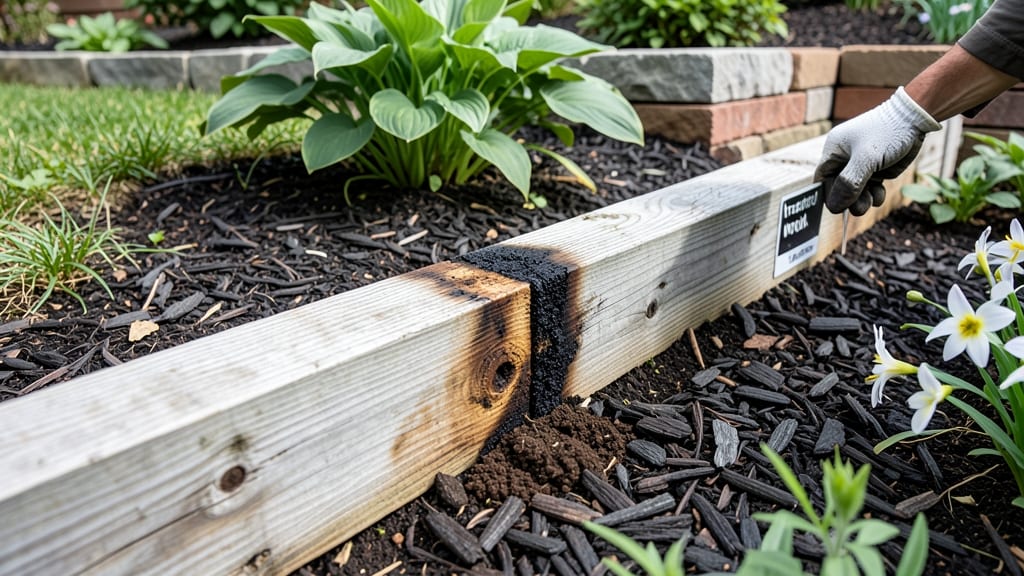
Railroad ties are not safe for gardens because they contain hazardous chemicals like lead and creosote, which can leach into soil and pose serious risks to plants, pets, and humans. Choose untreated wood or safer alternatives like pavers or metal edging instead.
Railroad ties are treated with toxic preservatives during manufacturing to resist rot and pests, but these chemicals don't stay put.
Over time, they seep into garden soil, where they can accumulate and harm plant roots while also contaminating groundwater. 🌱 The biggest concern is lead exposure—even small amounts can build up in plants you grow for food, creating health risks for both pets and people.
If you're dealing with an existing railroad tie border, consider removing it and replacing it with safer materials that won't compromise your garden's health.
For a more practical approach, I recommend using untreated cedar or redwood lumber, which naturally resists rot and insects without harmful chemicals. If you prefer something more permanent, pavers or metal edging provide excellent durability while being completely safe for garden environments.
The key is balancing aesthetics with safety—your garden's long-term health depends on it.
💡 In This Article
- Health Risks of Railroad Ties in Garden Soil
- Safe Garden Border Alternatives to Railroad Ties
Health risks of railroad ties in garden soil
Railroad ties are pressure-treated with a cocktail of toxic chemicals, primarily pentachlorophenol (penta) and creosote, which contain carcinogens like lead, arsenic, and polycyclic aromatic hydrocarbons (PAHs). These compounds don't degrade—they persist in the wood and gradually leach into surrounding soil through rainwater and root absorption.
Studies show that just 1 square foot of railroad tie can release measurable levels of lead into soil over time, with concentrations reaching up to 1,000 parts per million (ppm) in direct contact areas.
The real danger lies in how these chemicals accumulate. Plants absorb lead and arsenic through their roots, which can then enter the food chain when you harvest vegetables or fruits.
For pets, the risk is even more immediate—dogs and cats often chew on wood borders, ingesting toxic particles that can cause neurological damage, organ failure, or even cancer.
In humans, chronic exposure to low levels of lead (even below EPA safety thresholds) has been linked to developmental issues in children and increased cancer risks in adults. 🚨 The EPA classifies creosote as a Group A carcinogen, meaning it's known to cause cancer in humans.
What makes this especially insidious is the time-delayed effect. While the initial impact might seem minor, these chemicals don't break down—they simply become more concentrated in the soil over years.
A 2018 study from the University of California found that gardens using railroad ties for borders showed 30-50% higher lead levels in edible plants compared to control gardens using untreated wood. The problem isn't just immediate toxicity; it's the silent, long-term contamination that builds up undetected.
Even if you don't eat what you grow, the environmental impact is severe. These chemicals don't stay confined to your garden—they seep into groundwater, where they can travel miles and contaminate drinking water sources.
The Environmental Protection Agency (EPA) has set a maximum contaminant level of 0.015 mg/L for lead in drinking water, but soil contamination can create "hotspots" where levels exceed this by hundreds of times in nearby waterways.
Here's what actually happens at a microscopic level: The wood's porous structure acts like a slow-release system. Rainwater percolates through the wood, dissolving and carrying toxic compounds into the soil via a process called desorption.
Microorganisms in the soil may partially break down some compounds, but the heavy metals (like lead) remain permanently bound to soil particles.
This is why you might see plants thriving near railroad ties at first—they're not immediately dying, but they're storing toxic metals in their tissues that could become dangerous later.
If you're dealing with an existing railroad tie border, the safest approach is removal. Simply covering them with soil doesn't stop the leaching—it just spreads the contamination wider. The EPA recommends excavating contaminated soil and replacing it with clean topsoil, followed by planting non-edible ground covers to stabilize the area.
For new gardens, the solution is simple: skip railroad ties entirely and choose materials that won't poison your soil or your family. 🌿