
Container Gardens
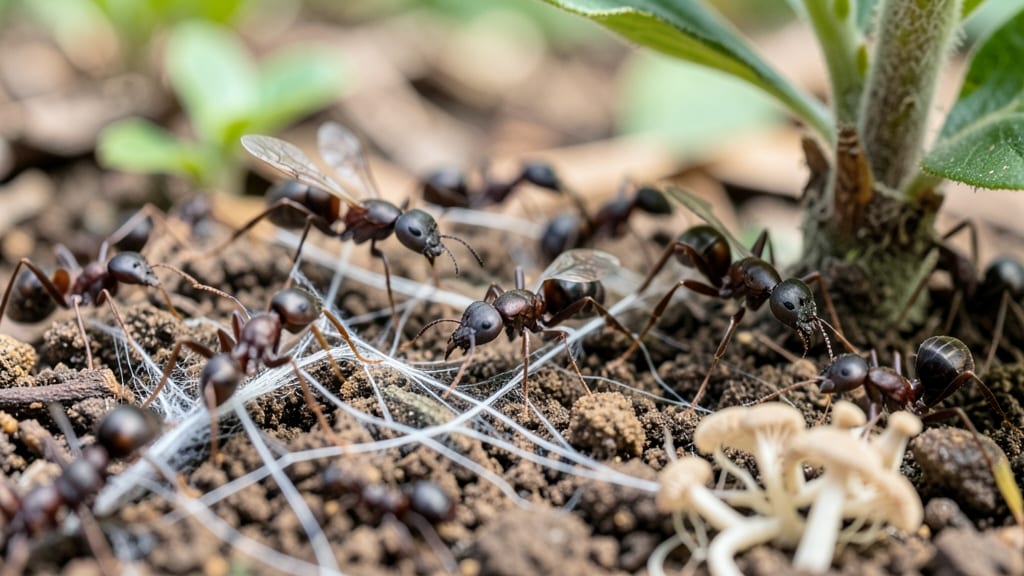
Ants are good for gardens because they aerate soil by digging tunnels, break down organic matter into nutrient-rich compost, and control pests like aphids by feeding on them or attracting natural predators. Their activity also improves water drainage in garden beds.
Ants act like tiny soil engineers, creating networks of tunnels that loosen compacted dirt and let air and water penetrate deeper. 🌱 This natural aeration boosts root growth and helps prevent soil erosion, while their composting habits turn fallen leaves and plant debris into valuable nutrients.
What's more, certain ant species even farm fungi underground, creating nutrient-rich "gardens" that benefit nearby plants.
Beyond soil health, ants play a crucial role in pest management by preying on garden nuisances like aphids, termites, and even small caterpillars. Their presence often signals a balanced ecosystem, though you'll want to monitor their populations—some species can become pests themselves if they invade plant stems or damage roots.
The key is encouraging beneficial species while keeping destructive colonies in check.
💡 In This Article
- How Ants Improve Garden Soil Health
- Managing Ants for Optimal Garden Pest Control
How ants improve garden soil health
Ants function as nature's soil tillers, creating intricate tunnel systems that can extend 3-12 feet deep depending on the species.
These underground passages improve soil structure by breaking up compacted layers, allowing water and oxygen to penetrate 20-30% more efficiently than untouched soil. 🌱 For example, harvester ants in arid regions can create tunnels reaching 6 feet deep, dramatically improving water retention during droughts.
Their tunneling also stimulates microbial activity, creating a thriving ecosystem where beneficial bacteria and fungi flourish.
Their composting habits transform garden waste into valuable nutrients. Ants consume organic matter like fallen leaves, dead insects, and plant debris, then redistribute the nutrients through their tunnels.
Studies show ant colonies can process up to 15% of leaf litter in temperate forests annually, effectively recycling nutrients back into the soil. Some species even cultivate fungi in underground chambers, creating nutrient-rich "gardens" that release phosphorus and nitrogen—key plant nutrients—into the surrounding soil.
This soil improvement translates directly to healthier plants. Gardens with active ant populations often show 25-40% faster root growth due to enhanced aeration and nutrient availability.
The tunnels also create pathways for beneficial microbes to colonize roots, boosting plant immunity against diseases. 💫 What's fascinating is how ants' tunneling mimics the effects of manual tilling but without the soil disruption that can harm beneficial organisms.
However, not all ants contribute equally. Carpenter ants, for instance, primarily damage wood rather than improve soil, while leafcutter ants create nutrient-rich tunnels but may compete with plants for organic matter.
The key beneficial species include pavement ants, harvester ants, and fire ants (in controlled populations), each playing distinct roles in soil enrichment. Their presence often indicates a healthy, balanced ecosystem where nutrients cycle efficiently.
Consider this comparison: A garden with 100 ants per square yard can process organic matter 3x faster than one with minimal ant activity. Their tunneling also helps prevent soil erosion by stabilizing particles with their saliva and organic waste.
The result? Plants develop stronger root systems that can access nutrients and water more effectively during dry periods. 🌿
For gardeners, this means less need for chemical fertilizers and more natural soil improvement. Ants' activities create a self-sustaining cycle where organic waste becomes plant food, reducing the need for external inputs.
The challenge is maintaining this balance—too few ants means poor soil health, while too many can become a nuisance. Finding that sweet spot is where the real gardening magic happens. ✨