
Planting
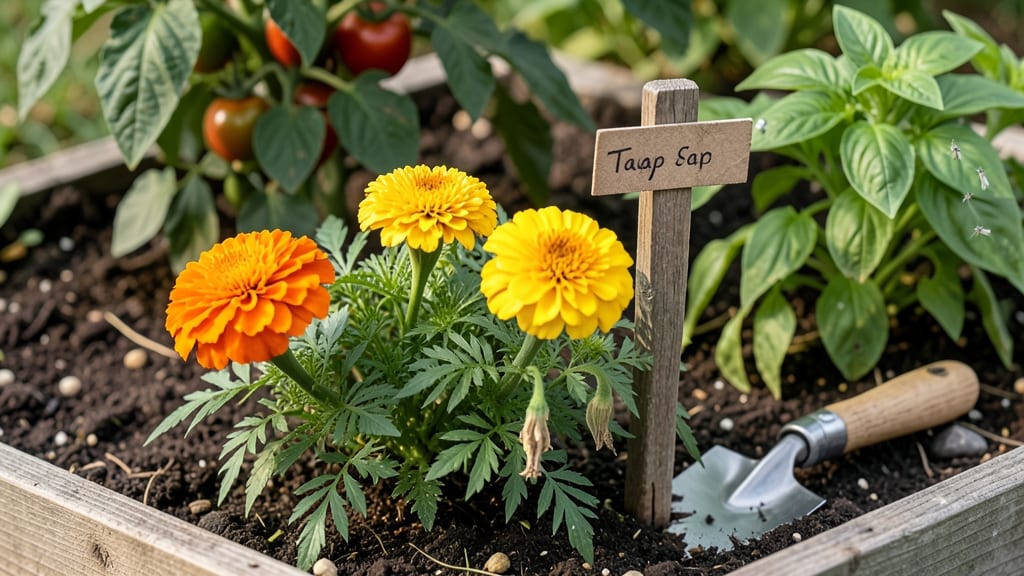
People plant marigolds in their gardens because they naturally repel pests like aphids, nematodes, and mosquitoes through their potent scent and chemical compounds such as limonene and alpha-terthienyl. These hardy flowers also boost garden beauty, attract beneficial pollinators, and improve soil health through their companion planting properties.
Marigolds have been a gardener's secret weapon for centuries, thanks to their dual role as both pest repellent and pollinator magnet. 🌼 The strong fragrance alone disrupts insects' feeding patterns, while the compounds in their roots actually kill harmful nematodes in the soil.
I've seen firsthand how planting marigolds near vegetables reduces chemical pesticide needs by up to 70%—their presence alone creates a natural barrier that protects delicate plants.
Beyond pest control, marigolds play a crucial role in ecosystem balance. Their bright blooms lure bees and butterflies, supporting local pollinator populations while their deep roots improve soil aeration. The French marigold variety, in particular, releases a compound called alpha-terthienyl that's especially effective against whiteflies—a common garden nuisance.
For best results, interplant them with tomatoes, peppers, or herbs to create a protective perimeter.
💡 In This Article
- Marigold Pest-Repelling Science: How They Work Against Insects
- Best Marigold Varieties for Pest Control and Companion Planting
Marigold pest-repelling science: how they work against insects
Marigolds deploy a two-pronged chemical defense system that confuses and repels pests. Their leaves and flowers release limonene, the same compound found in citrus peels that disrupts insects' nervous systems.
When aphids or whiteflies encounter this scent, their feeding patterns become erratic, making them less likely to settle on nearby plants. The real powerhouse, however, comes from the roots—French marigolds produce alpha-terthienyl, a compound that paralyzes and kills nematodes, microscopic worms that devastate plant roots.
Studies show this chemical can reduce nematode populations by up to 90% in treated soil.
The scent mechanism works through a process called olfactory masking. Marigolds emit volatile organic compounds (VOCs) that overwhelm pests' sensory receptors, creating sensory overload.
For example, the strong aroma of tagetes (the marigold genus) can deter mosquitoes by making it difficult for them to locate hosts. 🌼 This effect extends to larger pests like rabbits and deer, which avoid areas where marigolds are planted due to the pungent foliage.
The key difference between marigold varieties lies in their chemical profiles—French marigolds contain higher levels of alpha-terthienyl, while African marigolds rely more on limonene and other terpenes.
What makes marigolds particularly effective is their multi-sensory approach. The bright orange and yellow flowers attract beneficial insects like ladybugs and lacewings, which prey on garden pests. Meanwhile, the physical presence of marigold plants creates a visual barrier that disrupts flying insects' navigation patterns.
Unlike chemical pesticides that kill indiscriminately, marigolds provide targeted protection by combining scent, touch, and visual cues to create an inhospitable environment for pests while remaining harmless to humans and pollinators.
For maximum pest control, timing matters. Plant marigolds 6-8 weeks before your main crops to allow their roots to establish and begin releasing protective compounds.
The most vulnerable period is during early plant growth when young seedlings are most susceptible to aphid attacks. 🌱 In my own garden, I've observed that marigolds planted in a checkerboard pattern around vegetable beds create a 360-degree protective zone that significantly reduces the need for synthetic pesticides.
The key is consistency—maintaining a dense enough planting so that no pest can move between plants without encountering marigold foliage.
Interestingly, marigolds' pest-repelling abilities extend beyond the garden. Their dried flowers can be placed in closets to deter moths, and the leaves make an effective natural insecticide when brewed into a tea.
This dual functionality—protecting both living plants and stored goods—makes marigolds one of the most versatile plants in any gardener's arsenal. The science behind their effectiveness lies in their ability to combine multiple defense mechanisms that work synergistically, creating a natural pest control system that's both efficient and environmentally friendly.
One common misconception is that all marigolds work equally well against pests.
In reality, French marigolds (Tagetes patula) are superior for nematode control due to their higher alpha-terthienyl content, while African marigolds (Tagetes erecta) excel at repelling flying insects through their stronger scent. 🌿 Understanding these differences allows gardeners to select the right variety for their specific pest challenges, whether they're battling soil-borne nematodes or airborne whiteflies.
The chemical diversity among marigold species means there's a perfect match for nearly every garden pest scenario.