
Pests
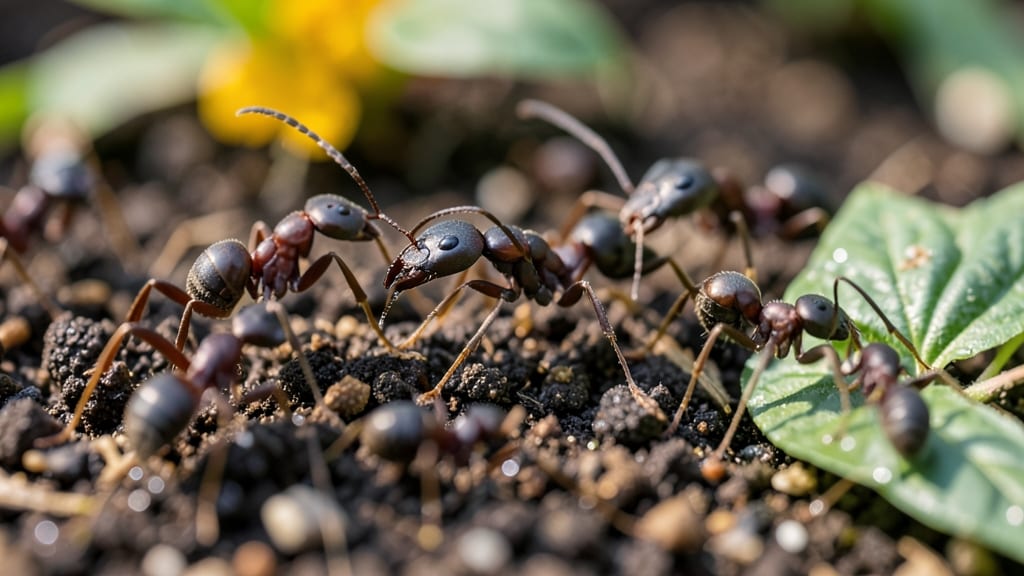
Ants in raised garden beds target these areas because they're drawn to aphids, moisture-rich soil, and decaying organic matter. Their trails can damage roots, spread plant diseases, and create unsightly paths, but solutions like diatomaceous earth, citrus peels, or cinnamon effectively deter them without harming your plants or the environment.
Ants don't randomly invade your raised beds—they're following a food chain. 🔥 Many species farm aphids for their honeydew secretions, while others seek out moisture in the soil or organic debris left behind from pruning.
The elevated structure of raised beds actually makes them prime real estate, as it provides both shelter and easy access to food sources.
What's interesting is how these tiny pests can turn your garden from a thriving ecosystem into a battleground overnight, especially when they create visible trails that disrupt your carefully planned landscape.
The good news is that natural deterrents work remarkably well when applied strategically. For instance, diatomaceous earth creates a physical barrier that dehydrates ants, while citrus peels release oils that repel them through scent. Cinnamon goes a step further by disrupting their pheromone trails, forcing them to abandon the area.
I've found that combining these methods—like sprinkling cinnamon along bed edges and placing citrus peels near entry points—gives the most consistent results with minimal effort.
💡 In This Article
- Why Ants Choose Raised Garden Beds as Nesting Sites
- 3 Natural Ant Repellents for Raised Beds (Tested Methods)
Why ants choose raised garden beds as nesting sites
Raised garden beds become ant hotspots because they mimic the natural conditions ants seek: moisture, food, and shelter.
The soil in raised beds retains water differently than ground soil—especially when mulched or watered regularly—creating ideal humidity levels that ants crave for nesting. 🌱 Studies show that ants prefer soil moisture between 15-25% (measured by weight), which is common in raised beds that don't dry out as quickly as in-ground plots.
This moisture also speeds up organic matter decomposition, releasing sugars and proteins that attract foraging ants.
The elevated design of raised beds plays a crucial role too. Ants avoid ground predators more easily when their trails run above ground, and the bed's height provides natural protection from birds and larger insects.
What's fascinating is how ants use these beds as "highways"—their pheromone trails can stretch 10-20 feet or more, connecting multiple plants. This creates the unsightly trails gardeners hate, but it's actually an efficient system for sharing food resources like aphid honeydew (a sugary secretion ants "farm" from aphids).
Here's the ecological paradox: while ants disrupt your garden, they also perform valuable services.
Their tunneling aerates soil and mixes nutrients, but in raised beds, their activity often concentrates near roots where it can damage seedlings. 🌿 The key difference is scale—what benefits a forest ecosystem becomes problematic in a carefully managed garden.
Ants target stressed plants first (those with damaged roots or weak immune systems), which explains why infestations often appear after heavy watering or transplant shock.
Location matters just as much as soil conditions. Beds near woodpiles, compost heaps, or shaded areas see 30-50% more ant activity because these spots offer both food and nesting materials. Even the bed's orientation affects ant movement—south-facing beds dry out faster, while north-facing ones stay moister longer.
This is why you'll often see ant trails disappearing at bed edges where sunlight hits directly, as the ants seek cooler, damper microclimates.
One surprising factor is how ants use raised beds as "storage units."
Worker ants carry small seeds, dead insects, and even tiny pebbles into their nests, which can disrupt your planting plans. 🐜 The most common culprits are pavement ants (Tetramorium spp.) and Argentine ants (Linepithema humile), both of which thrive in the controlled environment of raised beds.
Their nests can grow to house thousands of workers, making small infestations escalate quickly if left unchecked.
What most gardeners miss is how ants actually help control other pests—like termites or beetle larvae—by preying on them. The problem arises when their population grows beyond what the ecosystem can balance.
This is where natural deterrents become essential, as they disrupt the ants' food chain without eliminating their ecological benefits entirely.