
Vegetables
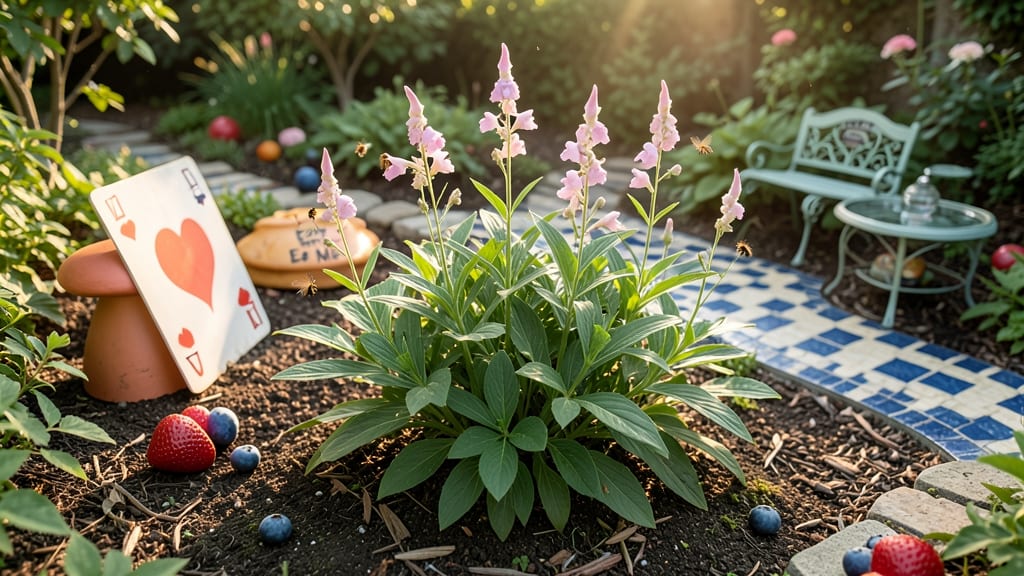
Alice in Wonderland botanical gardens use plants like bluebell flowers to evoke madness, white roses for innocence, and giant mushrooms to symbolize transformation, creating a living storybook where every bloom tells part of the tale.
These gardens transform Carroll's whimsical narrative into tangible beauty by carefully selecting flora that mirrors the story's emotional and physical journey. 🌿 For example, the forget-me-not flower—often used in Wonderland-inspired designs—represents loyalty, contrasting with the poisonous berries that symbolize danger.
Many themed gardens also incorporate playing card flowers (like the Queen of Hearts' red roses) to nod to the story's iconic characters. The magic happens when you pair these plants with winding paths and hidden doorways, just like in the original tale.
What makes these gardens so special is how they blend history with horticulture. Many botanical gardens today recreate Wonderland scenes using non-toxic alternatives for safety, especially in family-friendly spaces. For instance, instead of actual giant mushrooms (which are toxic), gardeners use oversized decorative varieties or painted wooden cutouts.
This approach preserves the story's wonder while making it accessible to all visitors. The key is balancing Carroll's surreal elements with real-world gardening practicality.
💡 In This Article
- Botanical Symbolism in Alice’s Wonderland: Plants and Their Hidden Meanings
- Designing Your Own Alice-Inspired Garden: Plant Selection Guide
Botanical symbolism in Alice’s Wonderland: plants and their hidden meanings
Lewis Carroll didn’t just write a story—he crafted a living botanical poem where every plant carries psychological weight. Take the bluebell (Hyacinthoides non-scripta), for instance: its bell-shaped flowers symbolize both beauty and intoxication, mirroring Alice’s disorienting fall down the rabbit hole.
In Victorian times, bluebells were associated with madness (likely due to their narcotic properties when ingested), which perfectly encapsulates Alice’s surreal experiences. The plant’s delicate 5-10 inch stalks create a dreamy, swaying effect in gardens, reinforcing the story’s whimsical tone.
The white rose (Rosa alba) appears throughout Wonderland as a symbol of innocence and purity, particularly tied to Alice’s childlike wonder. Historically, white roses represented new beginnings—fitting for Alice’s journey from the ordinary to the extraordinary.
In garden design, these roses thrive in full sun to partial shade and bloom from late spring to fall, providing year-round visual storytelling.
Meanwhile, the red rose (like those in the Queen of Hearts’ garden) carries danger: its thorns and vibrant color warn visitors of the story’s darker undertones, like the trial scene where Alice faces execution.
Carroll’s use of mushrooms—particularly the Amanita muscaria—goes beyond whimsy into psychological depth. While real Amanita mushrooms are toxic, their red-and-white caps symbolize transformation (like Alice’s growth during her adventure).
Gardeners often use non-toxic alternatives like giant puffballs (Calvatia gigantea), which can reach 3 feet in diameter, creating a safe but equally magical effect. The mushroom’s earthy aroma and spongy texture also evoke Wonderland’s underground world, where Alice meets creatures like the Gryphon and Mock Turtle.
Forget-me-nots (Myosotis) add another layer: their name reflects Alice’s forgetfulness in Wonderland, while their tiny blue flowers cluster in dense mats, symbolizing the story’s interconnectedness. In Victorian herbals, forget-me-nots were linked to memory loss—another nod to Alice’s disorientation.
Pairing these with poisonous berries (like deadly nightshade, Atropa belladonna) in garden displays creates a striking contrast between beauty and peril, just as Carroll intended. The berries’ glossy black fruit and white flowers stand out against lush greenery, drawing visitors into the story’s moral ambiguities.
Even the playing card flowers (like the Queen of Hearts’ roses) serve a purpose: their geometric patterns mimic the story’s obsession with order and chaos.
In real gardens, you can recreate this with double-flowered roses or lavender (for its structured spikes), both of which thrive in well-drained soil and 6-8 hours of sunlight daily. The lavender’s silvery foliage and purple blooms also evoke the story’s dreamlike color palette, where logic and fantasy collide.
What’s fascinating is how these plants reflect Victorian-era botanical knowledge. Carroll, a mathematician and logician, wove real flora into his narrative with precision—like using foxgloves (Digitalis purpurea) to symbolize hallucinations (due to their cardiac glycosides).
Today, gardeners can replicate this by grouping plants by their symbolic themes: a "madness corner" with bluebells and foxgloves, an "innocence nook" with white roses, and a "transformation zone" with giant mushrooms. The result? A garden that feels like stepping into the story itself. ✨