
Vegetables
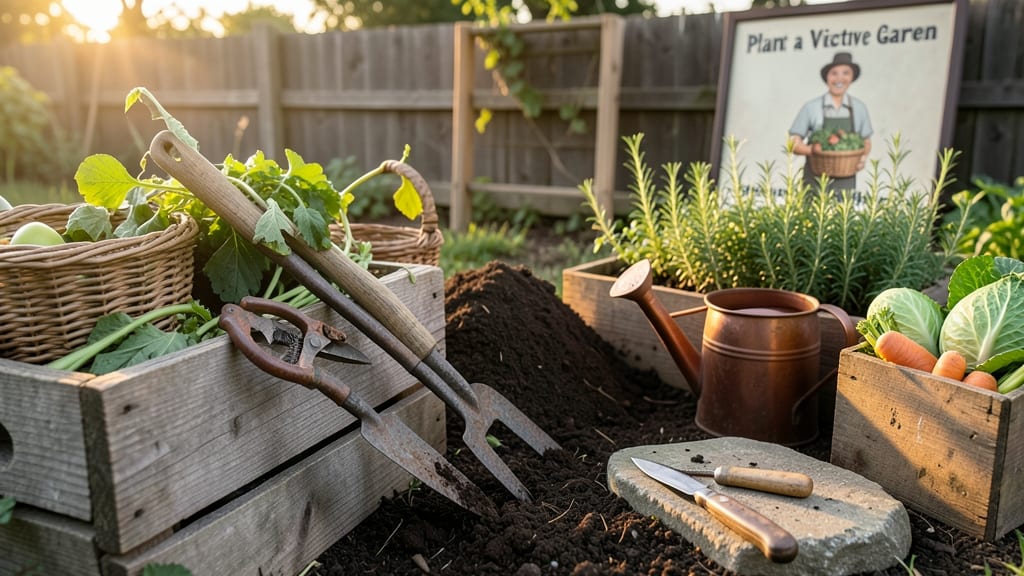
Victory gardens were important because they boosted World War II food supplies by producing fresh vegetables, reducing reliance on commercial farms, and conserving shipping resources for military needs while fostering patriotic community efforts.
During World War II, victory gardens played a crucial role in addressing food shortages that threatened the nation's ability to support both soldiers and civilians. 🌱 With commercial farming resources diverted to the war effort and shipping routes disrupted, these home gardens became a lifeline, producing over 40% of the nation's vegetables by 1944.
The U.S. government even launched campaigns encouraging families to grow their own produce, turning backyards into miniature farms and instilling a sense of shared responsibility.
Beyond their practical benefits, victory gardens served as powerful symbols of patriotism. They brought neighbors together, taught sustainable practices, and reminded citizens that even small contributions could make a big difference.
Schools and community groups often participated, reinforcing the idea that everyone had a part to play in the war effort. This dual role—feeding the nation while uniting people—made victory gardens one of the most impactful grassroots movements in American history.
💡 In This Article
- How Victory Gardens Addressed WWII Food Shortages
- Patriotic and Social Impact of Victory Gardens
How victory gardens addressed WWII food shortages
The U.S. food supply faced unprecedented strain during World War II due to three critical factors: rationing, shipping disruptions, and labor shortages. With commercial farms prioritizing feed crops for livestock and military rations, grocery shelves emptied by 1942, leaving families with limited access to fresh produce.
Victory gardens directly countered this by converting 20 million backyards into productive farmland, producing an estimated 8 million tons of food annually by the war's end.
The logistics behind this success were impressive. Most victory gardens focused on high-yield, space-efficient crops like tomatoes (20 pounds per plant), carrots (1 pound per square foot), and potatoes (50 pounds per 100 square feet).
These vegetables required minimal irrigation compared to commercial fields, making them ideal for home growers. The government even distributed 9 million seed packets in 1943 alone, ensuring families had access to reliable varieties. This decentralized production reduced pressure on national transportation networks, which were already strained by military shipments.
What made victory gardens particularly effective was their ability to stabilize food prices. During the war, prices for fresh vegetables surged by 30% due to supply constraints, but homegrown produce remained affordable.
A family growing just 100 square feet of garden could save $500-$1,000 annually (equivalent to $8,000-$16,000 today), directly combating inflation. The U.S. Department of Agriculture reported that victory gardens saved the nation $3 billion in food purchases by 1944, funds that could then support the war effort.
The scientific approach to victory gardening also addressed nutritional gaps. With meat and dairy rations limited, gardens prioritized nutrient-dense vegetables like spinach (100% daily vitamin K per cup), cabbage (85% vitamin C per serving), and beets (high iron content).
The government even published Victory Garden Guides with planting charts optimized for 4-6 month growing seasons, ensuring families could harvest continuously. This systematic approach turned backyard gardening into a precision agricultural practice.
Another often-overlooked benefit was the reduction in food waste. Commercial distribution systems lost 15-20% of produce due to spoilage during transport, but home gardens eliminated this entirely. Freshly harvested vegetables could be consumed within 24 hours, maximizing nutritional value.
The U.S. Office of War Information noted that families with victory gardens wasted 40% less food than those relying solely on grocery stores, further stretching limited resources.
Consider these key statistics that highlight their impact:
- Production Volume: By 1943, victory gardens accounted for 40% of all fresh vegetables consumed in the U.S.
- Labor Efficiency: A single family garden could produce 2-3 times more food per acre than commercial farms due to intensive care
- Shipping Savings: Conserved enough freight space to transport 760,000 tons of military supplies annually
- Price Stabilization: Reduced vegetable prices by 10-15% during peak wartime shortages