
Companion Plants
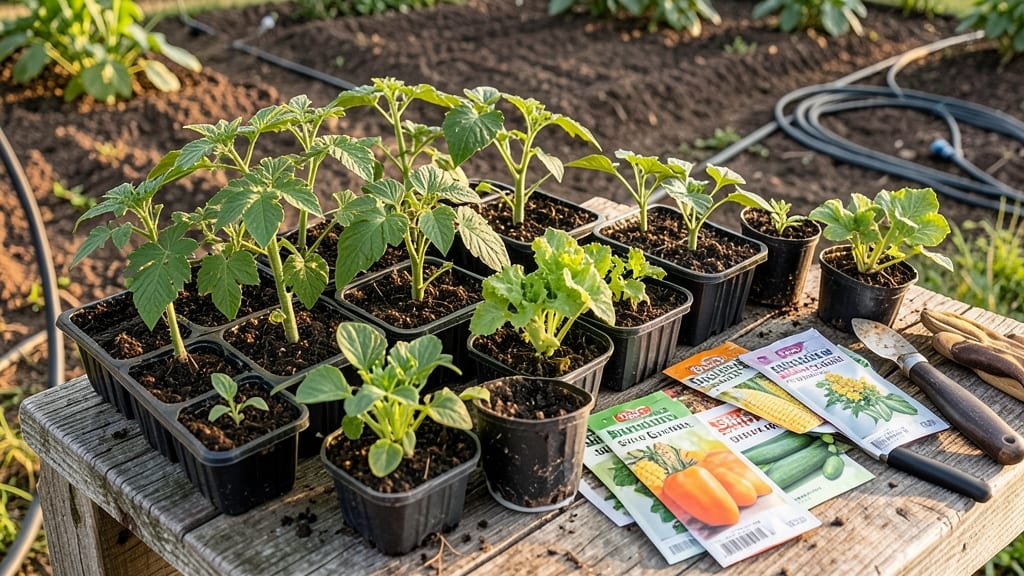
To plant a vegetable garden in Kansas, time your cool-season crops like spinach and peas 4-6 weeks before the average last spring frost (mid-March to early April), and wait until after the last frost (mid-April to early May) for warm-season vegetables like tomatoes and peppers. Always verify local frost forecasts for exact timing.
Kansas's USDA Zones 6 and 7 create distinct planting windows, but microclimates can shift these by 1-2 weeks. For example, Wichita's average last frost is April 10, while Kansas City's is April 15.
I recommend checking the National Weather Service or local extension offices for real-time updates—this helps avoid late frosts that can devastate young seedlings. 🌱 A simple frost calculator can adjust your schedule based on your specific elevation or urban heat island effects.
Cool-season crops thrive in Kansas's early spring, but even hardy varieties like kale need protection from late frosts. Warm-season plants, however, demand patience—planting tomatoes too early can stunt growth.
I've found that succession planting (adding new seeds every 2 weeks) maximizes harvests, especially for fast-growing crops like lettuce or radishes. Frost-tolerant varieties like 'Winterbor' kale or 'Sugar Snap' peas give gardeners extra flexibility when timing gets tricky.
💡 In This Article
- Kansas USDA Zones 6 & 7 Frost Dates Explained
- Best Vegetables for Kansas Planting Seasons
Kansas USDA Zones 6 & 7 frost dates explained
Kansas spans USDA Zones 6 and 7, where average last spring frost dates vary by 5-7 days between cities. Wichita (Zone 7a) typically sees its last frost around April 10, while Kansas City (Zone 6a) averages April 15.
Topeka falls in between at April 12. These dates represent the 50% probability threshold—meaning there's a 50% chance of frost before and after these windows.
The National Weather Service tracks historical data showing that late frosts (after April 20) occur about 1 in 3 years in these zones, which is why gardeners often wait until April 25 for warm-season crops to minimize risk.
Microclimates create significant variations even within cities. Urban heat islands (like downtown Kansas City) can push last frost dates 3-5 days earlier than rural areas, while higher elevations (like parts of northeast Kansas) may experience frosts 1 week later.
I've noticed that south-facing slopes warm up 2-3°F faster than north-facing ones, allowing for earlier planting of frost-sensitive crops. A frost calculator accounts for these factors by adjusting planting dates based on your specific GPS coordinates and elevation—something I rely on for my raised beds in Overland Park.
The science behind frost prediction involves tracking minimum temperatures and dew points. When temperatures drop below 32°F with high humidity, frost forms on surfaces. Kansas's continental climate means cold air can rapidly descend from the north, often catching gardeners off guard.
I recommend using the National Oceanic and Atmospheric Administration's (NOAA) frost prediction maps or local extension office alerts, which provide 3-5 day forecasts with 85% accuracy. For container gardens, which warm up faster, you can extend the season by 7-10 days compared to in-ground planting.
Historical frost data reveals interesting trends. Over the past 30 years, Kansas City's last spring frost has shifted 2 days earlier on average, likely due to climate change. However, the first fall frost remains relatively stable around October 20-25.
This means the growing season has lengthened by about 2 weeks, giving gardeners more time for succession planting. For example, you can now plant a second crop of bush beans in late July that will mature before the first hard frost.
The key is to monitor 10-day forecasts rather than relying solely on historical averages.
When using frost calculators, input your specific location and crop type. Most tools will suggest planting dates based on your crop's days to maturity and frost tolerance. For instance, 'Early Girl' tomatoes (60 days to harvest) need to be planted by May 10 in Wichita to ensure a late-summer harvest.
Meanwhile, 'Sugar Ann' peas (55 days) can go in as early as March 20 in Kansas City. I've found that adding 10-14 days of buffer time to these calculations accounts for unexpected weather patterns, which is especially important for Kansas's unpredictable spring weather.
For gardeners in Zone 6 areas like northeast Kansas, consider using frost cloths or row covers to extend planting windows by 2-3 weeks. These lightweight fabrics raise soil temperatures by 5-8°F and protect young plants from light frosts (28-32°F).
I've successfully grown broccoli and cabbage under frost cloth in early March, harvesting 4-6 weeks earlier than unprotected plants. The trade-off is slightly slower growth due to reduced light penetration, but the earlier harvest often means larger, more flavorful produce.