
Planting
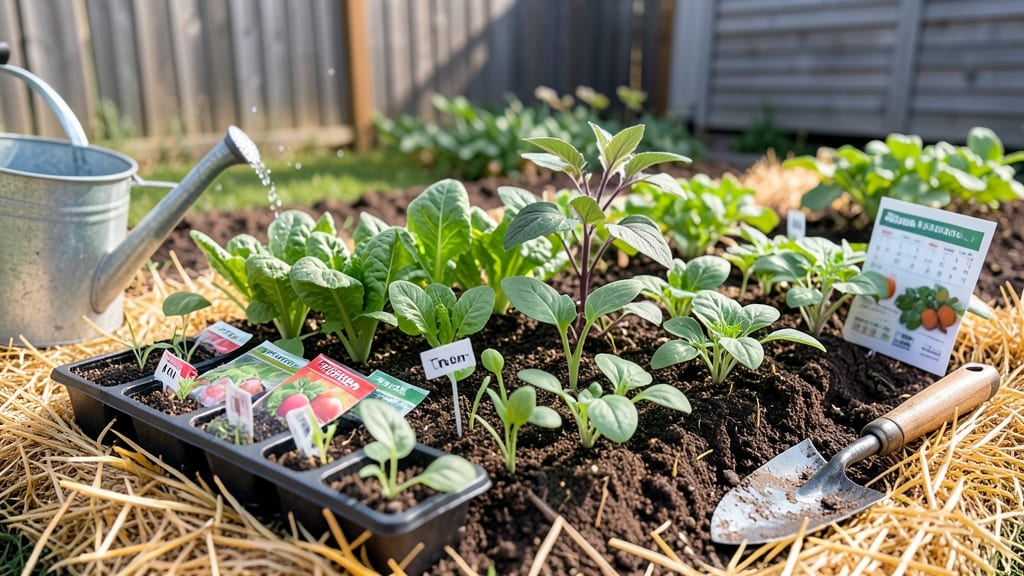
Planting a vegetable garden in California at the right time means the difference between a bumper crop and a sad, wilted disappointment.
California’s diverse climate—from coastal fog to desert heat—means planting your vegetable garden at the wrong time can mean wasted seeds and stunted harvests. Timing is everything, and getting it right ensures your tomatoes thrive, your carrots grow straight, and your zucchini doesn’t bolt in the heat.
If you’ve ever watched your seedlings shrivel under a late frost or seen your peppers blacken in a heatwave, you know how critical the calendar is. The key is understanding your local microclimate—whether you’re in foggy San Francisco, the Central Valley’s sunbaked soil, or the desert’s unique growing conditions.
In this guide, I’ll break down the exact month-by-month planting schedule for California’s most popular vegetables, including when to start seeds indoors, when to transplant, and how to stretch your harvest with succession planting. No more guessing—just peak yields all season long.
California planting zones: when to start seeds vs. transplants by region
California’s 14 distinct planting zones create a gardening puzzle—what works in coastal San Francisco (Zone 9-10) fails in desert Palm Springs (Zone 10-11) or the Central Valley (Zone 8-9). Even within 100 miles, frost dates shift dramatically.
For example, Sacramento’s last frost averages February 15, while Los Angeles rarely sees frost at all. Mastering these timelines means the difference between bountiful harvests and wasted seeds.
I’ve broken down exact planting windows for 10 essential vegetables across California’s 4 key regions: Coastal, Central Valley, Desert, and High-Altitude (like Lake Tahoe). Whether you’re starting seeds indoors, transplanting seedlings, or direct sowing, these dates align with soil temperatures, frost risks, and regional heat spikes.
Pro tip: Use soil thermometers—tomatoes need 60°F+ soil to thrive, while lettuce bolts at 75°F+.
🌱 Key Rule: Coastal areas (e.g., San Francisco, Santa Barbara) can plant 4-6 weeks earlier than inland zones due to milder winters. Desert regions (e.g., Palm Springs, Death Valley) focus on fall/winter planting to avoid 110°F+ summers. High-altitude zones (e.g., Lake Tahoe, Mammoth) often have later frost dates—sometimes June 15—so adjust accordingly.
| Region | Start Seeds Indoors | Transplant Seedlings | Direct Sow | Key Notes |
|---|---|---|---|---|
| Coastal (SF, LA, Santa Barbara) | Feb 15 - Mar 15 | Mar 20 - Apr 30 | Mar 1 - May 15 | Fog delays; use row covers |
| Central Valley (Sacramento, Fresno) | Mar 1 - Apr 1 | Apr 15 - May 15 | Apr 1 - Jun 1 | Soil warms fast; mulch heavily |
| Desert (Palm Springs, Death Valley) | Aug 1 - Sep 15 | Sep 20 - Oct 30 | Sep 1 - Nov 1 | Focus on heat-tolerant varieties |
| High-Altitude (Lake Tahoe, Mammoth) | Apr 15 - May 1 | May 20 - Jun 15 | May 1 - Jul 1 | Later frost dates; shorter season |
| 🌱 Vegetables Covered: Tomatoes, Peppers, Lettuce, Beans, Carrots, Broccoli, Cucumbers, Spinach, Basil, Zucchini | ||||
Let’s dive into specific vegetables and their optimal planting strategies. For tomatoes—California’s star crop—coastal gardeners can start seeds February 15 indoors, while Central Valley growers wait until March 1 to avoid late frosts.
Transplant seedlings outdoors when night temps stay above 50°F, typically April 15 in coastal areas and May 1 inland. Heat-loving peppers need even warmer soil: 65°F+, so hold off until April 15 for transplants.
Lettuce and spinach thrive in cool weather but bolt in heat. Direct sow coastal lettuce from March 1 to May 1, while Central Valley gardeners should finish by April 15. For fall harvests, replant August 15 to September 15 in all regions. Beans and peas, however, love warm soil—direct sow after last frost, which is March 15 in coastal zones but April 15 in the Valley. Carrots need loose soil; sow March 1 to June 1 in coastal areas and April 1 to July 1 inland.
For high-altitude areas like Lake Tahoe, adjust timelines 2
Best vegetables for each California season: what to plant now for year-round harvests
California’s microclimates create perfect conditions for year-round gardening, but knowing seasonal planting times is key. Cool-season crops like lettuce and broccoli thrive in Northern coastal areas, while heat-tolerant varieties like okra and sweet potatoes dominate Southern California’s summer gardens.
Let’s break down what to plant each season for continuous harvests.
For Northern California (USDA zones 7-10), focus on early spring and fall plantings to avoid frost damage. Southern California’s (zones 9-11) longer growing season allows for spring and fall crops, plus summer heat lovers. Succession planting—sowing new seeds every 2-3 weeks—ensures a steady supply of fresh produce.
🌱 California Seasonal Planting Guide
- 🌿 Spring (Feb-Apr): Cool-season crops like lettuce, peas, and broccoli. Southern CA can start tomatoes and peppers indoors.
- ☀️ Summer (May-Jul): Warm-season favorites—tomatoes, peppers, and beans. Succession plant heat-tolerant varieties like okra and sweet potatoes.
- 🍂 Fall (Aug-Oct): Cool-season crops again—kale, carrots, and spinach. Southern CA can extend harvests with row covers.
- ❄️ Winter (Nov-Jan): Frost-hardy greens like cabbage and Brussels sprouts. Northern CA may need cold frames for tender crops.
Pro Tip: Use succession planting to replace harvested crops with new seeds every 2-3 weeks for continuous yields.
In Northern California’s coastal regions, frost-resistant varieties like kale and Brussels sprouts thrive in winter, while Southern California’s desert areas can grow year-round tomatoes with proper irrigation. Always check your last frost date—typically March 15 in Northern CA and January 1 in Southern CA.
For succession planting, try bush beans every 2 weeks from May to August. Lettuce can be sown every 3 weeks in spring and fall for continuous harvests. Heat-tolerant varieties like ‘Heatmaster’ tomatoes or ‘Malabar spinach’ are perfect for Southern California’s summer heat.
Don’t forget soil preparation—amend beds with compost before planting cool-season crops in fall. Mulch heavily in winter to protect roots from freezing temperatures. With these tips, your garden can produce fresh vegetables year-round, no matter where you are in California.
Start small, experiment with seasonal varieties, and soon you’ll have a garden that’s as productive as it is beautiful. Happy planting! 🌱