
Size
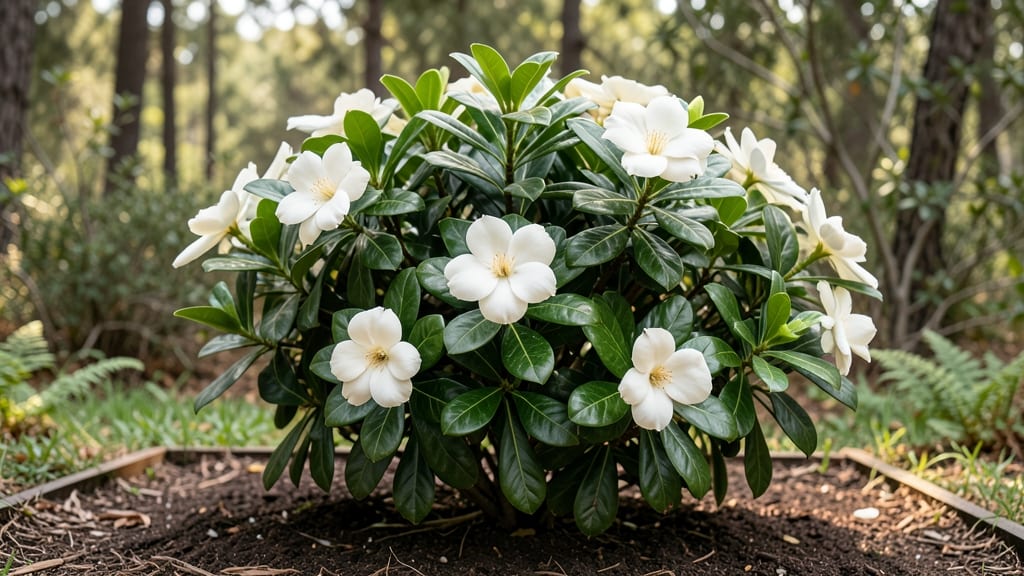
Gardenias grow anywhere from 3 to 6 feet tall at maturity, but their size depends entirely on the variety you choose—some stay compact like dwarf shrubs, while others stretch toward small tree height.
If you're dreaming of fragrant, creamy-white blooms but wondering whether gardenias will fit your garden’s size or container, knowing their exact growth potential is key—some varieties sprawl like vines while others stand tall like small trees.
Standard gardenias like G. jasminoides can reach 6 feet with a spread of 4 to 5 feet, making them a statement plant in borders or as standalone shrubs. Meanwhile, dwarf varieties like ‘Kleim’s Hardy’ top out around 2 to 3 feet, perfect for containers or small-space gardens.
Below, I break down the exact height ranges by variety, how to control growth with pruning, and the spacing rules you need to avoid overcrowding—so you can plan your garden layout with confidence.


Gardenia growth size by variety: height and spread measurements
If you're planning your garden layout or choosing gardenias for containers, knowing their mature height and spread is essential. Gardenias vary dramatically—some stay compact while others grow into small trees. The right variety can fit perfectly in your garden beds, patio pots, or even bonsai-style displays.
Let’s break down the exact dimensions for popular types so you can pick the perfect fit for your space.
Gardenias typically fall into three size categories: dwarf (2-3 ft), semi-dwarf (3-4 ft), and standard (4-6 ft). However, some varieties can reach 8 feet or more if left unpruned.
Understanding these measurements helps prevent overcrowding, ensures proper air circulation for disease prevention, and lets you plan companion plants effectively. Below, we’ll explore the most common varieties and their precise growth habits.
| Variety | Mature Height | Mature Spread | Growth Rate | Best For |
|---|---|---|---|---|
| G. jasminoides 'Kleim's Hardy' | 4-6 ft | 4-5 ft | Moderate (12-18 in/year) | Garden beds, hedges, cold-hardy zones |
| G. jasminoides 'Radicans' | 6-8 ft | 5-7 ft | Fast (18-24 in/year) | Trellises, large containers, privacy screens |
| G. jasminoides 'Veitchii' | 3-4 ft | 3-4 ft | Slow (6-12 in/year) | Containers, bonsai, small gardens |
| G. augusta 'Fortuniana' | 8-10 ft | 6-8 ft | Moderate (12-18 in/year) | Tropical landscapes, large estates |
| G. jasminoides 'Dwarf Compact' | 2-3 ft | 2-3 ft | Slow (6-10 in/year) | Patio pots, window boxes, small spaces |
| G. jasminoides 'Mystery' | 3-5 ft | 3-4 ft | Moderate (10-15 in/year) | Garden borders, mixed shrub beds |
The G. jasminoides 'Kleim’s Hardy' is one of the most popular choices for gardeners in cooler climates, reaching 4-6 feet tall with a similar spread. This variety is perfect for foundation plantings or hedges where you need both fragrance and structure.
Its moderate growth rate means it won’t overwhelm your garden overnight, making it ideal for long-term landscaping plans.
For those with limited space, the 'Dwarf Compact' variety is a game-changer. Staying under 3 feet tall and wide, it thrives in 15-gallon containers or window boxes.
This makes it perfect for balconies, patios, or even as a fragrant centerpiece on a small deck. Just ensure it gets enough sunlight to maintain its compact form.
If you’re aiming for a tropical feel in your garden, consider G. augusta 'Fortuniana'. This variety can grow into a small tree (8-10 ft tall), making it ideal for large yards or as a specimen plant.
However, it requires more space and maintenance to keep its sprawling habit in check. Pair it with palm trees or bamboo for a cohesive look.
When planning your garden, always account for 3-5 feet of clearance around gardenias to allow for airflow and prevent fungal diseases like powdery mildew. In containers, choose pots that are at least 12
How to control gardenia size: pruning and training tips for compact growth
Keeping your gardenia within your desired space is easier than you think! With the right pruning techniques and training methods, you can shape these fragrant shrubs to fit containers, small gardens, or even tight landscapes.
The key is understanding when and how to prune—whether you're topping back a sprawling plant or pinching new growth for a bushier look.
For compact gardenias, timing is everything. Late winter or early spring—just before new growth begins—is the best time to prune. This ensures you’re not cutting off next year’s blooms while still encouraging a neat, controlled shape.
If you’re working with container-grown gardenias, root restriction and regular pruning are your best tools for keeping them small.
Step-by-Step Guide to Pruning Gardenias for Compact Growth
- 1 Choose the Right Time: Prune in late winter or early spring (February-March) to avoid cutting off potential blooms. This is when gardenias are dormant but ready to sprout new growth.
- 2 Use Clean Tools: Sterilize your pruning shears with rubbing alcohol to prevent disease. Sharp tools make cleaner cuts, which heal faster and reduce stress on the plant.
- 3 Top for Height Control: Cut back overgrown stems by 1/3 to 1/2 their length. Focus on the tallest branches first to maintain a balanced shape. Avoid cutting into old wood, as gardenias bloom on new growth.
- 4 Pinch for Bushiness: In early summer, pinch back the tips of new growth to encourage branching. This creates a fuller, more compact shrub. Remove only the top 1/4 inch of each stem.
- 5 Thin Out Crowded Branches: Remove weak or crossing branches to improve airflow and light penetration. This reduces disease risk and keeps the plant dense and healthy. Aim for an open, vase-like shape.
- 6 Use Root Restriction for Containers: For potted gardenias, choose a container just 1-2 inches larger than the root ball. This naturally restricts root growth, keeping the plant smaller. Repot every 2-3 years to refresh the soil.
- 7 Fertilize for Controlled Growth: Use a balanced, acidic fertilizer (10-10-10) in early spring to encourage compact growth. Avoid high-nitrogen fertilizers, which promote leafy growth over blooms. Water thoroughly after fertilizing.
If you’re growing gardenias in containers, don’t forget to prune roots during repotting. Gently trim the outer 1/3 of the roots to encourage a denser root system.
This method, combined with regular pruning, can keep even large varieties like G. jasminoides under 3 feet tall in a 15-gallon pot.
For seasonal maintenance, lightly trim any overly leggy growth in mid-summer to maintain shape. Avoid heavy pruning during the blooming season (late spring to early fall), as this can reduce flower production. With consistent care, your gardenias will stay neat, fragrant, and perfectly sized for your space. 🌿