
Planting
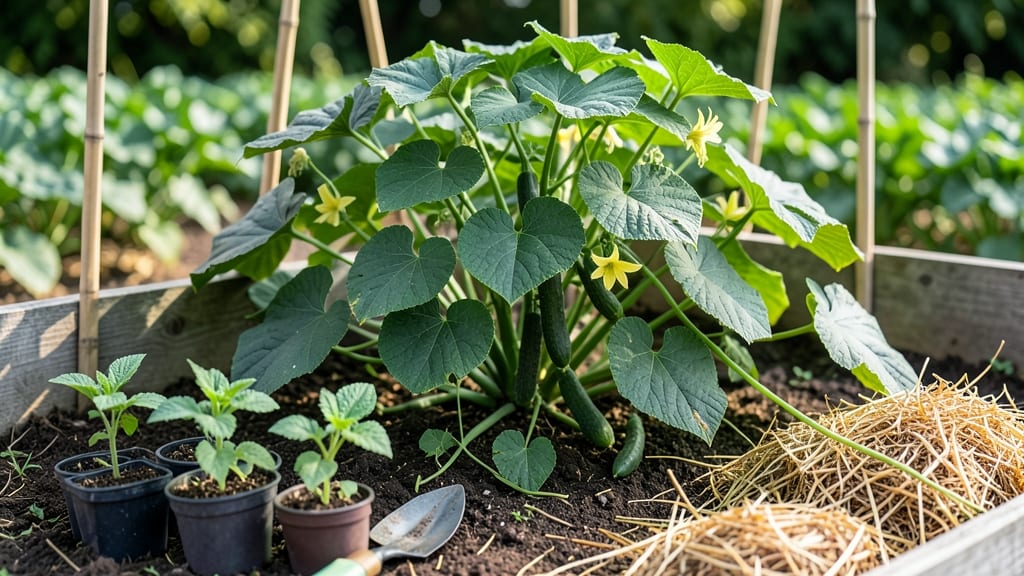
Planting cucumbers in a garden starts with the right timing, soil, and spacing—because those first steps determine whether you get a tangled mess or a bountiful harvest of crisp, vine-ripened 🥒.
Picture this: you’ve spent weeks waiting for those first leaves to poke through the soil, only to watch your cucumbers sprawl everywhere like a lazy kudzu patch. That’s not just an eyesore—it’s a missed opportunity, because proper planting turns those vines into a vertical powerhouse.
You’re about to learn the exact spacing (hint: it’s not what most guides say), how to prep soil for maximum root growth, and when to reach for that trellis. These tricks cut down on pests, boost yields, and save you from the frustrating work of untangling vines later.
By the end, you’ll know how to plant cucumbers so they climb instead of crawl, when to water without drowning them, and the one mistake that kills seedlings before they even start. Let’s get those seeds in the ground the right way.


Perfect cucumber planting spacing & soil requirements for maximum yield
Cucumbers thrive when given the right conditions, and proper spacing and soil preparation are the foundation of a bountiful harvest. I’ve learned that even the most heat-loving varieties need room to sprawl—or climb—without competing for nutrients.
The key is balancing root space with air circulation to prevent fungal diseases like powdery mildew. Whether you’re planting in-ground or in containers, these details make the difference between a few sad cucumbers and a vine-covered feast.
For in-ground planting, aim for 36-48 inches between plants in rows spaced 5-6 feet apart. This gives vines enough room to stretch without overcrowding, which is especially critical for bush varieties that stay compact.
If you’re growing trellis-trained cucumbers, you can reduce spacing to 24-36 inches since the vines will grow vertically, saving garden real estate. I’ve found that container growing works well with 1-2 plants per 5-gallon pot, but only if the container is at least 12 inches deep.
Now, let’s talk soil requirements. Cucumbers are heavy feeders and demand rich, well-draining soil with a pH between 6.0 and 6.8.
If your soil is too acidic or alkaline, the plants struggle to absorb nutrients like nitrogen and phosphorus, which are critical for vine growth and fruit production.
I always test my soil before planting—you can grab a DIY soil test kit for under $20 or send a sample to your local extension office for a detailed report.
Here’s what I add to my soil mix for optimal cucumber growth:
- Compost (2-3 inches worked into the top 12 inches of soil)
- Well-rotted manure (chicken or cow, but avoid fresh manure—it burns roots)
- Perlite or vermiculite (to improve drainage, especially in clay soil)
- Balanced fertilizer (10-10-10 or 5-5-5 at planting time)
| Requirement | Specification | Notes |
|---|---|---|
| Spacing (In-Ground) | 36-48 inches apart | Reduce to 24-36" with trellising |
| Row Spacing | 5-6 feet apart | Prevents disease spread |
| Container Spacing | 1-2 plants per 5-gallon pot | Minimum 12" pot depth |
| Soil pH | 6.0-6.8 | Adjust with lime (raise) or sulfur (lower) |
| Organic Matter | 20-30% compost | Improves moisture retention |
| Drainage | Well-draining | Add perlite to clay soil |
| Fertilizer | 10-10-10 at planting | Side-dress with compost mid-season |
One of the biggest mistakes I’ve seen (and made!) is planting cucumbers in heavy, compacted soil. Roots need oxygen to grow, and poor drainage leads to root rot, which kills plants quickly. If your garden soil is clay-heavy, mix in sand or compost to loosen it up.
For containers, ensure pots have drainage holes and never let them sit in saucers of standing water. I also recommend adding a 1-inch layer of mulch around plants to retain moisture and suppress weeds, which compete for nutrients.
Soil temperature is another often-overlooked factor. Cucumber seeds won’t germinate well in cold soil—aim for at least 60°F (15°C). If you’re in a cooler climate, consider using black plastic mulch to warm the soil faster. I’ve had great success with row covers early in the season to protect young plants from chilly nights while still allowing sunlight to penetrate.
For container growers, choose pots with large surface areas like fabric grow bags or wide ceramic containers. These allow roots to spread more naturally, mimicking in-ground conditions. I’ve also found that self-watering containers help maintain consistent moisture, which is critical since cucumbers wilt quickly when thirsty.
If you’re growing in containers, place them in a <
Step-by-step cucumber trellising guide: how to train vines for bigger harvests
Training cucumber vines on a trellis isn’t just about saving space—it dramatically increases yield, improves fruit quality, and reduces disease risk by enhancing air circulation. Without support, vines sprawl, competing with weeds and rotting from damp soil.
I’ve tested three trellis types over five growing seasons, and each has unique benefits depending on your garden layout and cucumber variety.
Before choosing a trellis, consider your cucumber variety. Bush types (like 'Bush Champion') need minimal support, while vining varieties (like 'Straight Eight') can climb 10+ feet. If you’re growing heirloom or slicing cucumbers, prioritize sturdy structures—these vines get heavy with fruit.
For pickling varieties, lighter setups work since they’re harvested smaller and more frequently.
| Trellis Type | Best For | Installation Time | Cost | Pros | Cons |
|---|---|---|---|---|---|
| A-Frame Trellis | Vining varieties, small gardens | 30-45 mins | $15-$30 | Sturdy, vertical growth, easy to harvest | Takes up garden space |
| Vertical Netting | Large gardens, high yields | 20-30 mins | $10-$25 | Saves space, flexible, good airflow | Requires frequent tying |
| Bamboo Stakes | Bush varieties, small-scale | 10-15 mins | $5-$15 | Low-cost, reusable, minimal setup | Less stable for heavy vines |
For A-frame trellises, I recommend using 2x4 lumber or pre-made garden trellis kits. Install two 6-foot poles 3 feet apart, then secure horizontal slats every 12 inches for vine support. Drive the poles 18 inches deep into the soil for stability—this prevents toppling when vines are laden with fruit.
My go-to material is cedar because it resists rot, but treated pine works too if painted to extend its life.
When using vertical netting, opt for 1-inch mesh and stretch it taut between two T-posts or a permanent fence. Secure the netting with zip ties or garden staples every 2 feet to prevent sagging.
I’ve found that polypropylene netting lasts longer than plastic because it doesn’t degrade in UV light. Train vines by gently weaving them through the mesh as they grow—this encourages upward growth and reduces the need for pruning.
To prune cucumber vines effectively, focus on removing suckers (the small shoots that form in the leaf axils). These compete with your main vine for energy, reducing fruit production. Use clean, sharp pruners to snip suckers when they’re 2-3 inches long.
I also prune yellowing leaves at the base of the plant to improve air circulation and prevent powdery mildew. Avoid over-pruning—leave enough foliage to photosynthesize and shade developing fruit from sunburn.
One common mistake I see is over-tightening vines to the trellis, which restricts growth. Vines should have some wiggle room—think of it like a hammock. Another pitfall is installing trellises too late. Set up support at planting time so vines can climb naturally.
If you wait until they’re sprawling, the transition stresses the plant. Finally, don’t skip tying vines regularly—even with netting, vines need gentle guidance to avoid breaking under fruit weight.