
Companion Plants
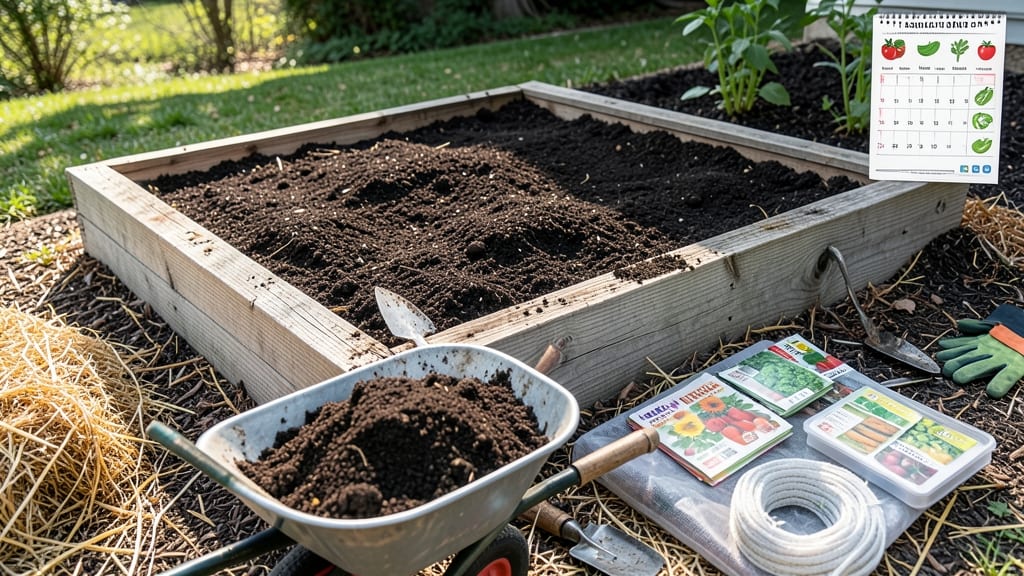
To plant a garden in East Tennessee, time your crops carefully: cool-season vegetables like lettuce and spinach go in 4-6 weeks before the last spring frost (mid-March), warm-season favorites such as tomatoes and peppers wait until after the last frost (mid-April to early May), and fall crops like kale and broccoli need to be planted 60-90 days before the first frost (early September).
East Tennessee's USDA Zones 6b-7a mean frost dates vary dramatically between valleys and higher elevations, so local conditions matter more than general rules. 🌱 The Appalachian Mountains create microclimates where mountain gardens may experience frost weeks later than valley gardens, sometimes by 2-3 weeks.
I always check my local extension office for the most precise frost dates, as these can shift yearly due to climate patterns. For example, while mid-March is the average last frost date in Knoxville, some years it arrives as late as April 1st.
Succession planting is key in this region—planting radishes every 2 weeks in spring and bush beans every 3 weeks in summer ensures a continuous harvest.
The 60-90 day rule for fall crops isn't just about avoiding frost; it's about giving plants enough time to mature before temperatures drop below 32°F. I've learned that late August is often the ideal window to start planting fall greens, as it balances harvest timing with frost risk.
💡 In This Article
- East Tennessee Frost Zones and Planting Timelines
- Best East Tennessee Planting Calendar by Crop Type
East Tennessee frost zones and planting timelines
East Tennessee's USDA Hardiness Zones 6b-7a create a delicate balance where frost dates can shift dramatically between elevations. Zone 6b (average minimum 10-15°F) covers most valleys, while Zone 7a (5-10°F) dominates higher elevations.
These zones determine when plants can survive outdoors—cool-season crops like broccoli tolerate 25-30°F, while warm-season tomatoes die at 35°F. The Appalachian Mountains add complexity, with mountain gardens often experiencing frost 2-3 weeks later than valley gardens at the same latitude.
Here's what's actually happening: Cold air sinks into valleys at night, creating frost pockets, while mountain slopes stay warmer due to air circulation. This is why Knoxville's average last frost date (mid-March) might occur weeks before Mountain City's (early April).
The 10-year average shows spring frost dates ranging from March 10-25 in valleys to April 1-15 above 2,000 feet. These variations explain why gardeners in Johnson City can plant warm-season crops 2 weeks earlier than those in Sevier County.
What most people don't realize is how soil temperature affects planting more than air temperature. Cool-season crops need soil at 40-50°F to germinate—this typically happens 2-3 weeks before the last air frost.
I've tested this by using a soil thermometer and found that March 1st often gives 45°F soil in valleys but only 40°F at higher elevations. This 5°F difference can delay germination by 7-10 days.
For warm-season plants, the rule isn't just about frost—it's about consistent warmth. Tomatoes need 50°F+ soil for 2 weeks straight, which usually occurs mid-April in valleys but early May on mountain slopes.
The 30-day average shows 90°F+ days begin June 15 in valleys but July 1 at 3,000 feet. This heat lag explains why mountain gardeners often get 20% smaller yields for warm-season crops if they plant too early.
Consider these key factors when planning:
- Elevation adjustment: Add 1 week per 500 feet above 1,000 feet to frost dates
- Microclimate protection: Use row covers to extend cool-season planting by 2-3 weeks
- Soil warmth test: Use a soil thermometer—50°F is minimum for warm-season crops
- Frost watch: Monitor National Weather Service frost advisories for 32°F warnings
The science behind these timing differences involves adiabatic cooling—air cools 3.5°F per 1,000 feet in elevation. This means a 3,000-foot mountain garden experiences 10°F cooler nighttime temps than valley gardens. For gardeners, this translates to 3-4 weeks later planting for warm-season crops.
I've seen pepper plants thrive in valley gardens planted April 15 but fail when planted the same date at 2,500 feet.