
Planting
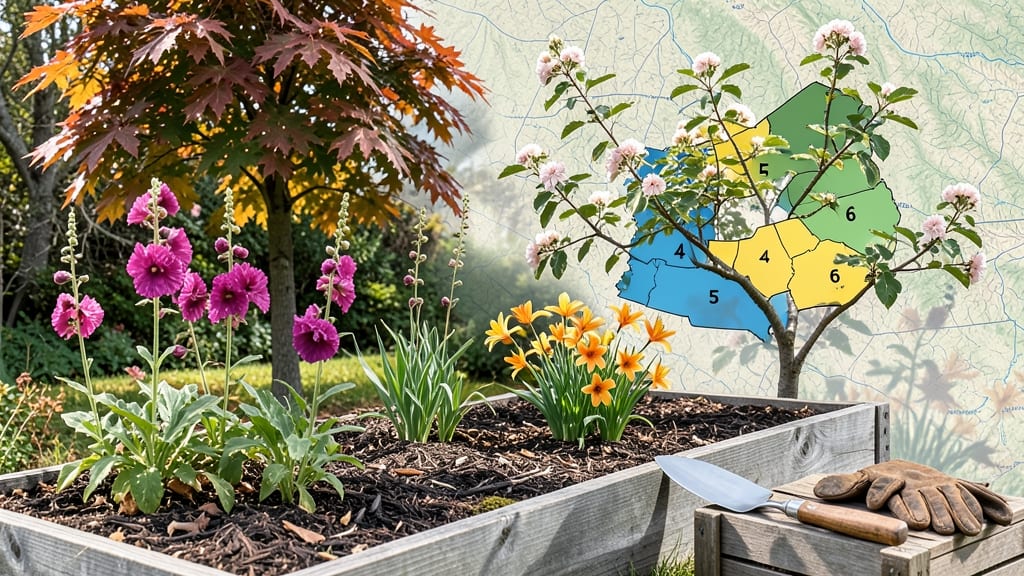
Michigan's gardening zones range from USDA Zone 4 in the Upper Peninsula to Zone 6 in the Lower Peninsula, with most areas falling between Zones 5b and 6a, which directly impacts what plants thrive and when you should plant them.
Understanding Michigan's gardening zones helps you choose the right plants for your area. 🌱 The Lower Peninsula's warmer climate (Zones 5b–6a) allows for longer growing seasons, while the Upper Peninsula's colder Zones 4a–5a mean shorter seasons and earlier frost.
This variation affects everything from when you plant tomatoes to which perennials will survive winter. For example, tender annuals like basil do well in the southern Lower Peninsula but may struggle in the Upper Peninsula unless you use season extenders.
Even within these zones, microclimates play a role—urban areas can be slightly warmer than rural spots, and lakeside locations may experience milder winters. The USDA's interactive map lets you pinpoint your exact zone, which is especially helpful for gardeners in transition areas like northern Michigan.
Knowing your zone also helps you time plantings correctly: cool-season crops like spinach can go in early spring, while heat-loving peppers need to wait until after the last frost date.
💡 In This Article
- USDA Zone Map of Michigan: Key Regions and Microclimates
- Best Gardening Seasons and Planting Timelines for Michigan Zones
USDA Zone map of Michigan: key regions and microclimates
Michigan’s gardening zones are shaped primarily by geography, with the Lower Peninsula dominated by Zones 5b–6a and the Upper Peninsula falling into colder Zones 4a–5a. The Great Lakes create microclimates—areas near water experience milder winters due to lake-effect snow buffering, while inland regions can be 2–5°F colder.
For example, Detroit (Zone 6a) averages 150 frost-free days, while Marquette in the Upper Peninsula (Zone 4b) sees just 100–120 days. Elevation also plays a role: hilltops in the UP can drop another 1–2 zones compared to valley floors.
The USDA’s interactive map lets you pinpoint your exact zone by entering your address, but Michigan’s irregular boundaries mean some areas straddle zone lines.
For instance, northern Michigan’s thumb region hovers between Zones 5a and 5b, while the Straits of Mackinac area transitions sharply from Zone 5a to 4b. These shifts matter for cold-sensitive plants like hydrangeas (Zone 3–9) or blueberries (Zone 3–7), which may need winter protection in Zone 4 areas.
Microclimates aren’t just about temperature—they also affect soil conditions. Lakeside gardens often have well-drained, sandy loam from glacial deposits, while inland areas may have heavier clay. This influences plant selection: rhubarb thrives in Zone 3 but struggles in waterlogged soils, while asparagus (Zone 3–10) prefers well-drained areas.
Even within a single zone, a south-facing slope can add 1–2 weeks to the growing season compared to a north-facing yard.
For gardeners, knowing these nuances helps avoid costly mistakes. A Zone 5a plant like peony might survive in the UP but bloom later due to shorter daylight in spring. Conversely, Zone 6a perennials like black-eyed Susan may struggle in Zone 4b without mulch.
The USDA map’s color-coded zones (purple for Zone 4, green for Zone 6) provide a starting point, but local nurseries and extension offices offer tailored advice for your microclimate.
Here’s how to use the map effectively:
- Enter your address: The USDA tool zooms to your exact zone, accounting for elevation and water proximity.
- Compare neighbors: A garden 10 miles away might be in a different zone—check nearby areas for planting inspiration.
- Adjust for microclimates: Add 1 zone if you’re near a lake or urban heat island; subtract 1 zone for cold pockets.
Understanding these variations lets you push boundaries—like growing roses in Zone 5b with winter mulch or extending the season with cold frames. The key is balancing the map’s data with your garden’s unique conditions. 🌿