
Planting
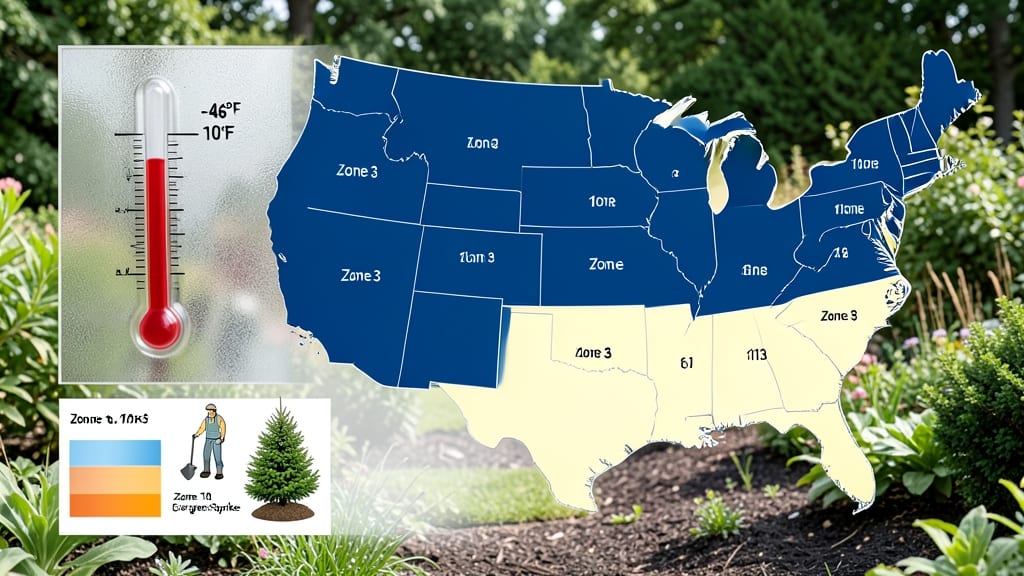
To find your gardening zone, look up your ZIP code on the USDA Plant Hardiness Zone Map, which reveals your 5-11 zone number (like Zone 7a) based on average winter temperatures. This zone tells you which plants will survive year-round in your area.
Your gardening zone isn't just a number—it's the foundation for successful planting. The USDA map divides the country into 13 zones based on average annual minimum temperatures, with each zone further split into 'a' and 'b' subzones representing 5°F differences.
For example, Zone 6a (-10°F to -5°F) is colder than Zone 6b (-5°F to 0°F), which directly affects what plants you can grow. 🌱 I always recommend double-checking your exact zone since microclimates (like a sunny south-facing wall) can create pockets that are 1-2 zones warmer than the official map suggests.
Once you know your zone, you can match it to plant hardiness ratings (like the ones on seed packets) to ensure your garden thrives. This system helps avoid costly mistakes, such as planting tender annuals too early or choosing perennials that won't survive your winters.
💡 In This Article
- How USDA Plant Hardiness Zones Determine Plant Survival
- Finding Your Exact Gardening Zone and Planting Timeline
How USDA plant hardiness zones determine plant survival
The USDA Plant Hardiness Zone Map divides the country into 13 zones based on the average annual minimum temperature—the coldest temperatures plants typically experience in winter. Each zone represents a 10°F range, with subzones 'a' and 'b' adding 5°F precision.
For example, Zone 7a ranges from -10°F to -5°F, while Zone 7b spans -5°F to 0°F. This precision matters because many plants have a critical temperature threshold below which they suffer frost damage or die.
Plants have evolved to survive specific temperature ranges, and their cells contain proteins that act like antifreeze to prevent ice crystal formation. When temperatures drop below a plant's hardiness zone, these proteins become overwhelmed, leading to cell damage.
For instance, a Zone 5 perennial like coneflowers will survive -20°F to -15°F winters, while a Zone 8 citrus tree can't tolerate anything below 10°F. The map ensures you match plants to climates where their natural cold tolerance aligns with local winter extremes. 🌡️
Beyond winter lows, zones also reflect frost-free days, which influence when plants can grow. Warmer zones (like Zone 10) have 300+ frost-free days, allowing tropical plants to thrive, while colder zones (like Zone 3) have only 90-120 frost-free days, limiting options to hardy species.
This is why Zone 3 gardeners grow potatoes in spring while Zone 10 gardeners can plant them year-round.
Microclimates—small areas with unique conditions—can shift your effective zone by 1-3 zones. A south-facing wall absorbs heat, creating a Zone 8 microclimate in a Zone 6 area, while a shady valley might be Zone 5 when the map says Zone 7.
These variations explain why some plants thrive in unexpected places. For example, a Zone 7a garden might successfully grow Zone 8 perennials near a brick wall, even if the rest of the yard freezes harder.
Elevation also plays a role: temperatures drop 3-5°F per 1,000 feet in elevation, meaning a mountain garden at 5,000 feet might behave like a Zone 5 even if the valley below is Zone 7.
This is why high-altitude gardeners often plant earlier in the season to avoid late frosts that can delay growth by 2-4 weeks. Understanding these factors helps you fine-tune your garden for success beyond the base zone number. ⚡
For example, if you're in Zone 6b (-5°F to 0°F), you can grow Zone 5-7 plants but should avoid Zone 8+ citrus or olives, which would perish in winter. The zone system acts as a survival guide, ensuring your garden's foundation matches the climate's realities. 🌿