
Pests and Diseases
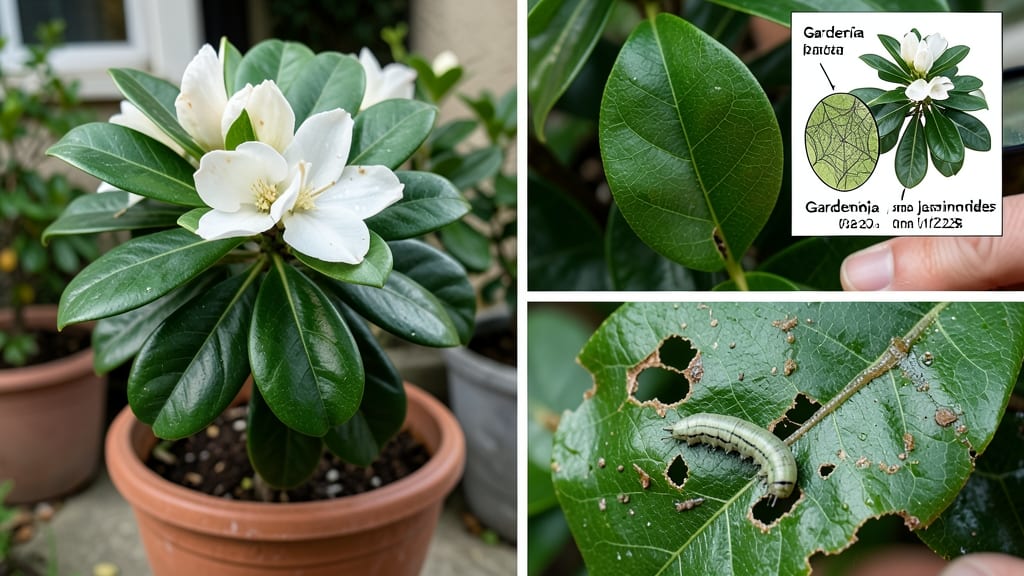
When your gardenia leaves are being eaten, the most likely culprits are spider mites, aphids, or caterpillars, though scale insects, thrips, deer, or slugs may also be responsible. Look for specific damage patterns like webbing, holes, or sticky residue to pinpoint the problem, then use targeted organic treatments.
Gardenias are particularly vulnerable because their soft, glossy leaves and sweet fragrance attract a variety of pests. 🌿 The key to solving this issue lies in understanding each pest's unique feeding habits—spider mites, for example, create fine webbing between leaves, while caterpillars leave behind irregular, ragged edges.
I always recommend examining both the top and undersides of leaves, as many insects hide there to avoid detection.
Once you've identified the culprit, organic solutions like neem oil or insecticidal soap can be highly effective. For larger pests like deer or slugs, physical barriers or traps often work best. The sooner you act, the better your chances of saving your gardenia's foliage and preventing further damage.
💡 In This Article
- Identifying Common Gardenia Leaf Pests by Damage Signs
- Organic Pest Control Methods for Gardenia Leaf Damage
Identifying common gardenia leaf pests by damage signs
Gardenias attract pests because their tender, sap-rich leaves provide an ideal food source. Spider mites, for instance, thrive on gardenias because their delicate foliage offers easy access to plant juices.
These tiny arachnids (barely visible to the naked eye) create fine webbing between leaves and leave behind a stippled yellowing pattern, often starting on the undersides where they hide from predators. 🔥 Unlike caterpillars, which chew through leaves, mites pierce plant cells with their mouthparts, sucking out chlorophyll and causing those distinctive pale spots.
Caterpillars, on the other hand, leave unmistakable signs: irregular holes with jagged edges and frass (tiny black fecal pellets) scattered across the leaves. You might also spot their silken shelters or even the caterpillars themselves curled up along stems.
These pests target gardenias primarily during their larval stage, when they're most voracious. Aphids create another telltale sign—sticky honeydew residue that attracts ants and promotes sooty mold growth on leaves.
The lifecycle of these pests matters too. Spider mites, for example, reproduce rapidly in dry, hot conditions (like summer), while aphids often arrive in spring as they migrate to new hosts.
Scale insects, which appear as small bumps on stems or leaves, go through multiple stages but remain stationary once they attach. Understanding these patterns helps you predict when to monitor your gardenias most closely. 🌟
Don't overlook larger threats like deer or slugs. Deer typically leave clean, ragged edges along leaf margins, while slugs create larger, irregular holes with a silvery slime trail. These pests are more common in shaded areas with high humidity.
The key difference? Deer damage usually affects multiple plants in a garden, while slugs target individual gardenias at night when conditions are moist.
Seasonal patterns also play a role. Early spring often brings aphid infestations, while late summer sees spikes in spider mite populations. Gardenias stressed by drought or poor soil nutrition become even more vulnerable.
That's why maintaining consistent watering (keeping soil evenly moist but not soggy) and using balanced fertilizer can deter pests before they become a problem.
For accurate identification, use a magnifying glass to examine leaf undersides and stems. Look for these key visual clues: webbing (mites), holes with frass (caterpillars), honeydew (aphids), or bumps (scale). Each pest leaves a unique signature that reveals its identity and the best treatment approach. 💫