
Propagation
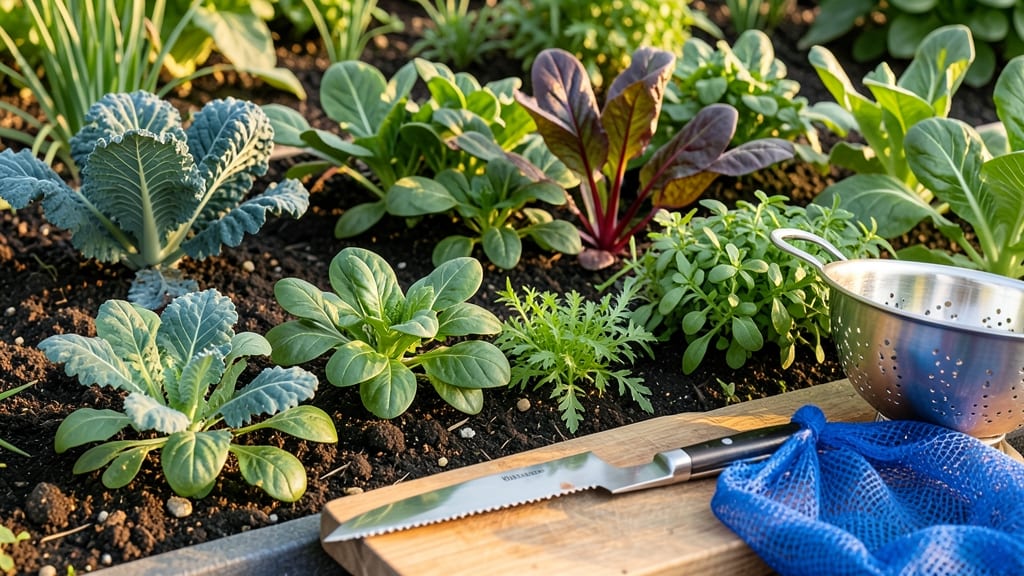
You can freeze straight-from-the-garden greens like spinach, kale, Swiss chard, collard greens, and arugula by washing, drying thoroughly, chopping, and blanching before storing in airtight containers or freezer bags. Avoid freezing delicate greens like lettuce or herbs with high water content.
Freezing garden greens is a game-changer for reducing food waste and keeping your pantry stocked with nutrients. 🌱 The key lies in selecting the right leafy varieties—those with sturdy stems and lower moisture content hold up best in the freezer.
For example, Swiss chard and collard greens maintain their vibrant color and crisp texture for months when prepared properly, while spinach and arugula work well but may soften slightly over time. The blanching step is non-negotiable: it stops enzymes that cause spoilage and preserves those bright colors and essential vitamins.
Here's a pro tip: chop greens into uniform pieces before freezing—they'll thaw and reheat more evenly. Use airtight containers or freezer bags to prevent freezer burn, and label everything with the date.
Most properly frozen greens stay fresh for 8-12 months, though leafy greens like kale often retain better quality than spinach. The payoff? You'll always have fresh-tasting greens ready for soups, smoothies, or sautéed dishes without the last-minute grocery run.
💡 In This Article
- Why Blanching Preserves Garden Greens’ Texture and Nutrients
- Step-by-Step Freezing Prep for Garden Greens
Why blanching preserves garden greens’ texture and nutrients
Blanching is the secret weapon for freezing garden greens—it’s a quick 90-second dip in boiling water followed by an ice bath. This process halts enzymatic activity that would otherwise turn your vibrant greens into a mushy, discolored mess.
When greens like kale or spinach are harvested, enzymes called polyphenol oxidases start breaking down cell walls, causing browning and texture loss. Blanching stops this at the source, preserving that fresh-picked crunch for months.
The science gets even cooler when you consider nutrients. Vitamin C, for example, degrades rapidly when exposed to air and light—blanching locks in up to 90% of its original content compared to just 50% in unblanched greens after freezing. Similarly, folate (a B vitamin) remains more stable.
The ice bath after blanching is critical too—it rapidly cools the greens to 40°F or below within 30 seconds, preventing further nutrient loss while maintaining crispness. Without this step, greens freeze with large ice crystals that rupture cell walls, leading to that dreaded "soggy" texture.
Here’s what happens when you skip blanching: your spinach might retain 70% of its original color after 3 months, but it’ll taste dull and limp. Blanched spinach? Still bright green and firm enough to hold its shape when thawed.
The same goes for Swiss chard—its thick stems stay crisp, while unblanched leaves turn rubbery. For arugula, blanching preserves that peppery bite that disappears in unfrozen samples. 🌿 The trade-off is minimal prep time (just 2-3 minutes per batch) for maximum quality.
Different greens need slightly different blanching times. Leafy greens like spinach and arugula only need 1-2 minutes in boiling water, while heartier greens like collards or Swiss chard can handle 3-4 minutes. Over-blanching leaches nutrients and softens texture, so timing is everything.
After blanching, spread the greens on a clean towel to dry completely—any moisture trapped in the freezer bags will turn into ice crystals, ruining texture. This is why professional freezer packs use food-grade mesh bags to drain excess water before sealing.
Color retention is another major win. Chlorophyll—the pigment that gives greens their vibrant hues—degrades faster in unfrozen samples. Blanching preserves chlorophyll by reducing oxidation, keeping your frozen kale looking as fresh as the day you picked it.
For comparison, unfrozen spinach loses 30% of its green color in just 24 hours, while blanched spinach stays nearly identical after 6 months in the freezer. The same principle applies to nutrients like lutein and zeaxanthin, which give greens their antioxidant power.
For the home freezer, a simple stovetop setup works: use a large pot of water (enough to submerge greens) and a bowl of ice water nearby. After blanching, immediately transfer greens to the ice bath for 30-60 seconds, then drain thoroughly.
This method is 95% as effective as commercial blanching equipment but costs nothing. The key is consistency—always use the same timing and water temperature (180°F) to get predictable results.
With this approach, your frozen greens will taste like they were just harvested, not like they’ve been sitting in the freezer for months.