
Plants
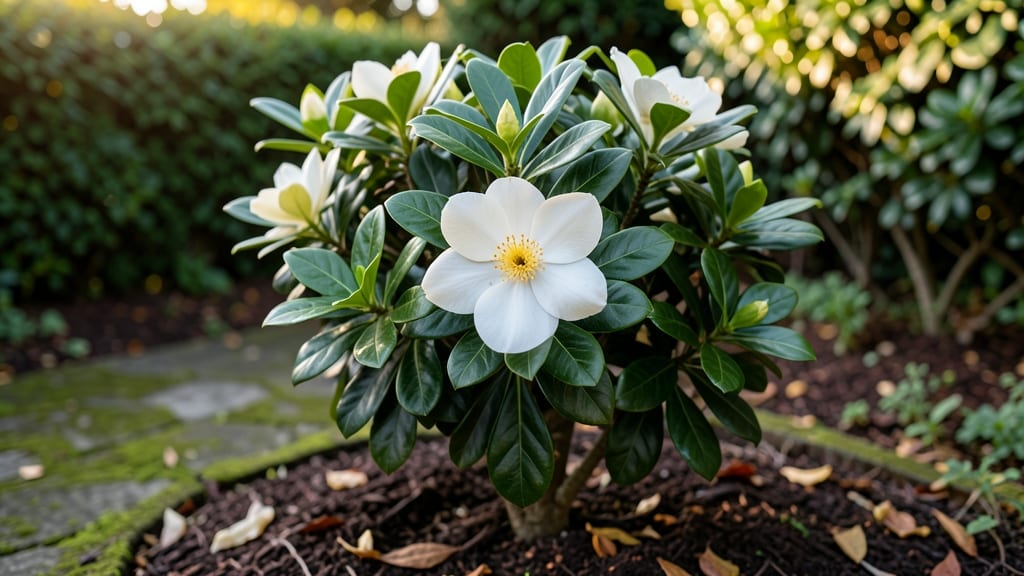
A gardenia plant looks like a lush tropical shrub with thick, glossy leaves and fragrant, creamy-white blooms featuring a bright yellow center. Its waxy petals often appear in clusters, while mature plants grow in a dense, rounded shape.
A gardenia's most striking feature is its waxy, velvety petals that give flowers a slightly ruffled texture when fully open. 🌸 The blooms typically measure 2-4 inches wide and emit a heady, sweet fragrance that’s strongest in the evening.
Unlike jasmine or camellia, gardenias have a distinctive yellow center surrounded by pure white petals, creating a striking contrast. The leaves are another key identifier—thick, oval-shaped, and deep green with prominent veins, giving the plant its signature tropical vibe.
The plant's growth habit also sets it apart: gardenias develop a rounded, bushy shape over time, with branches that spread outward. With proper care, they can reach 3-6 feet tall, making them perfect for hedges or as standalone ornamental plants.
Their glossy foliage and fragrant flowers make them a favorite in both gardens and indoor settings.
💡 In This Article
- Identifying Gardenia Flowers and Foliage
- Gardenia Growth Habits and Cultivation Tips
Identifying gardenia flowers and foliage
The gardenia's flowers are its most iconic feature, with a complex structure that sets them apart from similar blooms. Each flower typically consists of 4-6 layers of waxy, creamy-white petals surrounding a bright yellow center, creating a striking contrast.
The petals have a distinctive velvety texture that feels almost silky to the touch, with a subtle ruffled edge when fully opened. These blooms usually measure between 2-4 inches wide, though some varieties can reach up to 6 inches in diameter.
What truly makes gardenias stand out is their fragrance—a sweet, intoxicating scent that's strongest in the evening hours. The aroma comes from volatile compounds like benzyl acetate and linalool, which are also found in jasmine but in different concentrations.
This scent profile is so distinctive that gardenia flowers are often used in perfumes and floral arrangements. The blooms grow in clusters along the stems, with each flower lasting 3-5 days before wilting, though new buds continuously form in optimal conditions.
The leaves play an equally important role in identification, serving as a year-round marker even when flowers aren't present. Gardenia leaves are thick, leathery, and oval-shaped, measuring about 2-6 inches long with smooth edges and prominent central veins.
The surface has a glossy finish that reflects light beautifully, giving the plant its signature tropical appearance. Unlike camellia leaves which have serrated edges, gardenia leaves maintain their smooth outline, creating a clean, elegant look.
When comparing gardenias to similar plants, the key differences become clear. Jasmine flowers, while fragrant, have 5 delicate petals and lack the gardenia's waxy texture and yellow center.
Camellias feature more petal layers (often 7-9) and come in a wider range of colors, while gardenias maintain their signature white-and-yellow color scheme. The stems also differ—gardenia stems are woody and slightly hairy, while jasmine stems are more vine-like and smooth.
Here's what to look for when identifying gardenias in nature or nurseries:
- Flower structure: 4-6 waxy petal layers with bright yellow center
- Fragrance: Sweet, heavy scent strongest in evening
- Leaf texture: Thick, glossy, and smooth-edged
- Growth pattern: Rounded, bushy habit with woody stems
The combination of these visual and sensory characteristics makes gardenias instantly recognizable to those familiar with their unique appearance. 🌸