
Tools
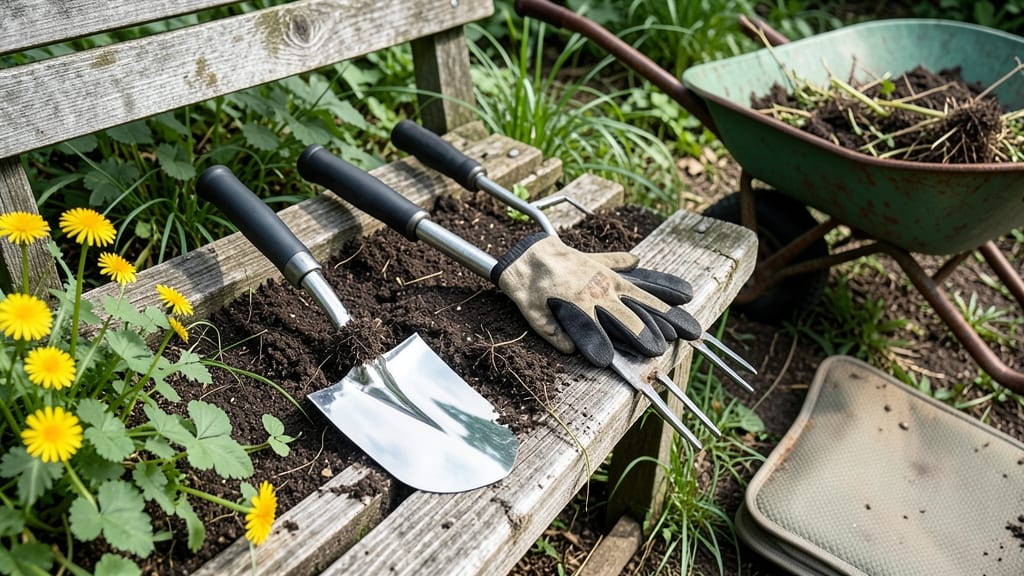
A weed clearing garden tool for heavy weeds and root removal needs a sharp, heavy-duty blade or digging edge to cut through tough growth and pull out deep roots cleanly. Prioritize tools like sturdy hoes, weeders, or cultivators built for long-lasting performance and comfortable handling.
A weed clearing tool's effectiveness depends on both the blade design and the material.
For example, a dandelion digger with a forked tip excels at extracting deep roots, while a stirrup hoe with a sharp cutting edge works best for shallow weeds. 🌱 The right tool also depends on your soil—sandy soil requires less force than hard clay, so blade thickness matters.
I always recommend testing a few types to see which feels most natural in your hands before committing to one.
Durability is another key factor. Tools with heat-treated steel blades resist bending and stay sharp longer, while ergonomic handles reduce strain during long gardening sessions.
Many gardeners swear by Fiskars or Radius Garden tools for their balance of strength and comfort, though budget options like Spear & Jackson can work just as well for occasional use.
💡 In This Article
- How to Choose a Weed Clearing Tool for Root Depth and Soil Type
- Top-Rated Weed Clearing Tools for Heavy Weeds: Hands-On Comparison
How to choose a weed clearing tool for root depth and soil type
The mechanics behind weed removal tools hinge on their blade geometry and material. A stirrup hoe, for example, uses a 90-degree blade angle to slice through shallow weeds at the soil surface, while a dandelion digger employs a forked tip to pry deep roots from hard-packed earth.
The blade's carbon steel construction (common in budget tools) holds an edge well but rusts faster than stainless steel, which costs more but lasts decades. For clay-heavy soil, look for blades with a thicker cross-section (3-4mm) to prevent bending under pressure.
Root depth determines which tool wins. Shallow weeds (1-2 inches deep) yield to a hula hoe or swing blade weeder, whose lightweight design lets you work quickly without fatigue.
Deep-rooted invaders like quackgrass or bindweed, however, demand a claw weeder or dandelion digger with a 6-8 inch reach. The digging action here relies on leverage—applying 15-20 lbs of force at the handle end translates to 50+ lbs of pressure at the tip.
Soil moisture also matters: dry, crumbly soil lets roots slip free easier than compacted clay.
Your grip and stance reveal why ergonomics matter as much as blade sharpness. A D-shaped handle (like on Fiskars tools) fits naturally in your palm, reducing wrist strain during 30-minute sessions. For heavy-duty work, extendable handles (up to 36 inches) let you stand upright while tackling large areas.
The weight distribution is critical too—tools balanced at the 1.5-2 lb range feel lighter than their 3 lb+ counterparts, but heavier tools often cut through tougher growth with less effort. Test a few to see which feels like an extension of your arm.
Material science plays a hidden role in longevity. Heat-treated blades (like those in Radius Garden tools) maintain their edge 3-5x longer than untreated steel, while powder-coated handles resist rust better than painted ones.
For organic gardeners, copper or brass blades avoid chemical coatings, though they require more maintenance. The trade-off? Copper blades cost $15-$25 more upfront but may last 10+ years with proper care. 🔨
Consider the soil's compaction level next. Sandy loam requires 20-30% less force to remove roots than hardpan clay, so a lighter tool suffices. In rocky terrain, opt for a wide-blade weeder (4-6 inches) to navigate between stones.
The key is matching the tool's mechanical advantage (force amplification) to your soil's resistance. A lever-based weeder, for instance, can multiply your hand strength by 4x, making it ideal for stubborn roots in tight spaces.
Pro tip: Pair your tool with the right technique. For deep roots, insert the blade at a 45-degree angle to slice cleanly, then wiggle it side-to-side to loosen the root ball. In hard soil, a light tap with a mallet (if your tool allows) can help the blade penetrate deeper.
The goal is to remove 90% of the root to prevent regrowth—something only the right tool-soil match can achieve consistently.