
Vegetables
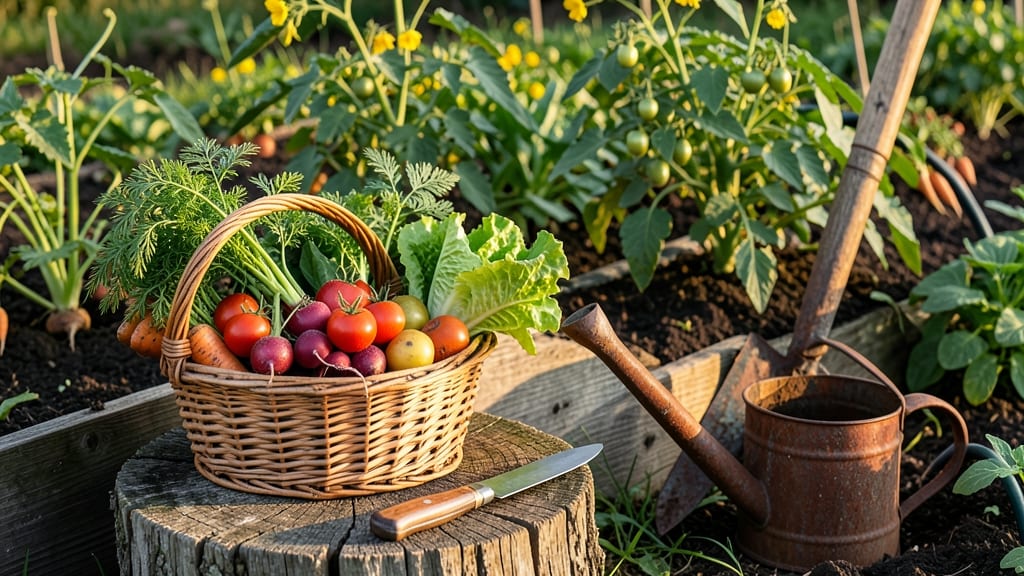
A victory gardens WW2 definition refers to homegrown vegetable and herb plots planted by civilians to address wartime food shortages during World War II, symbolizing self-sufficiency and community resilience.
During WWII, these gardens weren't just about growing food—they were a strategic response to food scarcity. 🌱 The U.S. government even launched campaigns encouraging families to plant "victory gardens," offering resources like seeds and gardening guides.
By 1943, over 20 million gardens were producing 40% of the nation's produce, easing pressure on commercial farms. Many families grew staples like tomatoes, potatoes, and carrots, while others experimented with less common crops to maximize yields in small spaces.
What made these gardens so effective was their adaptability. Urban dwellers used balconies and rooftops, while rural families expanded existing plots. The shared effort fostered community spirit, with neighbors trading produce and sharing gardening tips.
Today, the legacy lives on in modern homesteading and sustainable farming movements, proving that small-scale growing can have big impacts.
💡 In This Article
- How WWII Victory Gardens Boosted Food Production
- Planting and Maintaining a WWII-Style Victory Garden Today
How WWII victory gardens boosted food production
The mechanics behind victory gardens' success lay in their ability to diversify food sources during a time when commercial agriculture faced massive disruptions. By 1943, these gardens covered 18 million acres—an area roughly the size of New England—producing 40% of the nation's fresh produce.
This wasn't just about growing vegetables; it was a logistical masterstroke that freed up commercial farms to focus on livestock and grains while reducing the strain on transportation networks already burdened by wartime needs.
Government incentives played a pivotal role. The Victory Garden Program offered free seeds, gardening guides, and even radio broadcasts featuring tips from agricultural experts.
Families planted high-yield, space-efficient crops like radishes (ready in 25 days), green beans (harvestable in 50 days), and potatoes (which could be stored for months).
Urban gardens often prioritized leafy greens and herbs—like lettuce and parsley—that thrived in containers, while rural plots grew staples like corn and tomatoes, which required more space but provided long-term sustenance.
What made these gardens uniquely effective was their adaptability to local conditions. In cities like New York, rooftop gardens sprouted on tenement buildings, while suburban families converted lawns into intensive planting beds.
The U.S. Department of Agriculture even promoted "war gardens" in schools, teaching children to grow their own food—a practice that instilled lifelong skills. 🌱 The psychological impact was equally significant; these gardens became symbols of patriotism and resilience, with families proudly displaying their harvests as a tangible contribution to the war effort.
Another critical factor was the reduction of food waste. Victory gardens emphasized seasonal planting and preservation techniques, such as canning and root cellaring. Families learned to ferment vegetables, dry herbs, and store potatoes in cool, dark spaces to extend freshness.
This not only stretched limited resources but also taught modern lessons in sustainable food systems that resonate today.
The government's propaganda campaigns amplified the effort. Posters like "We Can Do It!" (featuring Rosie the Riveter) and slogans like "Grow Food for Freedom" framed gardening as a direct act of support for the military.
By 1945, victory gardens had produced 8 million tons of food, equivalent to the output of 41 billion cans of produce—enough to feed the entire U.S. population for a year. This achievement demonstrated how decentralized agriculture could complement large-scale farming during crises.
Even the soil itself played a role in their success. Many gardens used composted household waste (like kitchen scraps and yard clippings) to enrich poor urban soils, proving that waste reduction and food production could work hand-in-hand.
This holistic approach laid the foundation for today's urban farming and zero-waste movements, showing that small-scale growing isn't just nostalgic—it's a practical solution for modern food security challenges.