
Tools
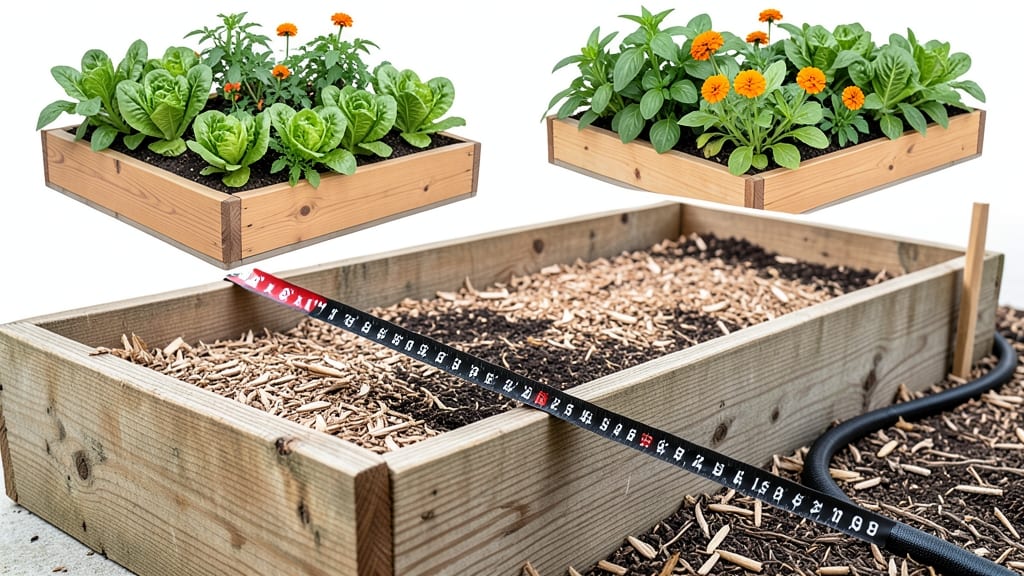
Standard garden bed sizes for vegetables typically range between 4 feet wide and 8–12 feet long, while flower beds often span 3–6 feet wide with customizable lengths. Raised beds should allow 24–36 inches of depth for optimal root growth and accessibility.
When planning your garden layout, the width of your beds is just as important as their length.
A 4-foot width gives you perfect reach to the center from either side, eliminating the need to step on soil and compact it—ideal for both vegetables and flowers. 🌱 For raised beds, the extra 12-inch depth provides room for deeper-rooted plants like tomatoes or carrots while keeping the soil warmer and better-draining.
I’ve found that longer beds (up to 12 feet) help maintain consistent soil moisture and temperature across the entire planting area, which is especially helpful in hot climates or during drought conditions.
Flower beds often get more creative with dimensions since they’re not planted in rows, but sticking to 3–6 feet wide keeps them manageable for pruning and watering.
The key difference between veggie and flower beds lies in their purpose: vegetables need precise spacing for growth, while flowers can be arranged more freely for aesthetic appeal.
For example, a 6-foot-long bed might accommodate a full row of bush beans or a mix of annuals and perennials in a cottage-style garden.
💡 In This Article
- Why Garden Bed Dimensions Matter for Plant Health
- Designing Functional Garden Beds for Different Crops
Why garden bed dimensions matter for plant health
Garden bed dimensions directly influence plant growth by controlling three critical factors: reachability, root development, and soil consistency.
A 4-foot width is the golden standard because it allows gardeners to comfortably reach the center from either side without stepping on the soil—this prevents compaction, which can restrict root growth by up to 30%. 🌱 For vegetables like lettuce or radishes, this width ensures even sunlight exposure across the entire bed, while flowers in wider beds may develop uneven growth patterns due to shading from taller plants at the edges.
The depth of your bed determines how far roots can penetrate. Standard in-ground beds provide 12–18 inches of depth, sufficient for shallow-rooted plants like herbs or strawberries.
However, raised beds with 24–36 inches of depth create an ideal environment for deep-rooted vegetables such as tomatoes or carrots, which need 18–24 inches to thrive. The extra depth also improves drainage and warms the soil faster in spring, giving plants a 2–3 week head start compared to in-ground planting.
Length plays a subtle but important role in soil consistency. Longer beds (up to 12 feet) help maintain uniform moisture levels because they reduce edge effects—where soil dries out faster due to exposure.
This is particularly valuable in hot climates or during droughts, where shorter beds may require 30–50% more frequent watering. For flowers, longer beds also allow for creative layering of plants by height, creating natural windbreaks and reducing pest access to vulnerable stems.
Airflow within the bed is another dimension-dependent factor. Taller plants like corn or sunflowers need at least 18 inches of space between rows to prevent fungal diseases caused by poor airflow.
In contrast, compact flowers like marigolds or pansies can be planted closely together (6–12 inches apart) because their bushy growth naturally improves circulation. The bed's width and length create microclimates that affect how quickly dew evaporates, which can influence disease susceptibility by up to 40% in humid conditions.
Pest control is the final piece of the dimensional puzzle. Wider beds discourage burrowing pests like voles, while deeper beds make it harder for surface-dwelling insects to access roots. For example, a 12-inch-deep raised bed creates a natural barrier against cutworms, which struggle to penetrate the additional soil layer.
Flower beds with 3–4 feet of width also make it easier to spot and remove pests before they establish colonies, reducing damage by 25–30% compared to narrower beds.
Consider this real-world application: A 4x8-foot vegetable bed can produce enough tomatoes for a family of four, while a 3x6-foot flower bed might yield 50–75 blooms of a single variety.
The dimensions aren't just about space—they're about creating an ecosystem where every plant has the optimal conditions to thrive without competing for resources. 🌿