
How To
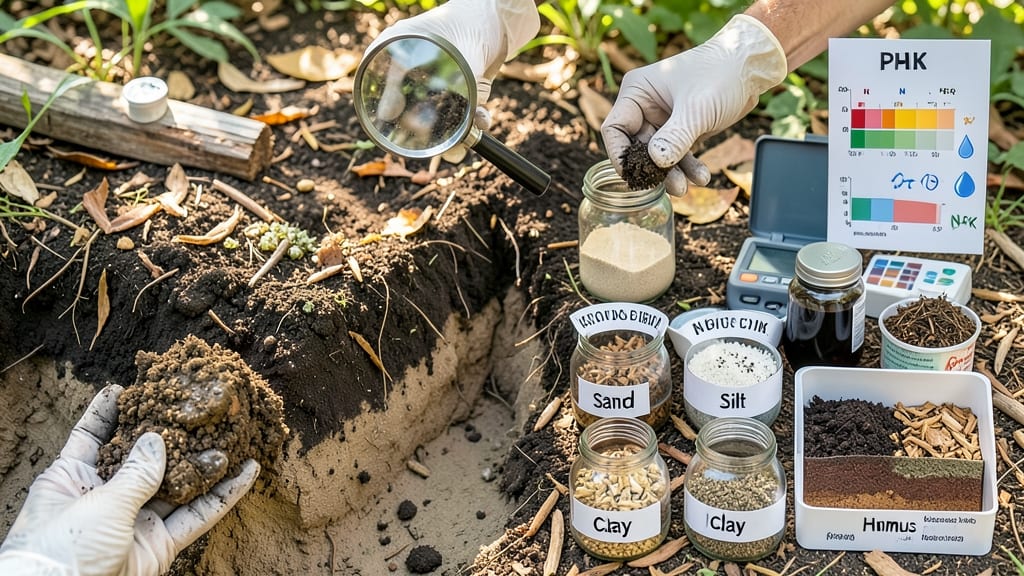
Soil science for gardeners starts with testing pH, organic matter, and nutrient levels to create the perfect growing conditions, while analyzing soil structure and microbial life helps you tailor fertilization and drainage strategies for maximum plant vitality.
Understanding your soil's makeup is like having a roadmap for your garden's success. 🌱 The pH level alone can determine whether your plants thrive or struggle—acidic soils favor blueberries, while alkaline soils suit lavender. Beyond pH, organic matter content affects moisture retention and nutrient availability, making it just as critical.
I've found that even a simple at-home test kit can reveal surprising deficiencies, like low nitrogen or phosphorus, which directly impact flower production and root growth.
The real magic happens when you combine these tests with observations of your plants' health—yellowing leaves might signal a nutrient imbalance, while poor drainage could be tied to soil compaction.
What sets experienced gardeners apart is their ability to interpret these tests and take action. For instance, if your soil tests show high clay content, adding coarse sand improves drainage, while sandy soils benefit from compost to boost nutrient retention.
Microbial activity, often overlooked, plays a huge role in breaking down organic matter and making nutrients accessible to plants. 🔬 The key is balancing quick fixes with long-term strategies—like using compost teas to boost beneficial bacteria while adjusting pH gradually with lime or sulfur.
💡 In This Article
- Key Soil Properties Every Gardener Should Measure
- Practical Soil Amendments Based on Test Results
Key soil properties every gardener should measure
Soil isn't just dirt—it's a living ecosystem where texture, chemistry, and biology work together to feed your plants. The three foundational properties to measure are texture (sand, silt, clay ratio), pH balance (acidity/alkalinity), and nutrient density (nitrogen, phosphorus, potassium).
Texture determines drainage and root penetration: sandy soils drain fast but hold few nutrients, while clay soils retain moisture but can suffocate roots. A simple jar test reveals your soil's composition—just fill a jar with soil, water, and shake.
After settling, the layers show sand (bottom), silt (middle), and clay (top). 🌱
pH levels directly impact nutrient availability. Most vegetables prefer 6.0-7.0, while blueberries thrive in 4.5-5.5 acidity. A pH meter or test kit measures this with color-changing indicators or digital readings. For example, if your soil tests at 5.5, adding agricultural lime raises pH, while elemental sulfur lowers it.
Nutrient density tests (like those from local extension offices) reveal deficiencies—low nitrogen (N) causes stunted growth, while phosphorus (P) shortages delay flowering. At-home kits provide quick results, but lab tests offer precise data for large gardens.
What these tests reveal isn't just numbers—it's a prescription for your garden. A clay-heavy soil with pH 8.0 might need gypsum to improve structure and sulfur to lower alkalinity, while a sandy soil at pH 5.0 could benefit from compost and lime.
Microbial activity, often measured indirectly through organic matter content, breaks down nutrients into plant-available forms. For instance, 1-3% organic matter is ideal for most plants, but composting or adding worm castings can boost this percentage over time.
Don't overlook the visual cues that complement test results. Compacted soil that repels water after rain suggests poor structure, while vibrant earthworms indicate healthy microbial life. Leaf discoloration—yellowing between veins signals magnesium deficiency, while purple stems often mean phosphorus shortages.
These visual clues help you cross-check lab results and adjust amendments accordingly. For example, if your soil tests show low potassium (K), banana peels or greensand can remedy the issue naturally over a few months.
Interpreting these measurements transforms guesswork into strategy. A high-sodium soil might need gypsum to flush out excess salts, while low calcium can be addressed with crushed eggshells. The goal is balance: too much of any amendment can disrupt the soil's delicate chemistry.
For instance, over-applying lime can raise pH beyond optimal levels, locking out essential micronutrients like iron and manganese. Always aim for gradual adjustments—soil is a living system, not a chemistry set. 🔬
Advanced gardeners also monitor cation exchange capacity (CEC), which measures how well soil holds onto nutrients. Soils with high CEC (like clay) retain nutrients longer but may need more frequent testing, while low-CEC soils (like sand) release nutrients quickly but require more frequent feeding.
This is where organic matter becomes your best friend—it increases CEC, improving nutrient retention and water-holding capacity. Think of it as soil insurance: the more organic matter, the more resilient your garden becomes to fluctuations in weather and fertility.
Start with the basics: texture, pH, and nutrients. Then layer in observations of plant health and microbial activity. Over time, you'll develop an intuition for your soil's needs—like recognizing that your tomatoes always thrive after a compost tea application or that your roses perk up after a light sulfur dusting.
Soil science isn't about perfection; it's about partnership. Your garden's health depends on understanding these properties and responding with confidence. 🌿