
Tools
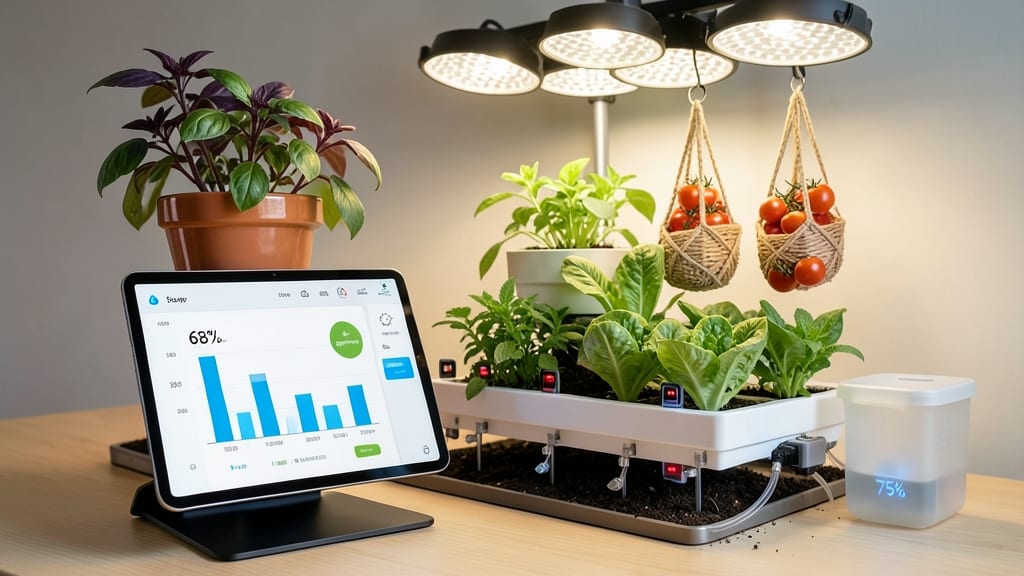
A smart gardening system automates watering, tracks soil moisture, and adjusts to weather patterns to save water while boosting plant growth through precision technology and real-time monitoring.
These systems use embedded sensors that measure soil moisture levels and connect to weather data feeds, creating a dynamic watering schedule tailored to your plants' needs. 🌱 The beauty of this tech is how it eliminates guesswork—no more overwatering or underwatering, which can both stress plants and waste precious resources.
I’ve seen systems cut water usage by nearly half while actually improving yields, thanks to the AI that learns from your garden’s specific conditions over time.
For home gardeners, the biggest advantage is convenience—many systems integrate with voice assistants or mobile apps, letting you monitor and control your garden from anywhere. Commercial growers benefit even more from the scalability and data insights, which help optimize large-scale operations.
The upfront cost might seem steep, but the long-term savings on water and energy make it a smart investment for serious gardeners.
💡 In This Article
- How IoT Sensors and Data Analytics Power Smart Irrigation
- Top Smart Gardening Systems for Home and Commercial Growers
How IoT sensors and data analytics power smart irrigation
At the heart of these systems are capacitive soil moisture sensors that measure the dielectric constant of soil—essentially detecting how much water is available to plant roots.
Unlike traditional moisture sensors that rely on electrical resistance (which can corrode over time), capacitive sensors use two metal plates to create an electrical field. When soil moisture changes, the field's capacitance shifts, sending real-time data to a central hub or cloud-based platform.
This tech is so precise it can distinguish between different soil types, from sandy loam (which drains quickly) to heavy clay (which retains moisture longer).
Weather data plays an equally critical role. Most smart systems integrate with NOAA APIs or local weather stations to factor in rainfall, humidity, and temperature forecasts. For example, if your system predicts 0.5 inches of rain in the next 24 hours, it will automatically pause irrigation to prevent overwatering.
The AI algorithms then adjust future schedules based on how your plants responded—like reducing watering frequency for drought-resistant succulents while maintaining higher moisture for leafy greens. This dynamic adaptation is what cuts water use by up to 50% compared to fixed-timer systems.
What makes this truly revolutionary is the learning curve. Many systems use machine learning to create a "plant profile" over time. For instance, if you notice your tomatoes produce better yields when watered at 6 AM instead of 8 AM, the system will adjust the schedule automatically.
The data doesn't just stop at water—some advanced systems track leaf temperature (via infrared sensors) to detect stress before it's visible, allowing for preemptive adjustments. This level of precision turns gardening from an art into a science-backed practice.
For home gardeners, the practical benefit is immediate: no more soggy soil or wilted plants from inconsistent watering. Commercial growers see even greater returns, with some operations reporting 20-30% higher yields due to optimized hydration.
The sensors typically last 5-10 years before needing replacement, and most systems are designed to work with existing irrigation setups, making them a low-friction upgrade.
The real magic happens when you combine these sensors with flow meters that track exactly how much water each zone receives—this helps identify leaks or inefficient sprinklers that might be wasting resources.
One common misconception is that these systems require complex setup. In reality, most plug into your Wi-Fi network and connect via companion apps that guide you through installation.
For example, the Rachio 3 system uses a simple smartphone app to map your garden zones and calibrate sensors in under 30 minutes. The initial learning phase might take a few weeks as the system adapts to your garden's unique conditions, but once optimized, it runs almost entirely autonomously.
This hands-off approach is perfect for busy gardeners who want professional-level results without the daily maintenance.
What's even more impressive is how these systems integrate with broader smart home ecosystems. Imagine your irrigation controller pausing automatically when your smart sprinkler detects rain, or adjusting watering when your home's energy monitor shows peak solar production (making it more efficient to run pumps during daylight hours).
The cross-platform compatibility means you're not just buying a watering system—you're gaining a tool that becomes smarter over time as it learns from your garden's specific needs and your lifestyle patterns. 💧