
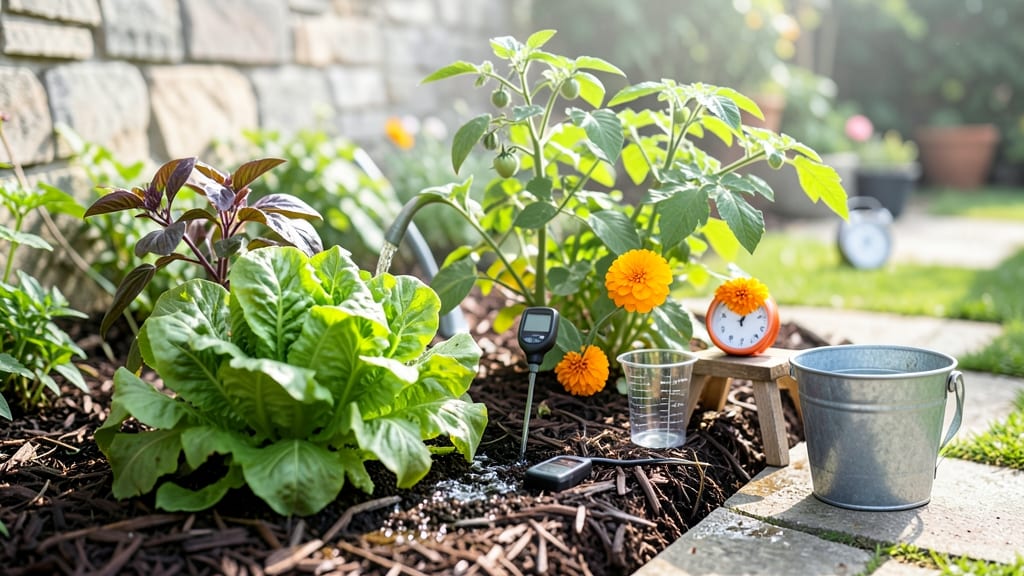
How Much Water Does a Garden Need Per Day: Science-Backed Rules by Plant Type

Watering

How Much Water Does a Garden Need Per Day: Science-Backed Rules by Plant Type

A garden needs the right amount of water per day to thrive, with 1 to 2 inches of water per week as a general guideline—but the exact amount depends on plant types, soil, and weather, not just a one-size-fits-all rule.

Overwatering or underwatering your garden can mean the difference between a thriving landscape and wasted resources—or worse, dead plants. But how do you know exactly how much water your garden needs each day? The answer depends on plant types, climate, and soil conditions, not guesswork.

For example, leafy greens like lettuce or spinach need consistent moisture, while drought-tolerant plants like lavender or succulents can survive on far less. Meanwhile, heavy clay soil holds water longer than sandy soil, which drains quickly. Without the right approach, you might be overwatering—or worse, underwatering—without even realizing it.

Below, I break down the science-backed watering rules by plant type, how to adjust for your soil and climate, and the simple tests to check if you’re getting it right. No more guesswork—just a garden that stays healthy all season long.

💧 Frequency
Varies by plant and season Every 3-7 days (depending on plant and weather)
🌿 Water Need
Medium Most plants need consistent moisture but avoid waterlogging.
🌅 Best Time
Morning Before 10 AM to reduce evaporation and fungal diseases to reduce evaporation and fungal diseases
🥛 Amount
Deep soak (1-2 inches of water per week) ~2500

Daily water requirements by plant type: science-backed guidelines

Understanding your garden's water needs per day isn't about guessing—it's about science. Plants vary wildly in their thirst levels, from water-loving tomatoes to drought-tolerant lavender. The key is matching your watering schedule to each plant's root depth and growth stage.

For example, shallow-rooted herbs like basil need frequent, light watering, while deep-rooted fruit trees can go weeks between deep soaks.

Research shows that 1-2 inches of water per week is the general rule for most gardens, but this changes dramatically based on plant type. Vegetables like lettuce and spinach prefer consistent moisture, while ornamental grasses thrive with minimal water once established.

Even the time of day matters—watering in the early morning reduces evaporation and fungal risks compared to evening watering.

The summary-table below breaks down daily water needs by plant category, including root depth considerations. Use this as your guide, but always adjust for your local climate conditions and soil type.

For instance, sandy soil drains quickly and may need daily watering in summer, while clay soil can hold moisture for 5-7 days between waterings.

Plant Type Daily Water Needs (inches) Root Depth Best Watering Time Notes
Leafy Greens (Lettuce, Spinach) 0.25-0.5 Shallow (6-12 inches) Morning Keep soil moist; mulch to retain water
Fruiting Plants (Tomatoes, Peppers) 0.5-1.0 Medium (12-18 inches) Morning or evening Deep watering 2-3x/week; avoid wetting leaves
Herbs (Basil, Cilantro, Parsley) 0.25-0.5 Shallow (6-12 inches) Morning Let soil dry slightly between waterings
Flowers (Roses, Petunias, Marigolds) 0.5-1.0 Medium (12-24 inches) Morning Deep watering 2x/week; mulch heavily
Ornamental Grasses (Miscanthus, Fountain Grass) 0.25-0.5 (established) Deep (24+ inches) Morning

How to adjust watering based on soil type and climate

Your garden's soil type and local climate are the two biggest factors in determining how much water it needs daily. Sandy soil drains quickly, while clay soil holds moisture for days, and loamy soil strikes a perfect balance.

Meanwhile, high temperatures and low humidity increase evaporation, forcing you to water more frequently. Understanding these variables lets you tailor your watering schedule for efficiency and plant health.

For example, a vegetable garden in sandy soil during summer may need watering every 2-3 days, while the same plants in clay soil might only require watering once a week.

Meanwhile, humid climates reduce watering needs by up to 30% compared to arid regions. Let’s break down how to adjust your approach based on these conditions.

💧 How Much Water Does a Garden Need Per Day?

  1. Sandy Soil: Water 2-3x weekly (1-2 inches per session). Dries fast—check soil daily in summer.
  2. Clay Soil: Water 1x weekly (1.5-2 inches). Holds moisture—risk of overwatering if overdone.
  3. Loamy Soil: Water 2x weekly (1 inch per session). Ideal balance—adjust for seasonal heat.
  4. Hot/Dry Climates: Increase by 50% during peak sun. Morning watering reduces evaporation.
  5. Humid/Cool Climates: Reduce by 20-30%. Focus on roots—avoid leaf wetting to prevent disease.
  6. Drought Conditions: Deep water every 7-10 days. Mulch heavily to retain moisture.
  7. Monsoon Seasons: Pause watering unless soil is bone-dry. Drainage is key—avoid soggy roots.

Seasonal shifts demand flexibility. During summer heatwaves, I water my tomato plants every morning for 10-15 minutes to keep roots hydrated without wasting water. In contrast, fall rains often eliminate my need to water at all—until the soil dries out.

Always check soil moisture before watering; stick your finger 1-2 inches deep—if it’s dry, it’s time to water.

Mulching is your best friend for water conservation. A 3-inch layer of mulch (straw, wood chips, or leaves) can reduce watering needs by up to 40% by slowing evaporation.

I apply mulch around my perennial flowers in early spring to lock in moisture for the entire growing season. Just avoid piling mulch against plant stems to prevent rot.

Don’t forget to adjust for rainfall. Before watering, check your local weather forecast and skip watering if 0.5 inches of rain is expected. I use a simple rain gauge to track weekly rainfall and adjust my schedule accordingly.

In arid regions, this can save hundreds of gallons of water per month.

Finally, group plants with similar water needs together in your garden layout. This hydrozoning approach makes watering more efficient. For example, place drought-tolerant succulents near the edge of your garden where they’ll get less water, and keep thirsty veggies like lettuce closer to your water source.

It’s a game-changer for sustainable gardening.

★★★★★5.0(14 reviews)
Categories Watering