
Watering
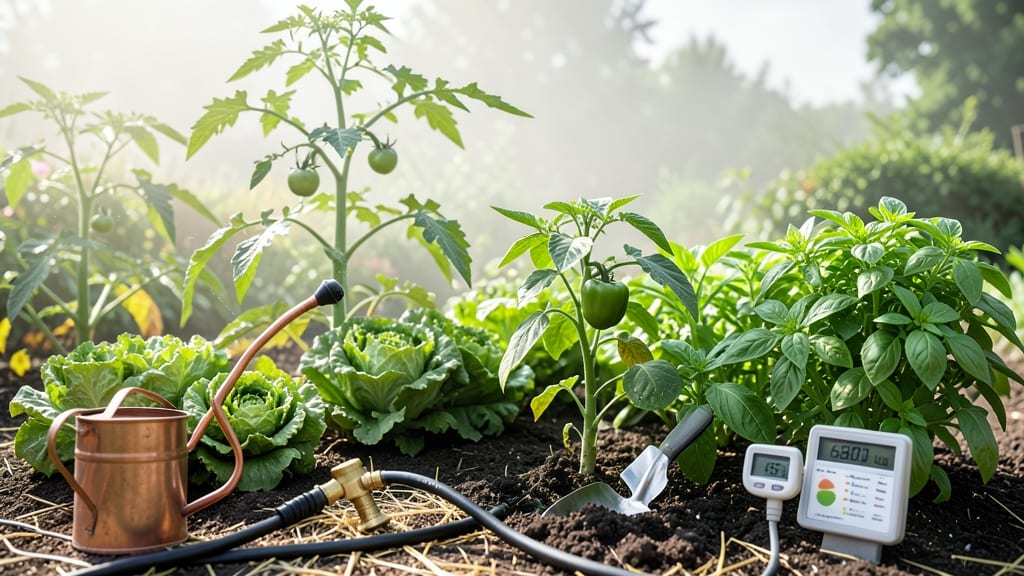
Watering your vegetable garden every day depends on the plants, soil, and weather — not just a one-size-fits-all rule.
Overwatering your vegetable garden can drown roots just as quickly as underwatering can stunt growth, so how do you strike the perfect balance? The answer isn’t as simple as a daily schedule; it’s about reading your soil, knowing your crops, and adjusting for heatwaves or rain.
Leafy greens like lettuce need consistent moisture, while root crops such as carrots prefer deeper, less frequent watering.
In USDA Zone 6a, where spring planting kicks off in April, the key is deep watering — about 1-2 inches per week — rather than shallow daily sprinkles that encourage weak roots.
Below, I’ll break down the science-backed watering rules by plant type, common mistakes to avoid, and a customizable weekly schedule so you can keep your 🥬 vegetable garden thriving without guesswork.
Science-backed watering rules for vegetable gardens (by plant type)
Watering your vegetable garden isn't one-size-fits-all—what works for leafy greens like lettuce can drown root crops like carrots. Research shows that most vegetables need 1-2 inches of water per week, but the frequency depends on their growth habits and your soil type.
For example, sandy soil drains quickly, requiring daily checks, while clay soil holds moisture longer, often needing water every 3-4 days. Understanding these differences prevents both overwatering and underwatering, both of which stress plants.
Leafy greens like spinach and kale thrive with consistent moisture in the top 2-3 inches of soil. Their shallow roots mean they need frequent, light watering—every 1-2 days in hot weather—to prevent bolting (premature flowering).
On the other hand, root vegetables like carrots and beets require deep, infrequent watering to encourage straight growth.
Overwatering them can cause forked roots or rot. Fruiting plants like tomatoes and peppers need steady moisture, especially during flowering and fruiting stages, but too much water can dilute nutrients and attract diseases like blossom end rot.
Soil type plays a critical role in watering frequency. Sandy soil drains water quickly, so you may need to water daily in summer, while clay soil can go 5-7 days between waterings.
To test your soil's moisture level, stick your finger 1-2 inches deep—if it feels dry, it's time to water. Mulching with 2-3 inches of organic matter (like straw or wood chips) helps retain moisture and reduces evaporation, cutting your watering needs by up to 30% in extreme heat.
This simple step also keeps soil temperatures stable, which is crucial for seed germination and root development.
Herbs like basil and cilantro are often overlooked but have specific needs. Basil, for instance, prefers even moisture and wilts quickly if underwatered, but its roots are shallow, so light daily watering in containers is ideal.
Cilantro, however, bolts (goes to seed) under stress, so keep its soil consistently moist but not soggy. For alliums like onions and garlic, deep watering once a week is sufficient, as their bulbs store moisture efficiently.
The key is adapting your watering schedule to the plant's growth stage—seedlings need more frequent watering than mature plants.
| Plant Type | Watering Frequency | Root Depth | Soil Moisture Goal | Key Tips |
|---|---|---|---|---|
| Leafy Greens (Lettuce, Spinach, Kale) | Every 1-2 days (shallow watering) | 0-3 inches | Top 2 inches consistently moist | Avoid overhead watering to prevent disease |
| Root Crops (Carrots, Beets, Radishes) | Every 3-4 days (deep watering) | 6-12 inches | Deep moisture, avoid soggy soil | Water deeply to encourage straight roots |
| Fruiting Plants (Tomatoes, Peppers, Cucumbers) | Every 2-3 days (deep soak) | 12-18 inches | 1-2 inches per week, steady moisture | Mulch to retain moisture and prevent blossom end rot |
| Herbs (Basil, Cilantro, Parsley) | Every 1-2 days (light watering) | 0-6 inches | Top 1-2 inches evenly moist | Basil needs consistent moisture; cilantro hates soggy soil |
| Alliums (Onions, Garlic, Leeks) | Every 5-7 days (deep watering) | 6-12 inches | Deep moisture, reduce as bulbs mature | Taper watering 4 weeks before harvest |
One of the biggest mistakes gardeners make is watering based on a **one-size-fits-all schedule
Daily watering mistakes that kill plants (and how to fix them)
Daily watering might seem like a safe bet for your vegetable garden, but many gardeners accidentally drown roots or create shallow root systems by watering at the surface. The key isn't frequency—it's depth and consistency.
Plants like tomatoes and peppers need moisture to reach 12-18 inches deep, while shallow sprinkles only wet the top inch of soil.
Another common mistake is ignoring weather patterns. A daily watering schedule works in dry climates, but after 0.5 inches of rain, most vegetables don't need extra water for 3-5 days.
Even herbs like basil can suffer from root rot if overwatered during humid summers. The fix? Check soil moisture 1-2 inches down before deciding whether to water.
Not unless it's a heatwave or your soil is sandy. Daily watering is often a mistake—it encourages shallow roots and fungal diseases. Instead, aim for deep watering 2-3 times per week, adjusting for rainfall and plant type. Use a moisture meter or the finger test to check soil depth.
Many gardeners also water at the wrong time. Evening watering keeps leaves damp overnight, inviting blight and powdery mildew. Morning watering (before 10 AM) gives foliage time to dry, reducing disease risk.
If you must water in the evening, avoid overhead sprinklers—use drip irrigation or soaker hoses instead to target the root zone directly.
Watch for wilting leaves as a red flag—but don't assume it always means underwatering. Yellowing leaves often signal overwatering, while crispy edges on older leaves can mean underwatering or high salt buildup.
For leafy greens like lettuce, keep soil evenly moist, but for root crops like carrots, let the top inch dry between waterings to prevent forked roots.
Fix inconsistent watering by grouping plants with similar needs together. For example, peppers and eggplants thrive with deep, infrequent watering, while radishes and spinach prefer consistent moisture. Mulch with straw or wood chips to retain moisture and reduce evaporation, cutting your watering needs by 30-50%.
Adjust your schedule seasonally—summer heat may require daily checks, but spring and fall often need watering every 4-5 days.
Remember, the goal is healthy roots, not a watering routine. Let your soil and plants guide you: if the top 2 inches are dry, it's time to water.
If leaves are perky and green, hold off. With these fixes, you'll avoid the most common watering mistakes and keep your vegetable garden thriving all season. 🌱💧