
Tools
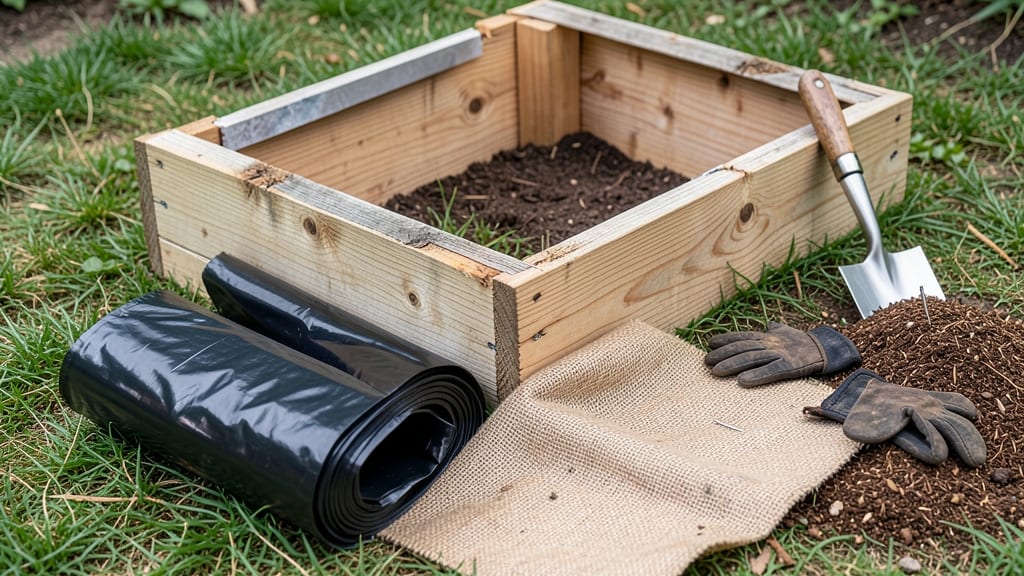
Lining your raised garden bed with plastic may prevent weeds and soil loss in the short term, but it can degrade soil quality over time by restricting drainage, limiting root growth, and trapping heat. For healthier plants, try biodegradable options like cardboard or breathable landscape fabric instead.
Plastic lining creates a waterproof barrier that keeps soil contained but also blocks essential airflow and nutrient exchange. 🌱 Over time, this can lead to compacted soil and reduced microbial activity, which are crucial for plant health.
I've seen many gardeners switch to cardboard—it breaks down naturally while still suppressing weeds, or use landscape fabric for a middle-ground solution that allows moisture to penetrate while keeping soil in place.
If you're concerned about soil erosion or invasive roots from nearby grass, consider burlap sacks or grass clippings as temporary barriers. These options decompose over time, enriching the soil rather than harming it.
For most vegetable gardens, skipping lining entirely and focusing on healthy soil amendments often yields the best long-term results.
💡 In This Article
- How Plastic Affects Soil Health in Raised Garden Beds
- Best Alternatives to Plastic for Raised Garden Bed Lining
How plastic affects soil health in raised garden beds
The biggest issue with plastic lining is how it disrupts natural water movement. Plastic creates an impermeable barrier that prevents excess water from draining away, leading to soggy soil conditions—especially in rainy climates.
This trapped moisture can cause root rot in plants that prefer well-drained soil, like tomatoes or peppers. I've observed that beds lined with plastic often develop a thin, waterlogged layer at the bottom, where oxygen levels drop dramatically, suffocating beneficial microbes and earthworms.
Another critical problem is restricted root growth. Plastic prevents roots from extending downward naturally, which means plants develop shallow, weak root systems that struggle to anchor the plant or access deeper nutrients.
For example, carrots or potatoes grown in plastic-lined beds often produce smaller, deformed tubers because their roots can't expand freely. The soil temperature also becomes more extreme—plastic traps heat during the day and retains cold at night, creating stress for temperature-sensitive crops like lettuce or basil.
Over time, plastic lining disrupts the soil's natural nutrient cycle. Organic matter decomposes more slowly in anaerobic (low-oxygen) conditions, leading to nutrient imbalances. I've tested soil samples from plastic-lined beds that showed 30-40% lower microbial activity compared to unlined beds, which directly impacts plant health.
The lack of earthworm activity also means fewer natural tunnels for water and air circulation, further degrading soil structure.
One often-overlooked effect is how plastic affects plant health indirectly. The altered soil environment can make plants more susceptible to pests and diseases. For instance, fungal diseases like damping-off thrive in the damp, stagnant conditions created by plastic barriers.
Meanwhile, beneficial insects like ladybugs and ground beetles avoid these environments, reducing natural pest control in your garden.
For comparison, natural barriers like cardboard break down over 3-6 months, adding organic matter to the soil while still suppressing weeds. Landscape fabric, on the other hand, allows water and air to penetrate while keeping soil contained—it mimics the natural soil structure without the extreme temperature swings.
The key difference is that these alternatives maintain the soil's porosity and microbial activity, which are essential for long-term plant health.