
Tools
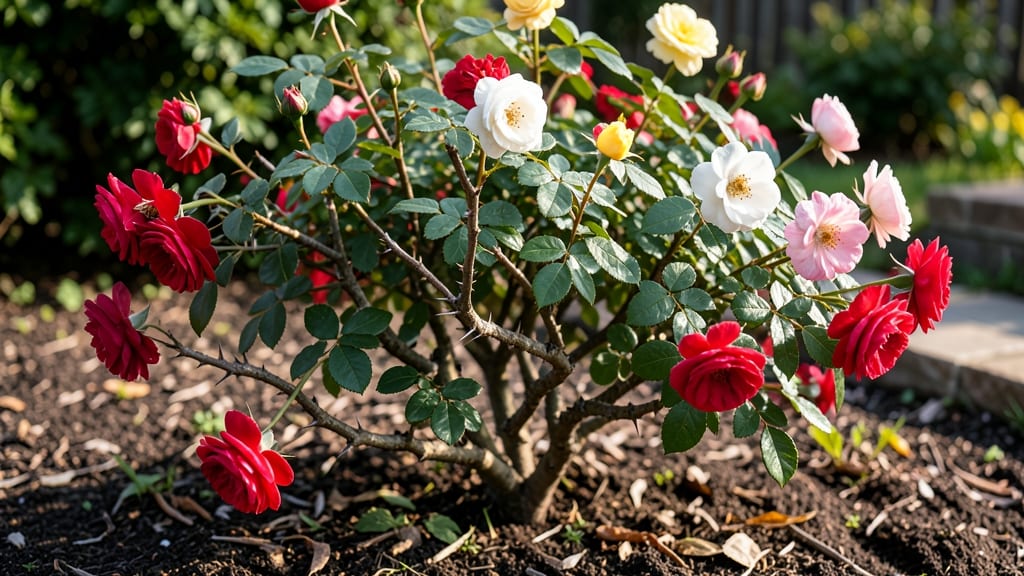
A rose garden in Seattle, Washington thrives when you plant bare-root roses in early spring (March-April) or fall (October-November), select hardy varieties like 'Knock Out' or 'David Austin' roses, and enrich the soil with compost to handle the region's damp conditions. Heavy mulching protects roots from winter rains while maintaining proper drainage.
A rose garden in Seattle's cool, wet climate demands careful timing and variety selection. 🌧️ The city's frequent rainfall and mild winters mean traditional roses often struggle, but disease-resistant types like 'Knock Out' roses handle moisture better.
I've found that planting in fall (after the first frost) gives roots time to establish before winter rains, while spring planting avoids soggy soil. The key is amending clay-heavy soil with compost and using raised beds if drainage is poor—this mimics the natural hillside conditions roses prefer.
Seattle's acidic soil also benefits from a 3-inch layer of mulch (like cedar chips) to block fungal spores. Prune roses in late winter before new growth appears, and fertilize lightly in early spring—too much nitrogen can make them susceptible to mildew.
The payoff? Vibrant blooms that last through Seattle's famously overcast summers.
💡 In This Article
- Seattle’s Climate and Best Rose Varieties for Pacific Northwest Gardens
- Step-by-Step Guide to Planting Roses in Seattle’s Rainy Season
Seattle’s climate and best rose varieties for Pacific Northwest gardens
Seattle’s mild, maritime climate creates unique challenges for rose gardens. The city’s average annual rainfall of 38 inches—spread across 150+ rainy days yearly—means roses must handle constant moisture without succumbing to fungal diseases like black spot or powdery mildew.
The cool summers (75-80°F) and chilly winters (35-45°F) also limit traditional rose varieties, which often struggle with these temperature extremes. 🌧️
The key to success lies in selecting disease-resistant hybrids bred for Pacific Northwest conditions. Varieties like 'Knock Out' roses (disease-resistant and repeat-blooming) or 'David Austin' English roses (hardy to Zone 5) thrive because they’ve been developed to withstand wet climates.
These roses feature thicker cuticles and natural fungicides in their foliage, reducing the risk of common fungal infections. For example, 'Ramblin' Rose' varieties (like 'Ramblin' Tetra Pizzazz') grow well in Seattle’s acidic soil (pH 5.5-6.5) and tolerate partial shade from the frequent overcast skies.
Seattle’s acidic, clay-heavy soil (common in the region) drains poorly when saturated, which is why amending with compost and sand (a 50/50 mix) improves aeration and drainage. Roses in Seattle also benefit from elevated beds or containers to prevent root rot—a critical adaptation for the region’s wet winters.
The right variety paired with proper soil prep ensures roses can focus energy on blooming rather than fighting disease or waterlogged roots.
Temperature fluctuations also play a role in blooming cycles. Seattle’s cool nights (often dropping to 50°F even in summer) can delay bud opening, while sudden rain showers can damage delicate petals. This is why hybrid teas and floribundas (like 'Double Delight') are popular—they bloom profusely despite the climate’s unpredictability.
For fragrance lovers, 'William Baffin' or 'Gertrude Jekyll' roses offer intense scents while handling Seattle’s damp conditions with ease.
One often-overlooked factor is wind exposure. Seattle’s coastal winds can stress roses, so planting near a windbreak (like a fence or hedge) protects blooms and foliage. I’ve seen roses in exposed areas develop windburn (brown, papery edges on leaves), which weakens the plant.
Choosing compact, bushy varieties (like 'Bonica') reduces wind damage while maximizing bloom density in small spaces.
For gardeners in Seattle’s Zone 8a, fall planting (after October 15) gives roots time to establish before winter rains, while spring planting (after March 15) avoids soggy soil.
The right variety, paired with these climate-specific adaptations, turns Seattle’s rainy season into an opportunity for lush, disease-free rose gardens. 🌸