
Tools
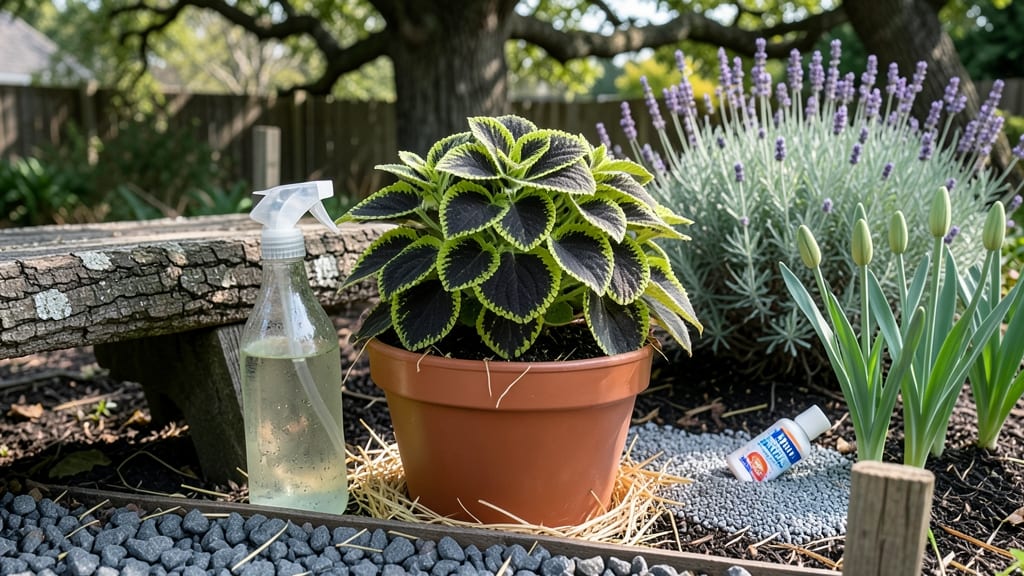
To repel cats from your garden, use a citrus spray made with lemon or orange peels, water, and dish soap. Cats dislike the scent, and the solution deters them naturally without harming plants or pets. Reapply every 2-3 days for best results.
Cats have an extremely sensitive sense of smell, and citrus oils—particularly limonene—trigger an instinctive aversion in them. 🌿 This natural repellent works because the strong scent disrupts their territorial marking behaviors, making your garden less appealing.
Unlike chemical sprays, citrus-based solutions are pet-safe and won't damage plants, though you should always test a small area first. The dish soap in the mix helps the spray stick to foliage longer, ensuring the scent lingers even after drying.
For best results, combine this method with other deterrents like crushed eggshells or prickly plants near entry points. Cats dislike both the texture and the scent of these alternatives, creating a multi-layered defense.
Always reapply after rain or heavy watering, as the scent will fade quickly in wet conditions. Consistency is key—cats learn patterns, so maintaining the spray schedule reinforces their avoidance behavior over time.
💡 In This Article
- Why Citrus Scents Effectively Deter Cats
- Step-by-Step Citrus Spray Recipe for Maximum Effectiveness
Why citrus scents effectively deter cats
A cat's sense of smell is 14 times stronger than a human's, making them hyper-sensitive to certain compounds found in citrus fruits. The key player here is limonene, a naturally occurring oil in citrus peels that cats instinctively avoid.
This compound triggers their aversion through a combination of scent intensity and chemical structure that their olfactory system perceives as unpleasant or even threatening. 🌸 Unlike humans, cats lack certain taste receptors for sweetness, making the sharp, bitter notes of citrus overwhelmingly off-putting.
The science gets even more interesting when you consider feline behavior. Cats use scent marking to establish territory, and strong citrus odors disrupt this natural communication.
When they encounter your citrus-sprayed garden, their brains register the scent as a potential threat or unfamiliar element, prompting them to avoid the area entirely.
This is why even a light application can create a 3-5 foot exclusion zone around treated plants—cats will typically avoid entering spaces where they detect these strong, unfamiliar scents.
What makes citrus particularly effective is its dual-action mechanism: the scent itself repels cats, while the oils leave a residual coating on foliage that lasts longer than water-based solutions. Unlike commercial chemical repellents that can harm plants or leave toxic residues, citrus-based solutions break down naturally in sunlight and rain.
The dish soap component in the spray acts as an emulsifier, helping the citrus oils adhere to plant surfaces rather than evaporating immediately. 💧 This creates a more persistent barrier that cats can detect even after the spray dries.
Another advantage of citrus over synthetic repellents is its broad-spectrum effectiveness. While some cats might become accustomed to one type of repellent over time, the complex chemical profile of citrus—containing limonene, linalool, and other terpenes—makes it harder for them to develop resistance.
Studies on feline behavior show that cats exposed to citrus scents consistently demonstrate avoidance behaviors, with some even showing signs of stress when confined in citrus-scented spaces. This makes citrus one of the most reliable natural deterrents available for gardeners.
For maximum effectiveness, focus on treating areas where cats frequently enter or mark. The most vulnerable spots are typically near garden edges, along fences, or around prized plants that cats might be drawn to.
A little goes a long way—just 1-2 teaspoons of citrus oil per gallon of water creates a potent solution that cats can detect from several feet away. The key is consistency; cats learn through repetition, so maintaining the spray schedule reinforces their avoidance behavior over time. 🌿
When comparing citrus to other natural repellents like vinegar or coffee grounds, citrus stands out for its long-lasting scent profile. While vinegar has a strong odor that fades quickly, citrus oils maintain their potency for 2-3 days after application, making them ideal for protecting gardens between waterings.
The combination of scent persistence and feline aversion makes citrus the gold standard for natural, pet-safe garden protection.