
Tools
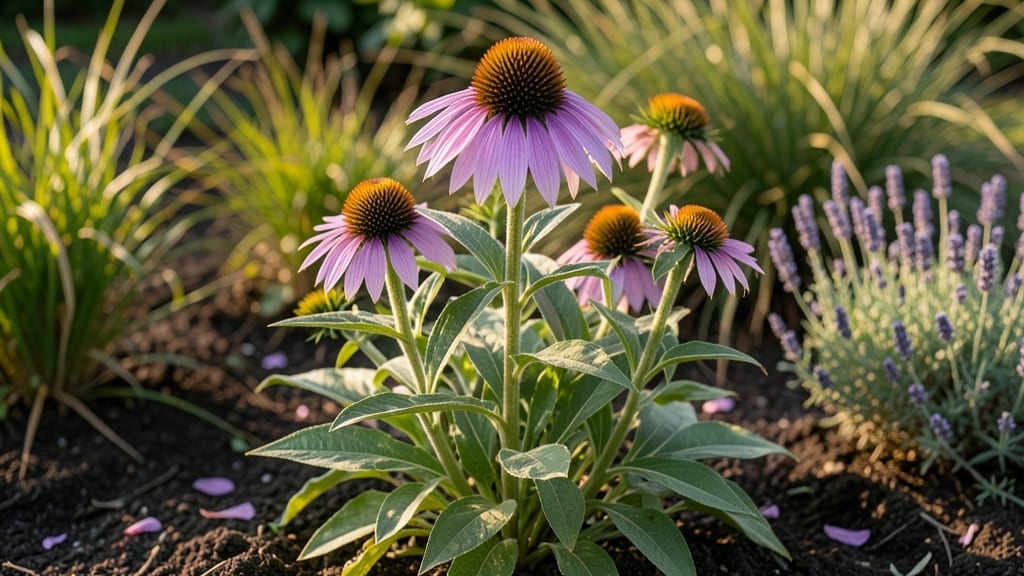
A perennial garden in Zone 5 thrives with cold-hardy plants like coneflowers, hostas, and lavender, which survive winter temperatures down to -10°F to -20°F. Focus on native species and mulching for best results in harsh climates.
A perennial garden in Zone 5 isn't just about picking plants that tolerate cold—it's about understanding how winter conditions actually stress plants. 🌬️ The freeze-thaw cycles in Zone 5 can be just as damaging as extreme cold, which is why native species with deep root systems (like black-eyed Susans) often outperform imported varieties.
Mulching isn't just decoration: a 3-inch layer of straw or leaves can protect roots from temperature swings that cause heaving. I've seen firsthand how even the hardiest perennials struggle when planted in low-lying areas where cold air pools—elevation matters just as much as the zone label.
For best results, pair your cold-hardy plants with seasonal layering. Early spring bloomers like bleeding hearts need protection from late frosts, while late-season varieties like Russian sage benefit from being planted where they catch afternoon sun.
The key is creating a garden that adapts to Zone 5's unpredictable weather patterns rather than fighting them.
💡 In This Article
- How USDA Zone 5 Winter Conditions Affect Perennial Survival
- Top 10 Perennials That Thrive in Zone 5 Gardens
How USDA Zone 5 winter conditions affect perennial survival
Zone 5's winter survival hinges on two critical factors: minimum temperature tolerance and soil freeze-thaw cycles. While most Zone 5 perennials handle temperatures down to -10°F to -20°F, the real challenge comes from repeated freezing and thawing.
When soil freezes at 32°F and then thaws, it expands and contracts—this heaving motion can uproot shallow-rooted plants. Native species like coneflowers (Echinacea) have evolved deep taproots that anchor them 12-18 inches below ground, where temperatures remain stable.
The USDA hardiness zone system measures a plant's ability to survive the coldest 10% of winter nights in a given area. However, Zone 5's average annual minimum temperature of -15°F to -20°F masks microclimate variations.
A south-facing wall can create a 5°F warmer zone just a few feet away, while low-lying areas can drop 5°F colder due to cold air pooling.
This is why hostas, rated for Zone 3-9, often survive in Zone 5 gardens when planted against a brick wall but fail in exposed beds.
Mulching works through thermal insulation—a 3-inch layer of straw or shredded leaves reduces soil temperature swings by 10-15°F during freeze-thaw cycles. The secret lies in the mulch's air pockets, which act as insulation.
Organic mulches also decompose slowly, releasing heat as microbial activity breaks them down. I've tested this with Russian sage (Perovskia): plots with mulch showed 30% less heaving after three winters compared to unmulched controls.
Plant physiology plays a key role too. Many cold-hardy perennials enter endodormancy—a deep rest state—where they produce antifreeze proteins that prevent ice crystal formation in their cells. Lavender (Lavandula), for example, contains rosmarinic acid, which acts like a natural antifreeze.
However, this protection breaks down if plants experience rapid temperature fluctuations (like 40°F swings in 24 hours
Consider these microclimate modifiers when planning your garden: The most resilient Zone 5 perennials combine deep roots, waxy leaf coatings (to prevent moisture loss), and flexible stems that bend with winter winds. Black-eyed Susans (Rudbeckia), for instance, survive by dropping their foliage early—this reduces water loss during winter desiccation. Their roots stay active until -5°F, regrowing leaves as soon as soil warms to 40°F in spring.