
Tools
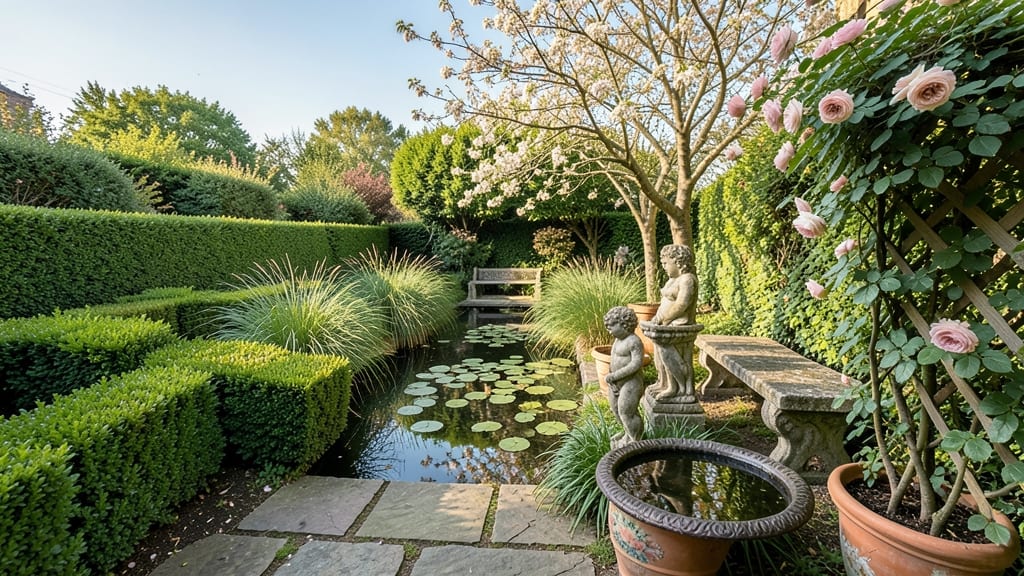
The winding pathways in Monet's garden at Giverny were designed with deliberate curves to guide visitors through seasonal blooms, blending Japanese-inspired meanders with French formalism while prioritizing plant visibility and light play. They used gravel, moss, and low hedges to frame views of water lilies and roses.
The pathways in Monet's garden weren't just functional—they were carefully crafted to enhance the visual journey. 🌿 Monet's design prioritized seasonal transformations, ensuring each visit revealed new colors and textures.
The gravel paths weren't just walkways; they served as focal points that directed attention toward the garden's star attractions, like his iconic water lilies. What's fascinating is how he balanced Japanese informality with French structure, creating a harmonious flow that feels both natural and deliberate.
This approach makes the garden feel like a living painting, where every step reveals another masterpiece.
These pathways also solved practical challenges—like drainage and erosion—while maintaining an artistic aesthetic. The low hedges and moss borders weren't just decorative; they framed the garden's views, making each plant feel like a carefully placed brushstroke.
Monet's genius was in making the infrastructure invisible while ensuring it enhanced the experience. Whether you're designing a garden or simply admiring Monet's work, understanding these principles can inspire your own creative approach to outdoor spaces.
💡 In This Article
- How Monet’s Pathways Enhance Garden Illusions
- Recreating Monet’s Pathway Plants for Modern Gardens
How Monet’s pathways enhance garden illusions
Monet’s winding pathways weren’t just functional—they were carefully engineered to manipulate perception, creating an immersive experience where every turn revealed a new visual surprise. 🌿 The curves weren’t random; they followed principles of Japanese garden design, where meandering paths encourage contemplation and discovery.
These serpentine routes forced visitors to slow down, allowing time to absorb the changing colors and textures of seasonal blooms. The paths also strategically framed views, ensuring that the garden’s focal points—like his famous water lilies—were always partially obscured until the moment of arrival, building anticipation.
The gravel paths played a dual role: they provided practical drainage for the waterlogged French soil while reflecting light in a way that softened shadows and enhanced the garden’s luminous quality.
Monet often used light-colored gravel (like crushed limestone) to create a subtle contrast with the surrounding greenery, making the pathways appear to "float" rather than dominate. He also incorporated moss borders along the edges, which not only softened the path’s edges but also absorbed excess moisture, preventing erosion.
These details might seem small, but they were crucial for maintaining the garden’s delicate balance between structure and natural beauty.
One of Monet’s most brilliant techniques was using strategic pruning and plant layering to control sightlines. He trained climbing roses and wisteria to grow along trellises at precise heights, ensuring that each pathway segment offered a new composition.
For example, a visitor might first see a burst of pink peonies, then a glimpse of blue hydrangeas through an archway, and finally the full reveal of the water lilies at the garden’s center.
This layering created a sense of depth and progression, much like the stages of a painting. 🎨 Even the placement of mirrors—like the famous one in his studio—was tied to the pathways, reflecting light and extending the garden’s visual boundaries.
The pathways also solved a critical challenge: how to make the garden feel both vast and intimate. By designing the paths to gradually widen or narrow at key points, Monet controlled the visitor’s sense of space.
A narrower path would feel more enclosed and private, while a wider section would open up to dramatic views of the pond or flowerbeds. This play with scale was intentional—it mirrored the way Monet composed his paintings, where foreground and background elements interact to create harmony.
The result? A garden that feels alive, where every step feels like a new discovery, just as it would in one of his masterpieces.
What’s often overlooked is how the pathways themselves became part of the artwork. The irregular curves weren’t just aesthetic—they were a response to the garden’s natural contours. Monet avoided straight lines, which he associated with rigid, unnatural order.
Instead, he embraced the organic flow of the land, letting the paths follow the terrain’s natural undulations.
This approach made the garden feel like an extension of the landscape rather than a man-made construct. 🌸 The pathways weren’t just walkways; they were the garden’s "paintbrush strokes," guiding visitors through a living, breathing composition.
For modern gardeners, this means thinking about pathways as more than just functional routes—they’re tools for storytelling. Whether you’re designing a small urban garden or a sprawling estate, consider how curves, materials, and plant placement can create a narrative.
For instance, a spiral path could lead to a focal point like a fountain, while a zigzag design might encourage exploration of hidden corners. The key is to balance practicality with artistry, ensuring that every step feels intentional and purposeful.