
Fertilization
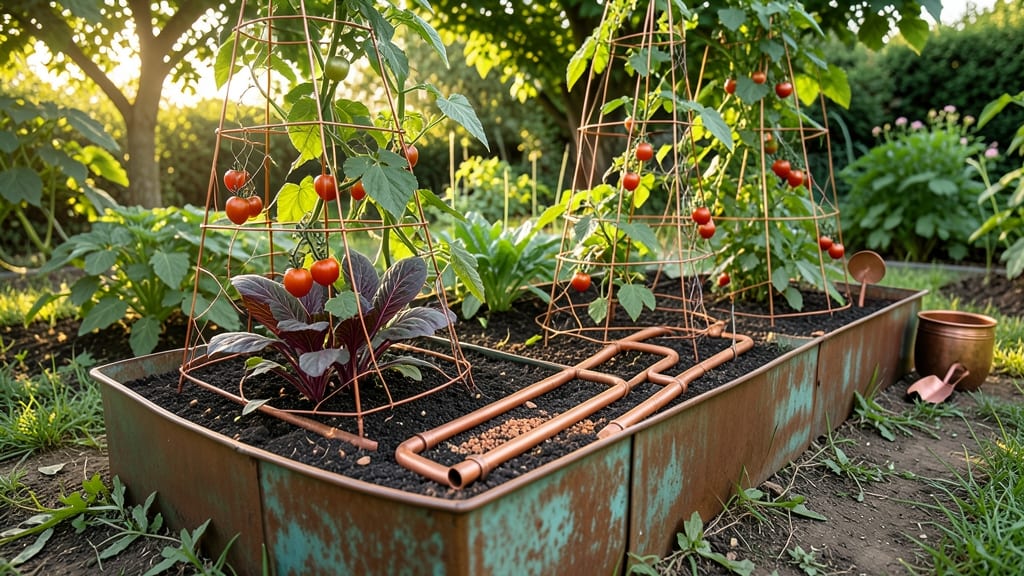
Using copper in garden beds boosts soil health by activating beneficial microbes and preventing fungal diseases like blight, while naturally repelling pests such as slugs and snails. Opt for copper sulfate or organic sources like crushed copper wire for the best results.
Copper acts as a natural soil booster by supporting enzyme activity that helps break down organic matter, making nutrients more accessible to plants. 🌱 The trace amounts needed for optimal growth also act as a fungal inhibitor, protecting roots from diseases while its metallic properties deter common garden pests.
Unlike synthetic pesticides, copper works as a preventive measure rather than a reactive one, creating a healthier ecosystem in your garden beds.
For best results, I recommend starting with a light application—about 1 tablespoon of copper sulfate per 10 square feet—and reapplying every 2-3 months during growing seasons. Organic options like crushed copper wire are safer for edible gardens but require more frequent monitoring to ensure even distribution.
Always water the soil after application to help the copper integrate fully into the root zone.
💡 In This Article
- How Copper Enhances Soil Microbial Activity and Plant Growth
- Practical Ways to Add Copper to Garden Beds
How copper enhances soil microbial activity and plant growth
Copper plays a crucial role in soil health by acting as a co-factor for enzymes that break down organic matter into plant-available nutrients. 🌱 In trace amounts (0.02-0.05% of soil composition), copper activates enzymes like polyphenol oxidase and laccase, which help decompose complex compounds into simpler forms.
This process accelerates nutrient cycling, making phosphorus and nitrogen more accessible to plant roots. For example, copper-deficient soils often show stunted growth in leafy greens because these plants rely heavily on copper-dependent enzymes for chlorophyll production.
The antifungal properties of copper stem from its ability to disrupt fungal cell membranes, particularly in pathogens like Phytophthora (which causes blight).
Copper ions bind to sulfur-containing proteins in fungal cells, preventing them from replicating. 🔥 This is why copper sprays have been used for over a century to control diseases in vineyards and vegetable gardens.
However, the key lies in dosage: while 1-2 ppm (parts per million) of copper enhances microbial activity, concentrations above 10 ppm can become toxic to beneficial bacteria and mycorrhizal fungi that form symbiotic relationships with plant roots.
Organic copper sources like composted copper-rich materials (such as certain seaweeds or manure from copper-fed livestock) release copper gradually, mimicking natural soil conditions. In contrast, inorganic sources like copper sulfate (CuSO4) provide an immediate but shorter-term boost.
The choice depends on your garden's needs: organic sources are ideal for long-term soil building, while inorganic options offer faster disease suppression during outbreaks.
One often-overlooked benefit is copper's role in improving soil structure. The metal helps stabilize soil aggregates by interacting with organic compounds, reducing compaction and improving water retention. 💫 This is particularly valuable in clay-heavy soils, where copper amendments can increase porosity by up to 15% when applied correctly.
The trade-off? Overapplication can lead to phytotoxicity, where copper accumulates in edible crops like potatoes or tomatoes to levels unsafe for consumption.
To maximize benefits, pair copper with other soil amendments. For instance, adding compost increases microbial populations that utilize copper more efficiently, while sulfur applications can help balance pH levels (copper is most available in slightly acidic soils, pH 5.5-6.5).
The synergy between copper and these amendments creates a more resilient soil ecosystem that supports both plant growth and natural pest control.
What most gardeners don't realize is that copper's effects extend beyond the soil surface. When applied as a foliar spray (0.1-0.2% copper sulfate solution), it can prevent early blight in tomatoes by forming a protective barrier on leaves.
The key is consistency: regular, light applications are more effective than occasional heavy doses, which can lead to copper buildup in the soil over time.