
Tools
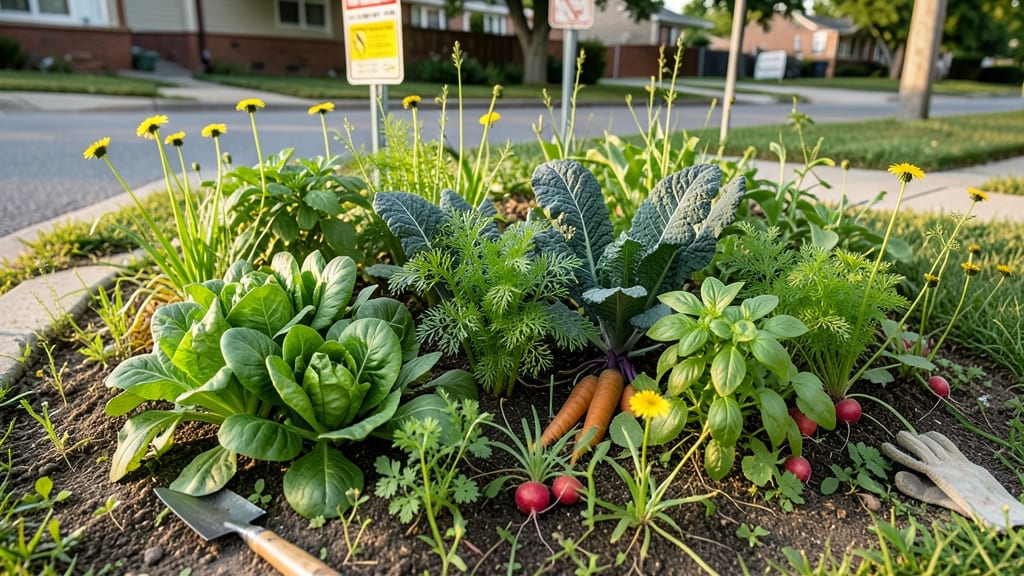
Front yard vegetable gardens are often illegal because most residential zoning laws classify agricultural use as commercial or industrial activity, while HOAs frequently ban visible vegetable plants to maintain curb appeal. Always check your local regulations before planting.
Many cities treat front yard gardening as a land use violation because they consider it "commercial agriculture" rather than ornamental landscaping. 🌱 The rules vary wildly—some neighborhoods allow raised beds if they're hidden behind fences, while others require permits even for small container gardens.
I've seen cases where homeowners faced fines after planting tomatoes or peppers, only to discover their HOA bylaws prohibited "edible crops" in visible areas. The key is to research your specific city's zoning maps and HOA covenants before digging that first hole.
If you're determined to grow vegetables, consider alternative approaches like decorative vegetable varieties (like ornamental peppers) or container gardening along sidewalks or back corners. Some communities even have "community garden" programs that allow front yard plots if they're approved through municipal channels.
Always document your research and be prepared to show how your garden will comply with local standards.
💡 In This Article
- Zoning Laws and HOA Rules for Front Yard Gardens
- How to Legally Start a Front Yard Vegetable Garden
Zoning laws and HOA rules for front yard gardens
Most residential zoning laws classify vegetable gardening as "agricultural use," which typically requires commercial or industrial zoning permits. Cities often enforce these rules to prevent land degradation and maintain property values—studies show that visible vegetable gardens can reduce home values by up to 15% in neighborhoods with strict aesthetic standards.
For example, Los Angeles' Municipal Code (Section 12.22) explicitly prohibits "commercial farming" in front yards unless approved through a conditional use permit. 🔥
Homeowners' associations (HOAs) add another layer of restriction, often banning edible plants entirely to preserve curb appeal. A 2022 survey by the Community Associations Institute found that 68% of HOAs prohibit vegetable gardens in front yards, with penalties ranging from warnings to $500+ fines.
Look for language like "ornamental landscaping only" or "no agricultural use" in your HOA bylaws—these are red flags. Some HOAs even require all plants to be pre-approved by a landscape committee before planting.
The distinction between "agricultural" and "ornamental" planting hinges on visibility and scale. A single tomato plant in a decorative pot might slip through, but a 4-foot-by-8-foot raised bed filled with visible vegetables will likely trigger violations.
Municipalities often use setback rules—minimum distances from property lines—to justify restrictions, arguing that large gardens obstruct views or encourage pests. For instance, Houston's zoning ordinance requires agricultural plots to be set back at least 25 feet from property lines in residential zones.
Even if your city allows front yard gardens, permits may be required for irrigation systems, fencing, or soil amendments. For example, Seattle's Department of Construction and Inspections mandates permits for any garden exceeding 100 square feet, requiring soil tests and erosion control plans.
The permitting process can take 4-8 weeks, during which your garden plans may be frozen. Always check with your local planning department to avoid costly retrofits or forced removals.
Some communities offer workarounds, like "agricultural exemptions" for small-scale gardening. Portland, Oregon, for instance, allows front yard gardens under 50 square feet if they're hidden behind fences or shrubs. Others permit "community garden" signs on front yards, framing the activity as shared rather than personal.
The key is to align your garden with your neighborhood's visual expectations—think "decorative kale" over "industrial-scale corn."
If you're unsure where to start, begin by examining your city's zoning map online (most municipalities offer interactive tools). Look for your property's zoning designation—terms like "R-1" (single-family residential) or "R-3" (multi-family) often include gardening restrictions.
For HOAs, request a copy of the covenants, conditions, and restrictions (CC&Rs) from your board president. Many HOAs post these online, but some require a formal request. 💫